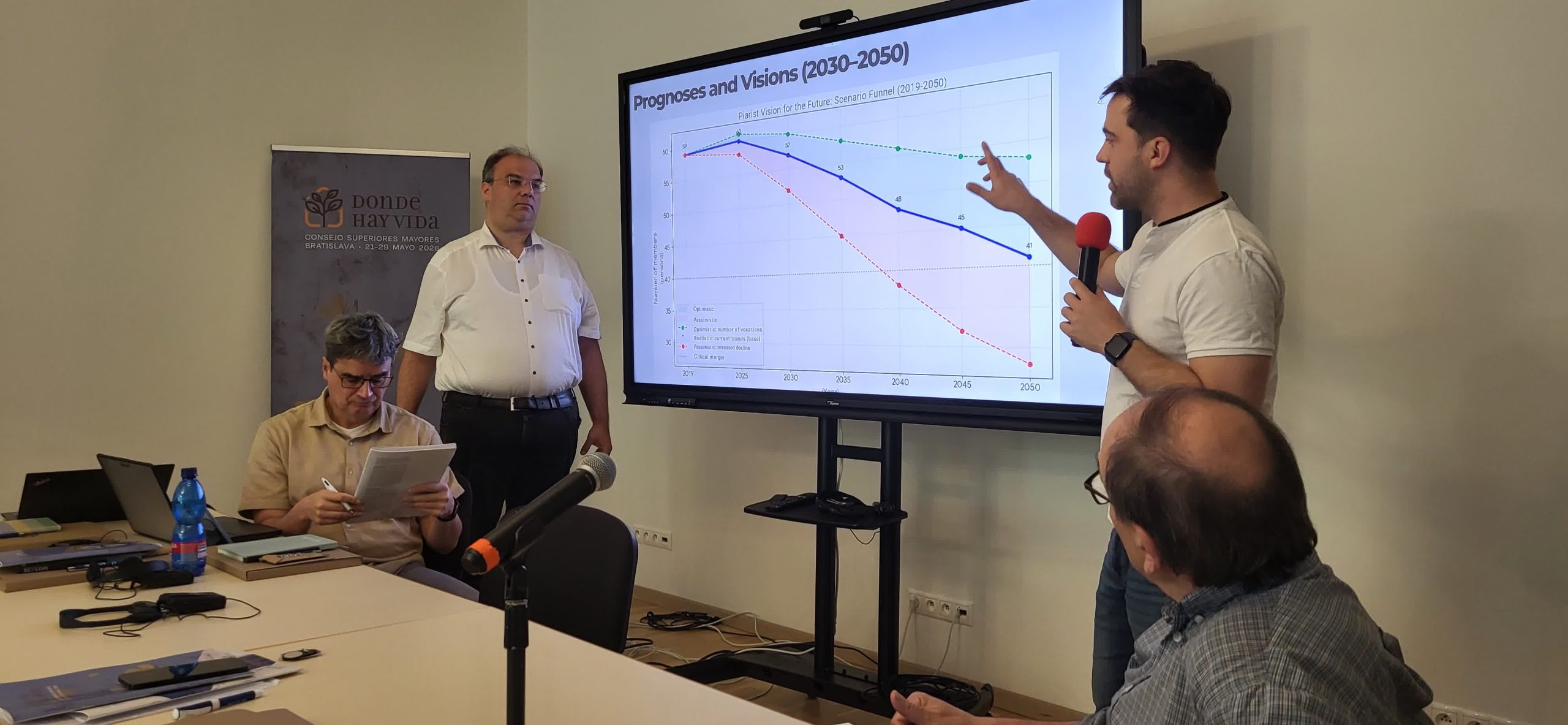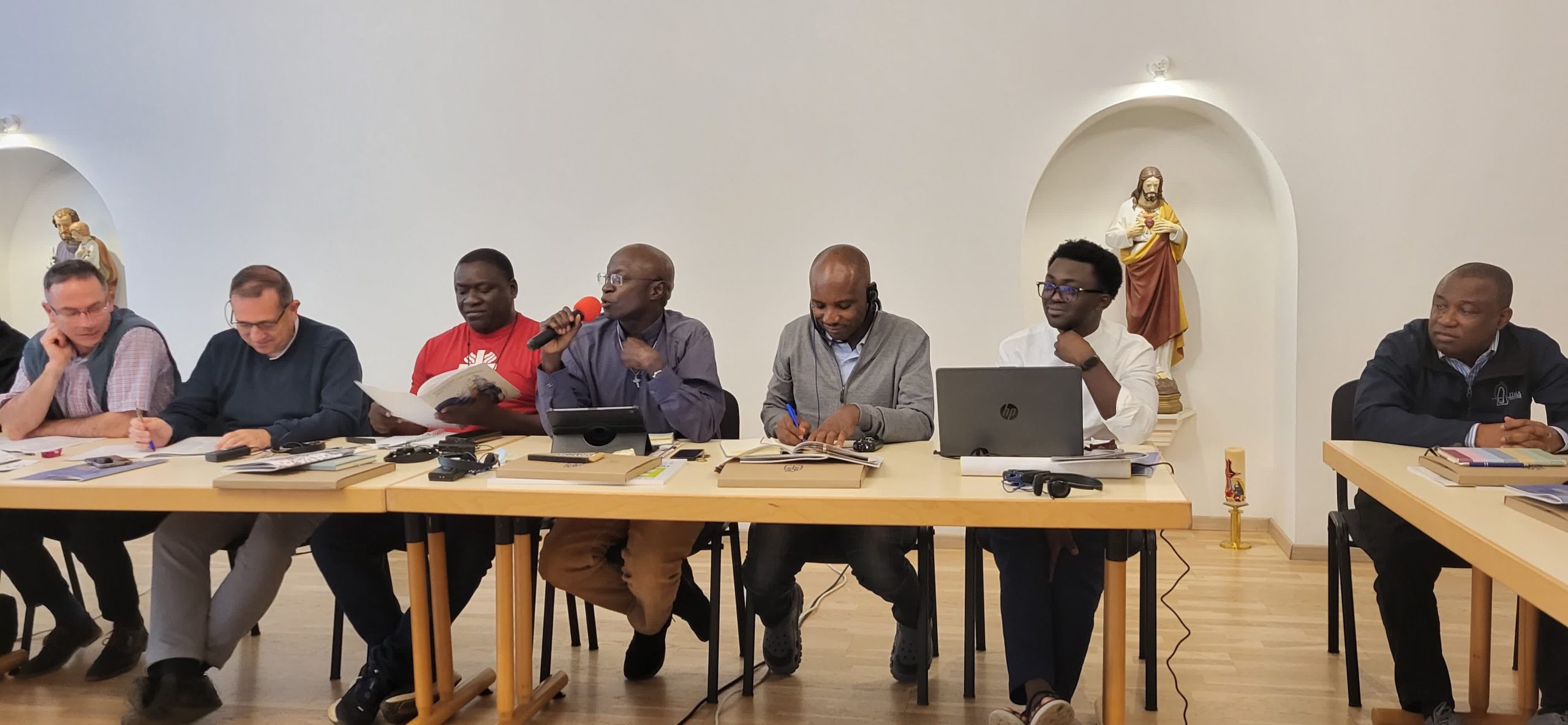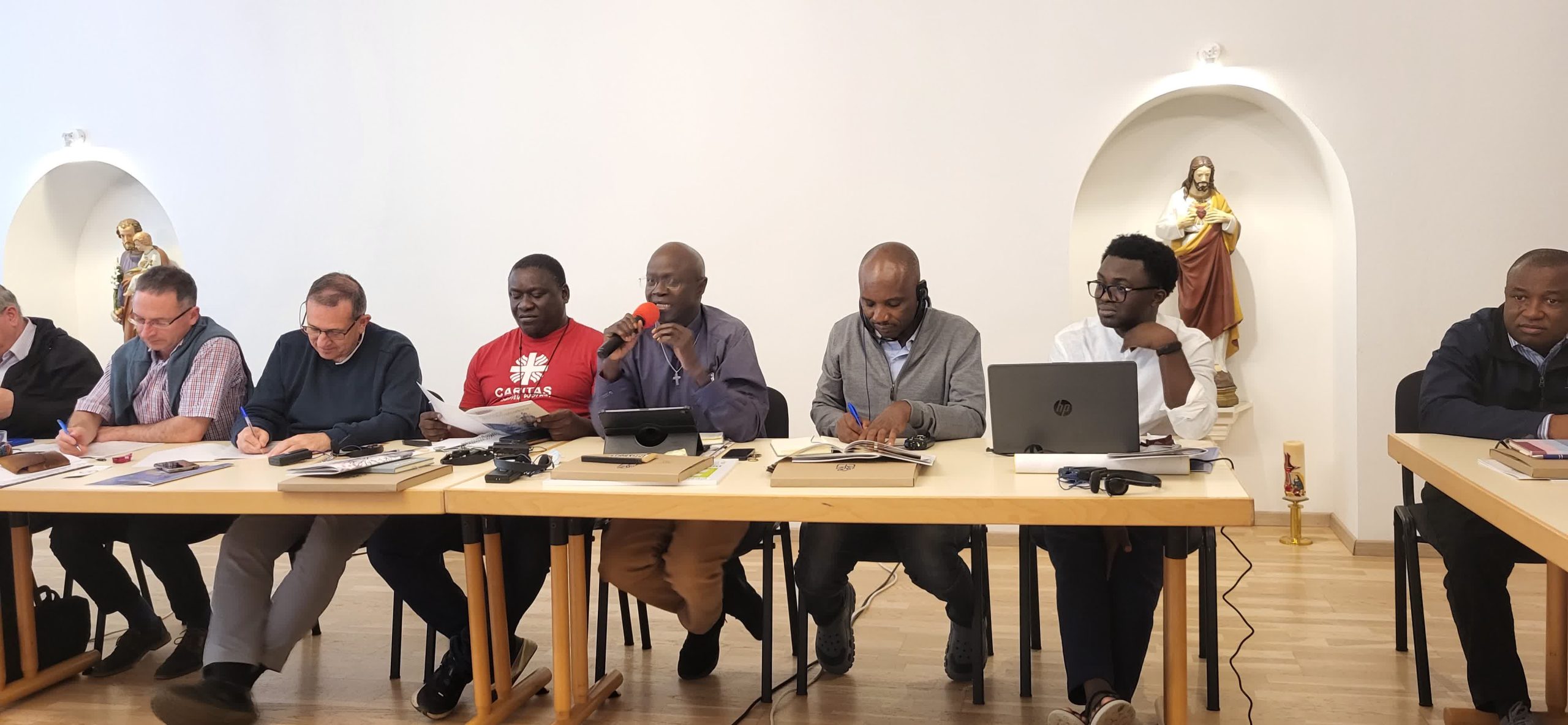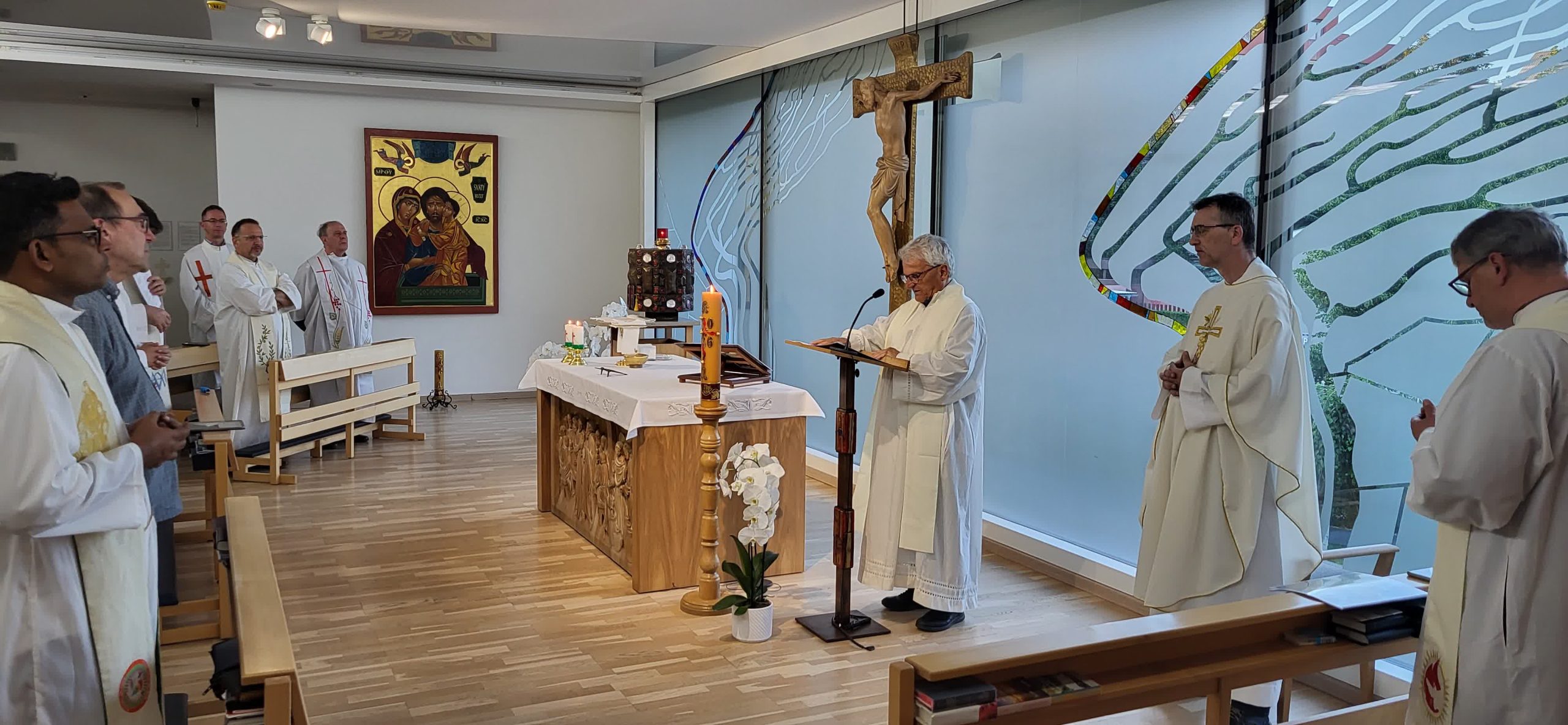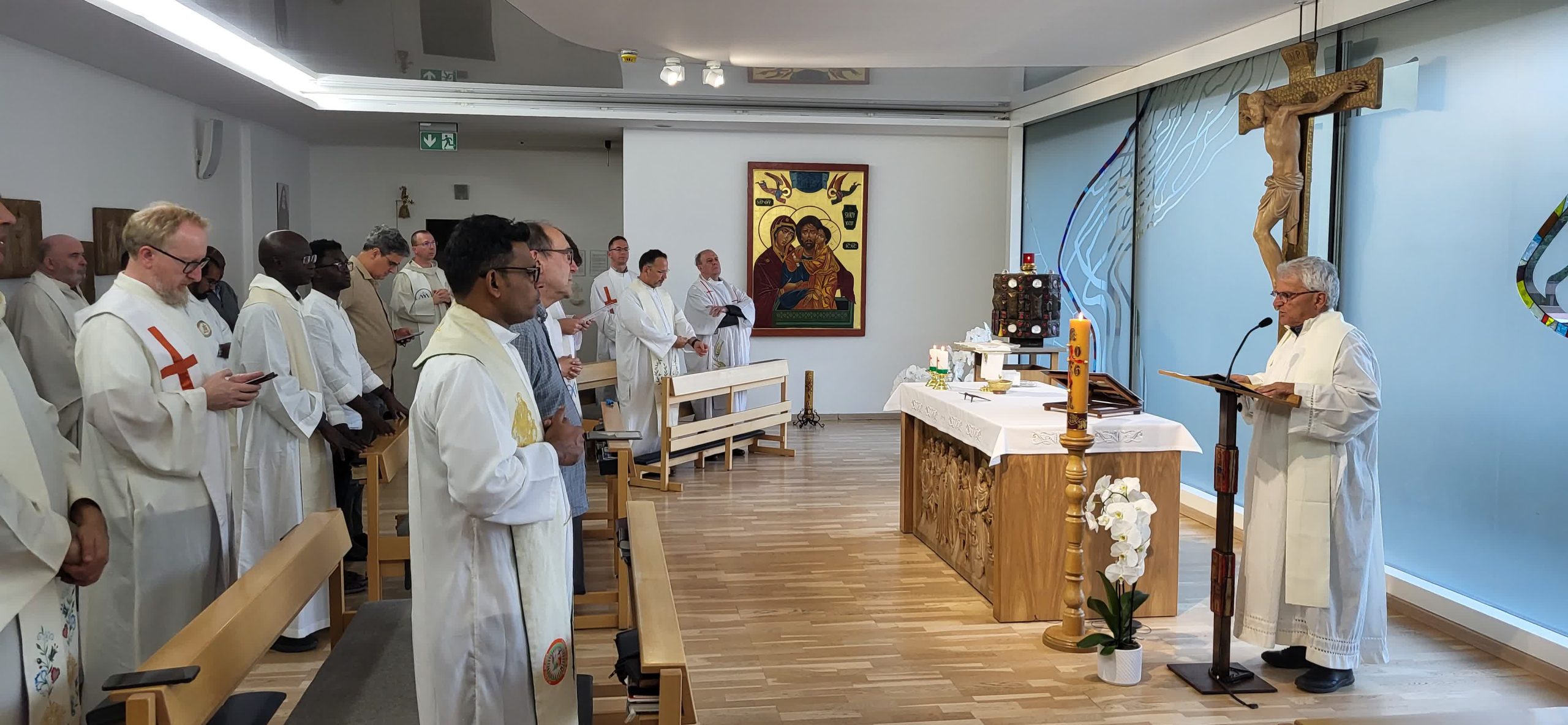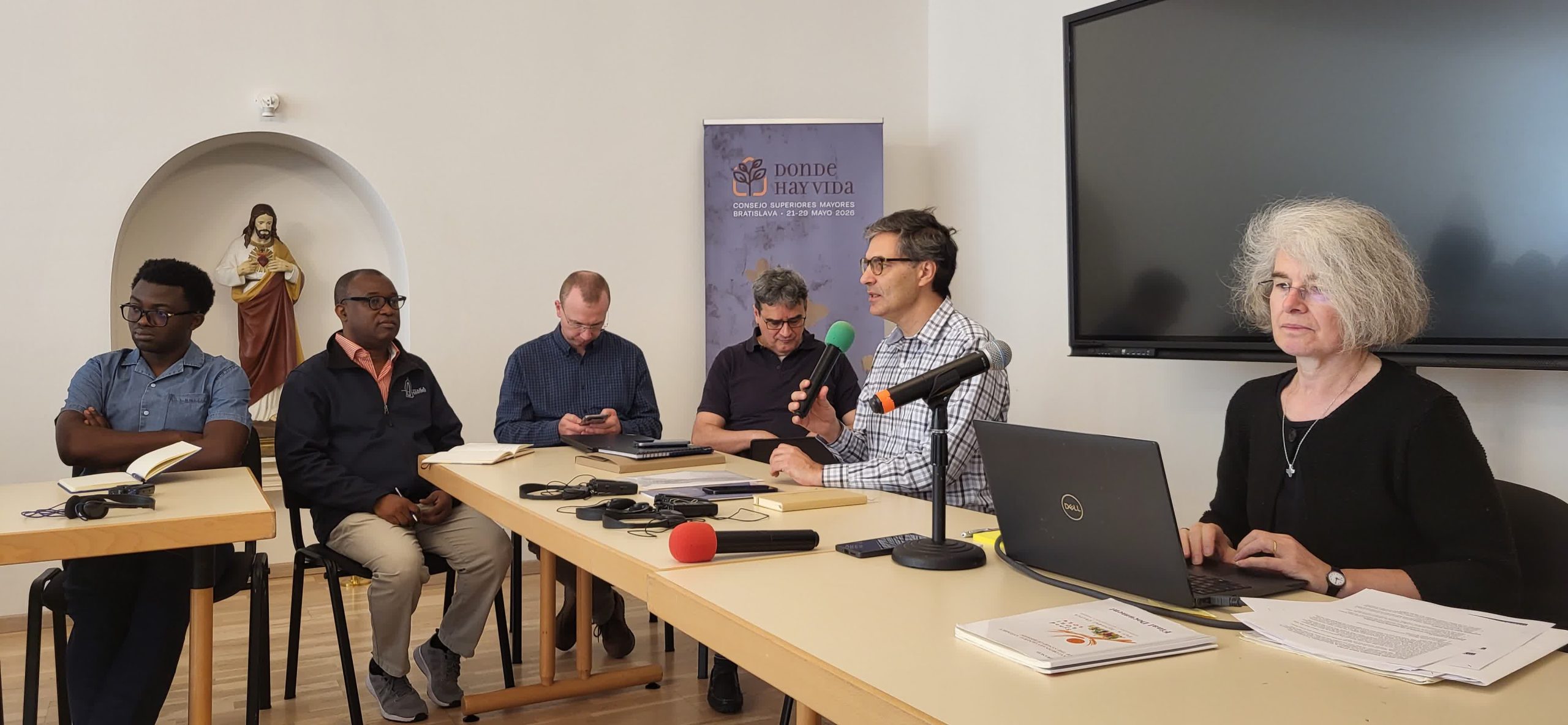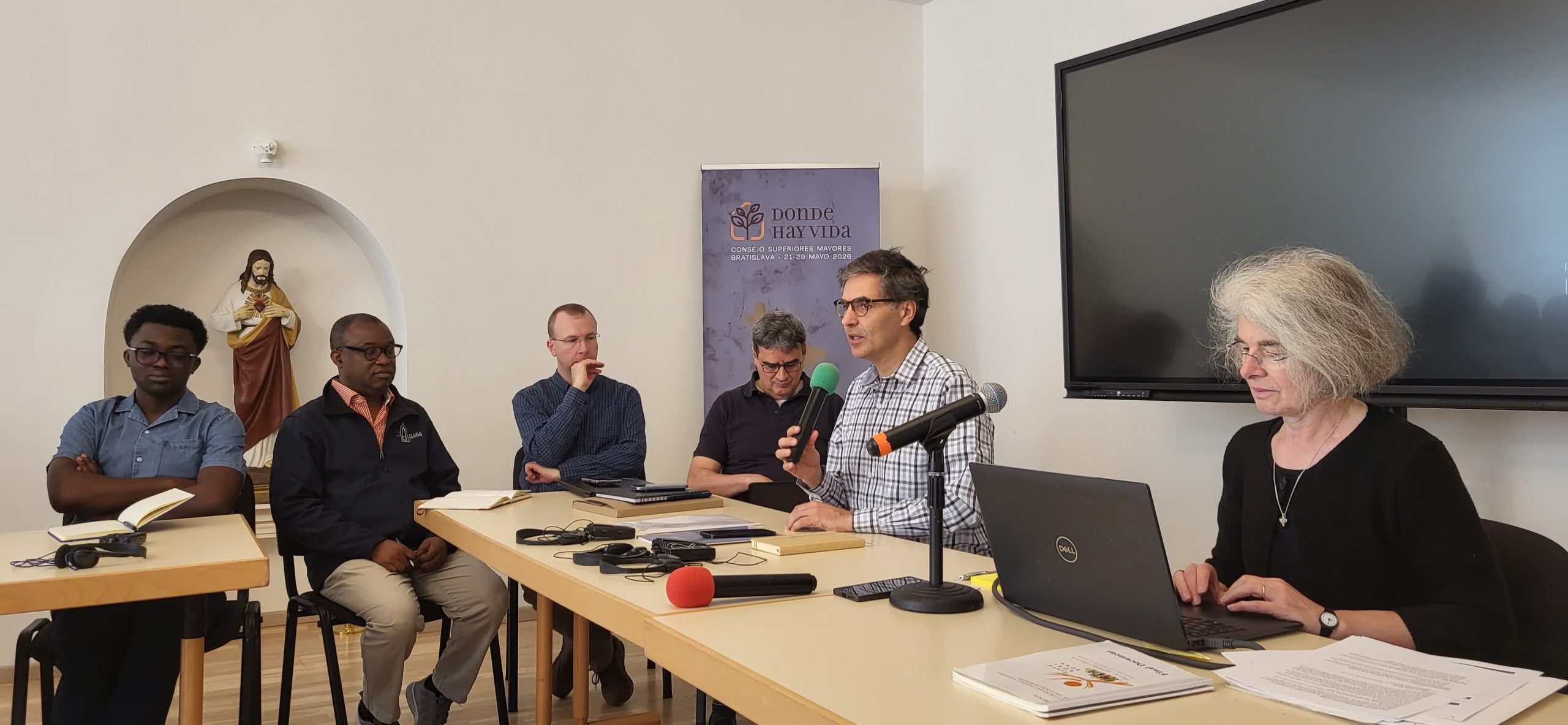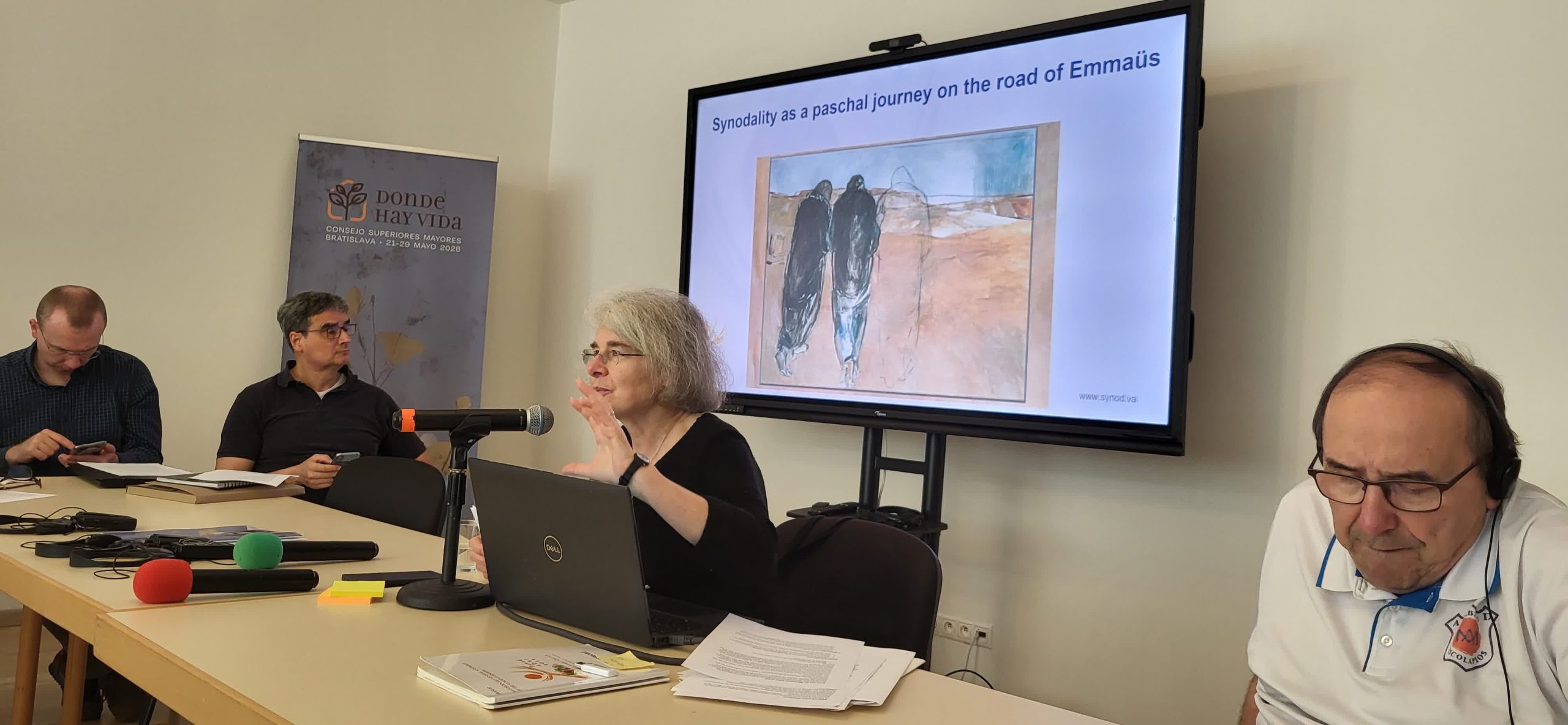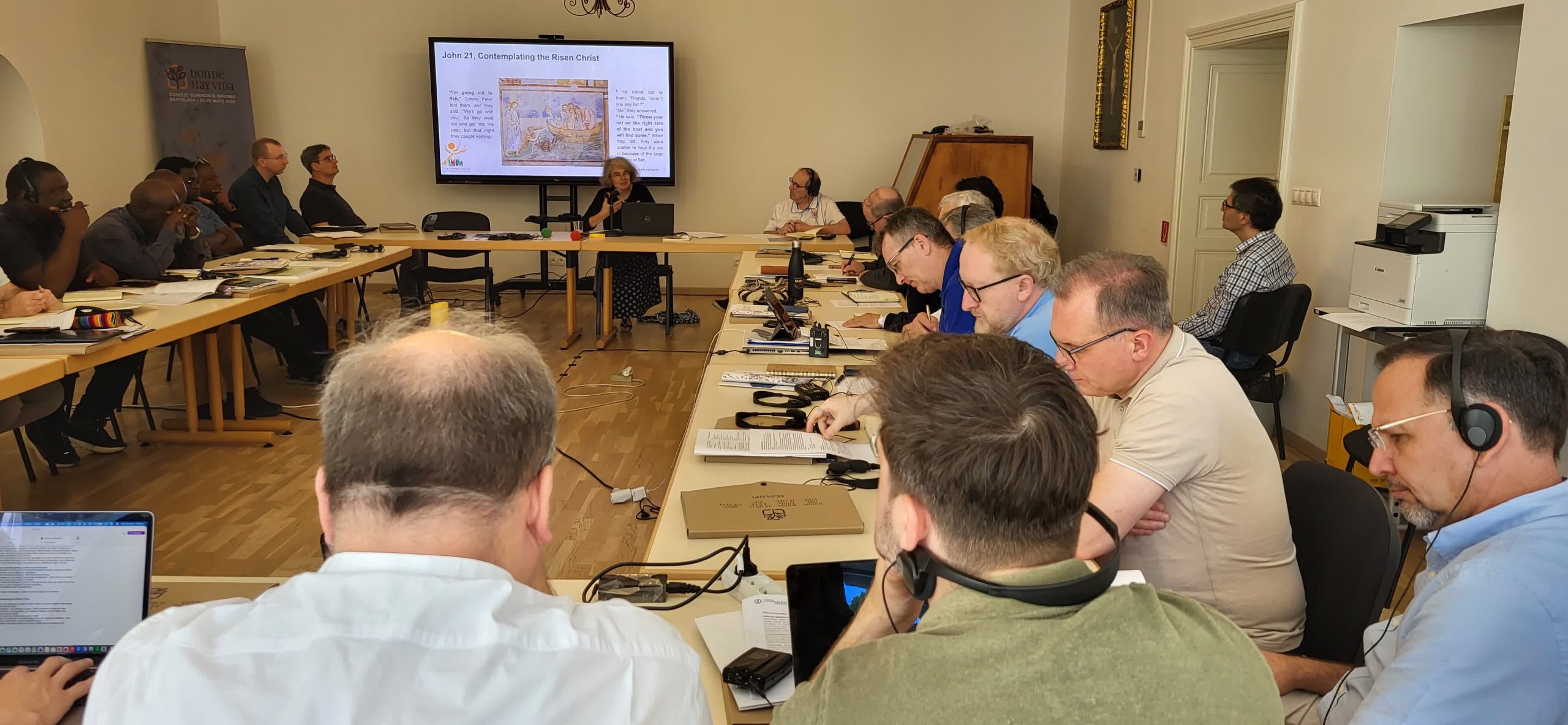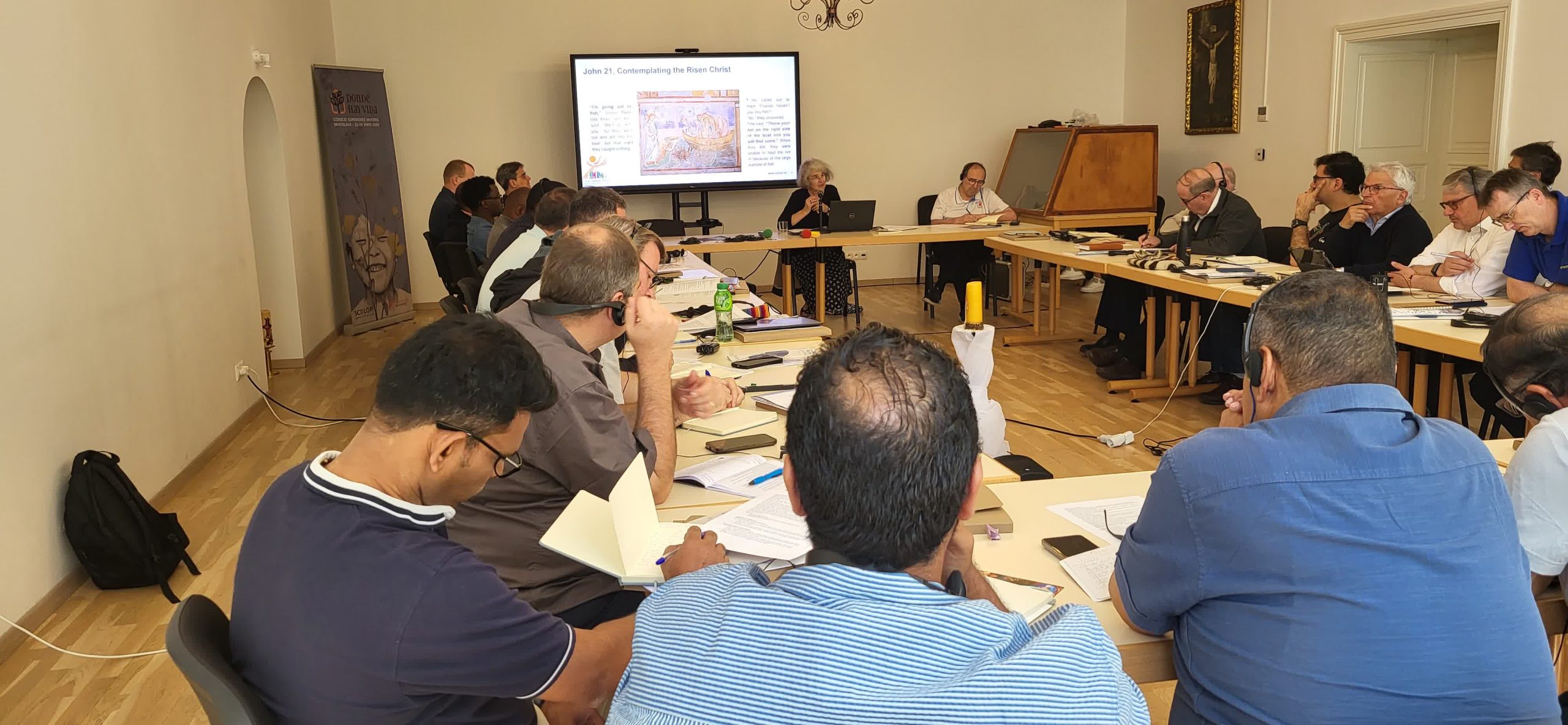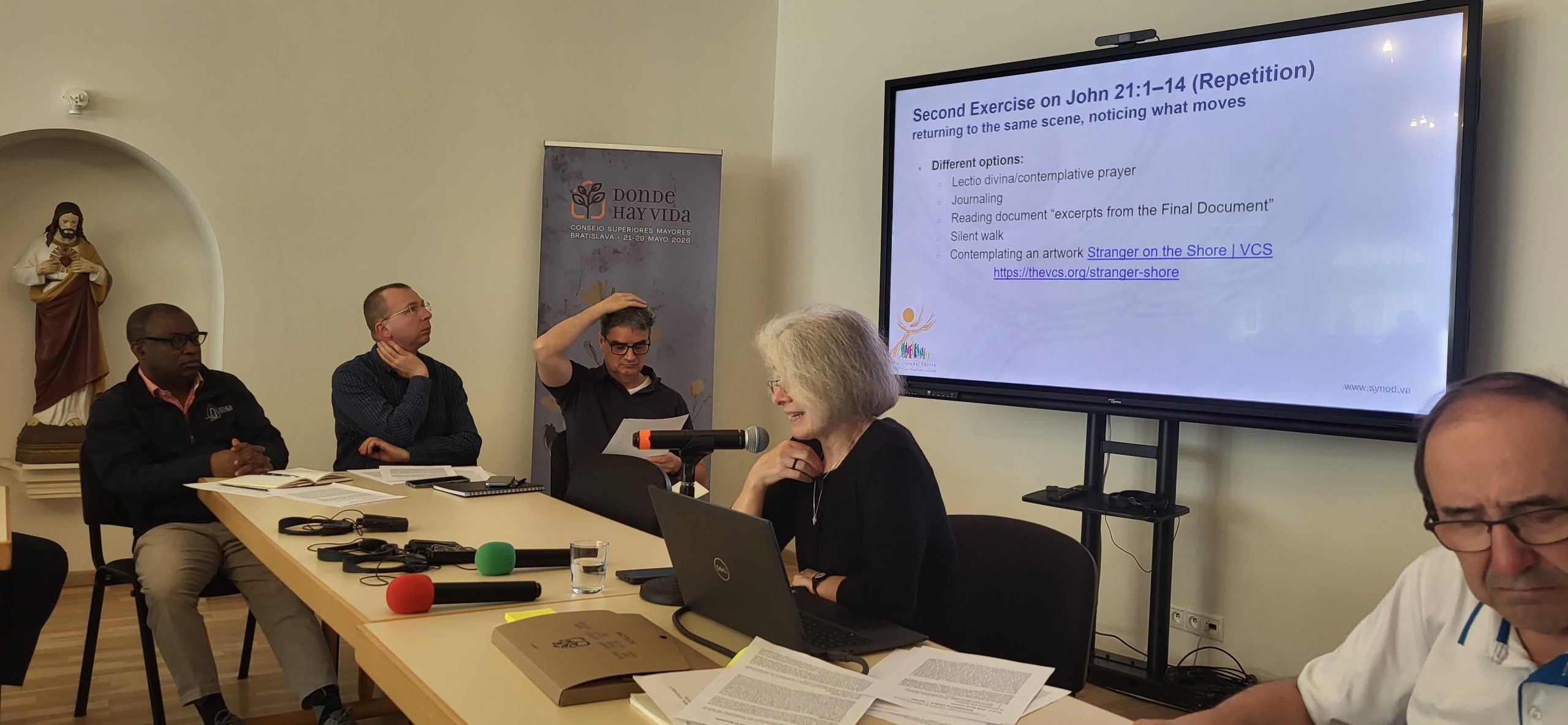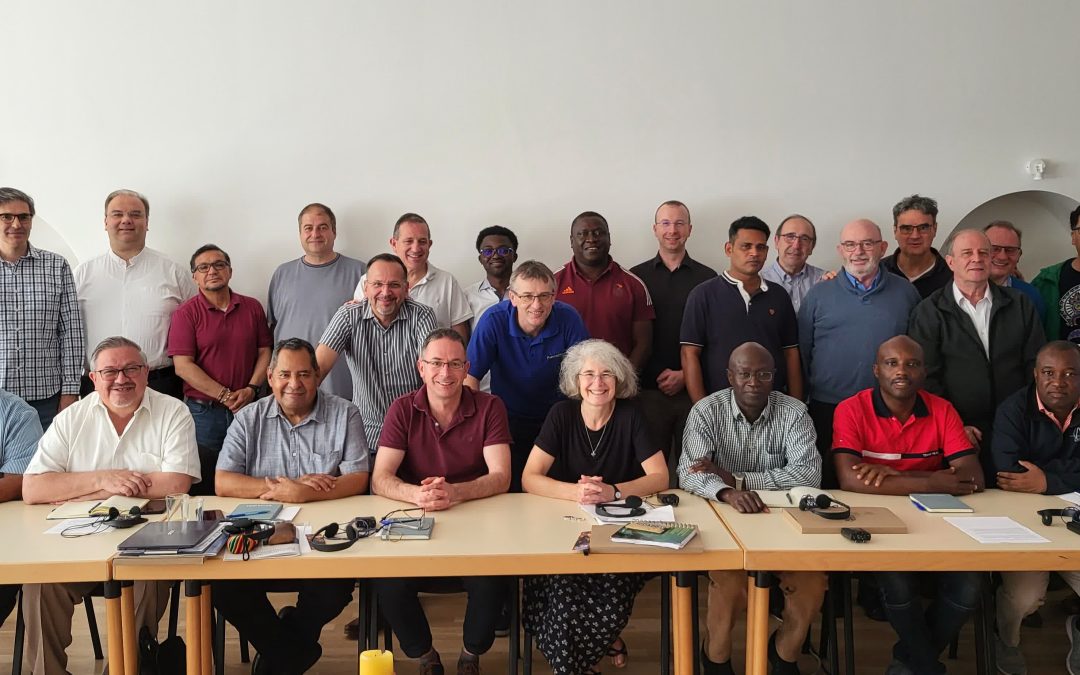
The Second Council of Major Superiors of the Order of the Pious Schools continues in Bratislava. The first two days of the meeting, 22 and 23 May, are dedicated to a retreat. This time of prayer and prayerful silence seeks to be, in the very spirit of the Council, the spiritual foundation on which all the subsequent work of discernment, listening and shared reflection will rest.
The retreat is being accompanied by Sr Nathalie Becquart, XMCJ, a French religious of the Congregation of the Xavièresand, since March 2021, Undersecretary of the General Secretariat of the Synod of Bishops, a role in which she became the first woman to hold such a position and the first with voting rights in the Synod. Her presence is a particular gift for the Order at this moment of its journey, not only because of her ecclesial responsibility, but also because of the theological and spiritual depth with which she has accompanied the Church’s most recent synodal processes.
Sr Nathalie’s journey also sheds light on a very significant continuity with our charism. Before her appointment to the General Secretariat of the Synod, she was coordinator of the pre-synod and a prominent participant in the Synod of Bishops on Young People, the Faith and Vocational Discernment, held in 2018, from which the apostolic exhortation Christus vivit later emerged. That assembly represented, in many ways, a first living school of synodality: bishops, young people and pastors learned together to listen, to walk and to discern, in an experience that Pope Francis later took up as a model of the new way of being Church.
From that experience of the Synod on Young People — so close to the heart of the Pious Schools because of our educational and pastoral mission with young people — came an impulse that led into the great Synod on Synodality(2021–2024), whose XVI General Assembly concluded on 26 October 2024 with the approval of a Final Document that Pope Francis asked to be received as participating in the ordinary Magisterium of the Successor of Peter. There is a clear line of continuity: what began as listening to young people became listening to the whole People of God.
The Church is living a new and demanding time. Pope Francis has declared the synodal journey completed and has opened a crucial phase of implementation, called to integrate synodality as a constitutive dimension of the Church. As the General Secretariat of the Synod recalled, the synodal process does not end with the assembly, but also includes the implementation phase, a stage that will continue until an Ecclesial Assembly in the Vatican in October 2028. Local Churches, religious congregations and communities throughout the Church are invited to translate into ordinary life the five conversions proposed by the Final Document: spiritual, relational, procedural, institutional and missionary.
Our Second Council of Major Superiors is also situated within this horizon, and it is no coincidence that it has chosen to be lived “in a key of shared discernment”. The harmony with the present ecclesial moment is complete: what we are called to do these days in Bratislava is what the Order of the Pious Schools is called to do, in a key of continuous listening and learning.
The Order has actively participated in the different phases of consultation and reflection and has made its language and method its own: listening to the People of God, Conversation in the Spirit at every moment of our initial and ongoing Piarist formation, co-responsibility of religious and lay people, real participation of young people, and attention to the peripheries. The building up of the Pious Schools — religious and lay people sharing charism and mission —, the Calasanz Movement, the irreplaceable ministry, attention to the peripheries and Pastoral Care for Vocations are concrete channels through which the Order has already been living, for years, essential dimensions of ecclesial synodality.
For this reason, this retreat is more than a prayerful pause before the work begins: it is a renewal of our gaze. The Major Superiors are invited to contemplate the life and mission of the Pious Schools from the same perspective with which the whole Church is learning to look at herself today: as a people walking together, listening to the Spirit.
Sr Nathalie’s accompaniment places the discernment of the Second Council of Major Superiors before some of the challenges that the Spirit today proposes with particular insistence to consecrated life and, concretely, to our Order: communion, unity, discernment, accompaniment, and apostolic and evangelical leadership. This is the deep meaning of the retreat we are living these days in Bratislava: to prepare the heart so that it may be the Spirit who leads the Council and, through the Council, the whole life of the Pious Schools at this moment in their history.
This whole journey — that of the Synod, that of the Council of Major Superiors, that of each Demarcation, that of each Piarist presence — only makes sense if it is lived as listening to the Holy Spirit. It is He who calls, who guides, who sustains. It is He who makes a group of brothers gathered around a work table into a true ecclesial assembly; who transforms a calendar of sessions into an itinerary of grace; who breathes where there is life, and where new life asks to be born.
We entrust these two days of retreat to the prayer of the whole Order, so that the Holy Spirit, who always renews the face of the earth, may also renew the face of the Pious Schools and teach us, once again, to recognise where there is life.
As complementary notes to this chronicle of the Second Council of Major Superiors, mention should be made of the Eucharists presided over by Frs Sergio Sereni and József Urbán, as well as the humble and effective help of junior Martín in everything related to logistics, technical support and transfers. Thank you.