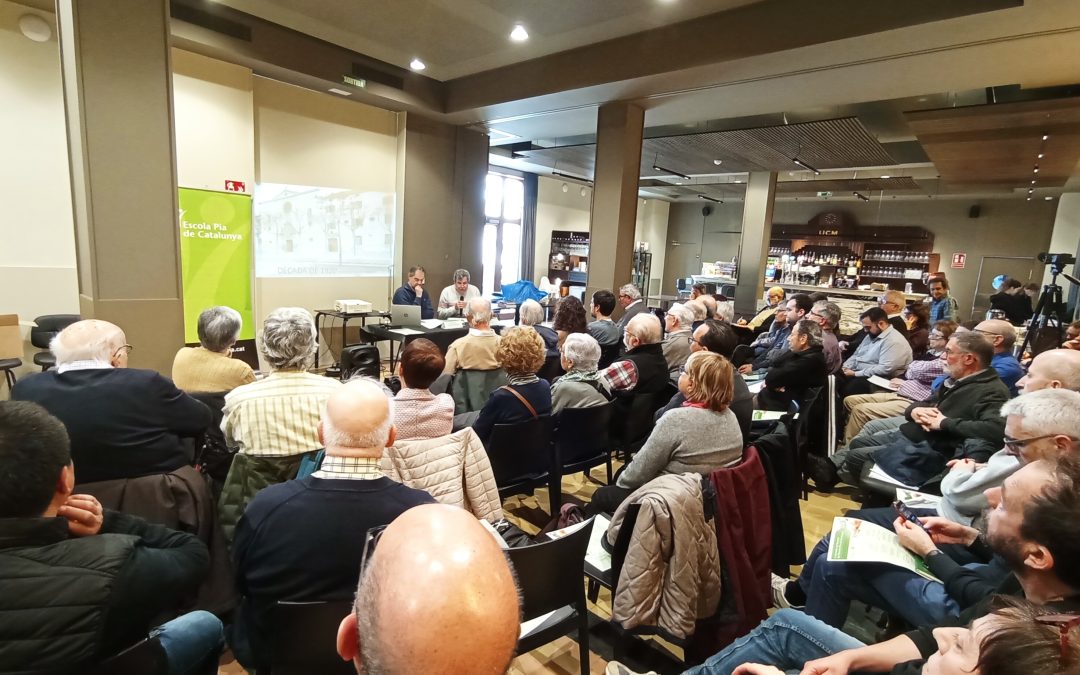
The 2nd Research Conference on the Pious Schools in Catalonia highlights the close ties between Mataró and the Institution, with a successful turnout
More than fifty people took part in the second edition of the Jornada de Recerca sobre l’Escola Pia de Catalunya, promoted by the Provincial Archive of the Institution, held on Saturday, 22 March. The Cafè Nou of Mataró provided the setting for the latest research on the history of the Pious Schools and their deep roots in the region, with special emphasis on the ties forged over the centuries with the capital of the Maresme.
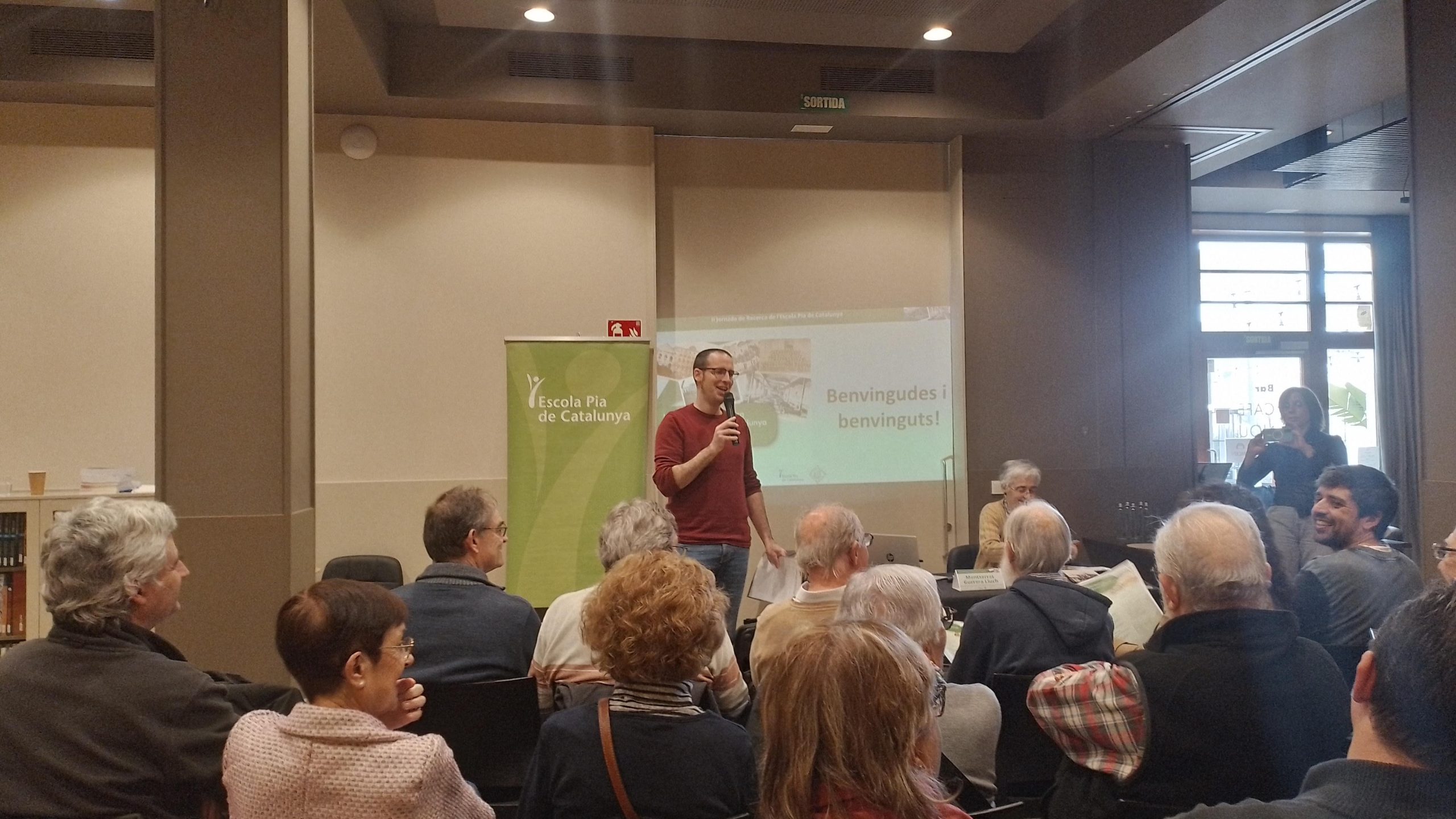
The event was attended by María Beatriz Delgado, Councillor for Education, Vocational Training, University and Sports of the Mataró City Council, who welcomed the participants and officially opened the conference. Councillor Delgado underlined the longstanding relationship between the Order and the city, its vocation of service, and the significant number of generations who have passed through the classrooms of Santa Anna. Also present were Jordi Truñó, Headmaster of the Pious School of Mataró; Carles Ruiz, General Director of the Pious Schools of Catalonia; and Jordi Vilà, Provincial of the Pious Schools.
Mataró and the Pious Schools, a relationship with a long history
Both the keynote lecture and the first panel of expert interventions focused on the history of education in Mataró over the centuries, where the Piarists established themselves in 1737. Montserrat Gurrera Lluch, retired Professor of Theory and History of Education at the University of Barcelona, member of the Society for the History of Education, and a recognised expert on the history of the capital of the Maresme, opened the session with a retrospective on education in Mataró during the 18th and 19th centuries. Her presentation, entitled L’Escola Pia de Santa Anna i seva rellevància en l’origen de la xarxa escolar a Mataró (1737-1868) (The Pious School of Santa Anna and its relevance in the origins of the educational network in Mataró, 1737-1868), provided an in-depth analysis of the foundation and development of the local educational network.
The following presentations focused on the relationship between the city and the Pious School. Héctor López Silva, historian specialised in the study of the Church during the Early Modern Period, gave a talk on La Germandat de la Mare de Déu dels Desemparats de Mataró (The Confraternity of Our Lady of the Forsaken of Mataró). Nicolau Guanyabens, historian and head of the Archive-Museum of Santa Maria de Mataró, together with Enric Correa, a member of the same institution, highlighted the role played in the 1960s by L’Associació d’Antics Alumnes de l’Escola Pia de Santa Anna (The Alumni Association of the Pious School of Santa Anna) as a platform for social engagement and the promotion of Catalan identity. Although unable to attend the conference, the research of Quim Graupera, Doctor in Art History, researcher and essayist specialising in Catalan art and medieval heritage, was also presented. His study focused on La construcció de l’església de Santa Anna (The construction of the Church of Santa Anna).
A “cinematographic” investigation and a study related to the founder, Joseph Calasanz
Subsequent contributions centred on research into figures closely linked to the Pious Schools. Starting from an old “cursed” photograph found at the bottom of a trunk in Cuba — where the Pious Schools had a significant presence until the early 1960s — Marga Ortiz Morillas, archivist, librarian, and director of the magazine L’Esquitx, presented her work entitled I a tu qui t’estima, carnisser? (And who loves you, butcher?). This research led her to contact the descendants of an unknown soldier who appears in the photograph, which carried only a handwritten note warning against its dissemination. Ortiz captivated the audience with a dynamic presentation that raised more questions than answers about the photograph and its protagonists.
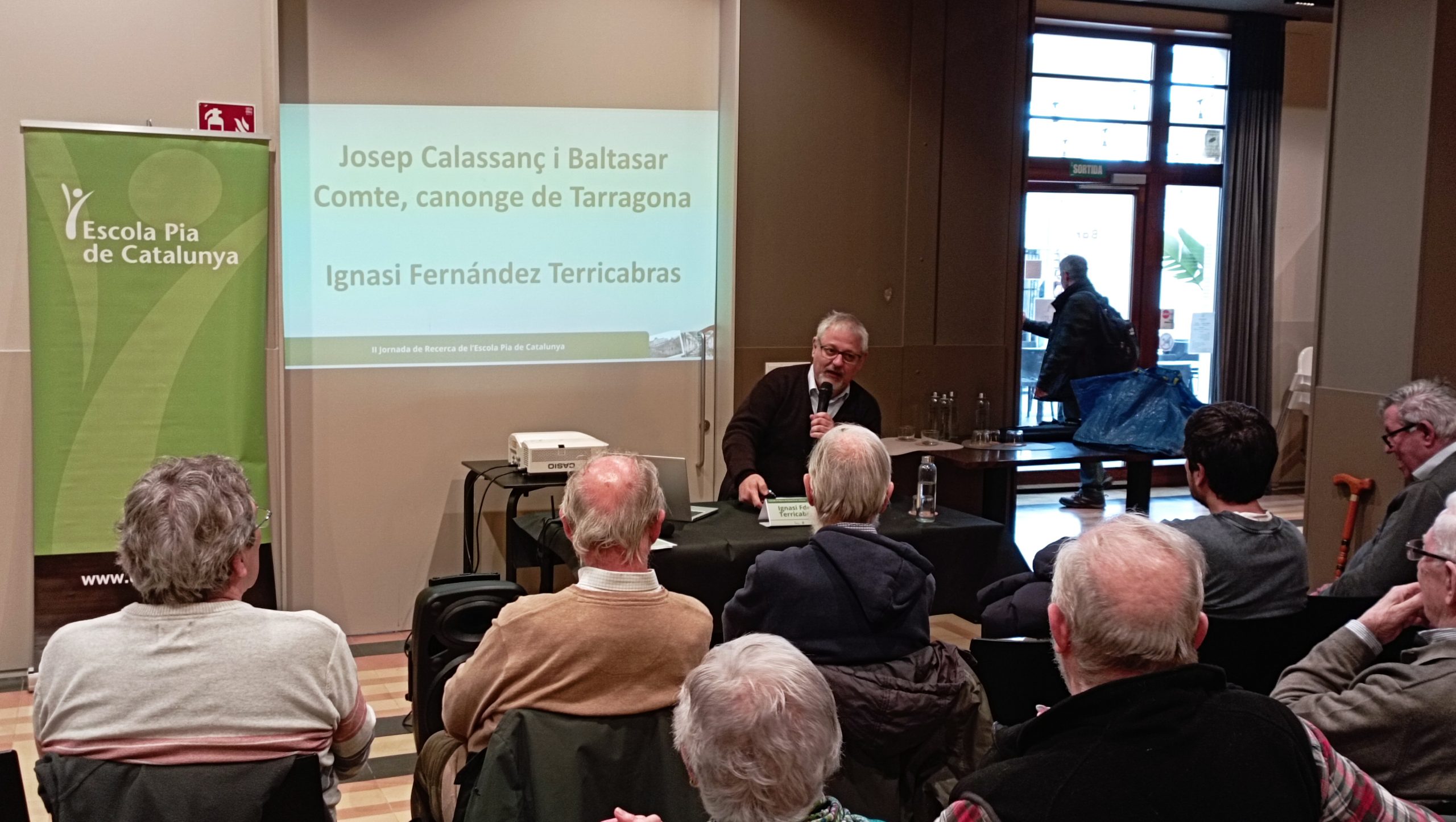
The founder of the Order, Joseph Calasanz, was the focus of the next presentation. Ignasi Fernández Terricabras, Professor of Early Modern History at the Autonomous University of Barcelona (UAB), Doctor in History and specialist in the History of the Church in the Early Modern Period, analysed the relationship between Josep Calassanç i Baltasar Comte, canonge de Tarragona (Joseph Calasanz and Baltasar Comte, Canon of Tarragona). Comte had a biography marked by several scandals and legal proceedings. Why then did Calasanz end up lending him a sum of money shortly after arriving in Rome in 1592?
Moià, school or field hospital?
The third block of presentations focused on stories related to different Pious Schools. Elvira Permanyer, librarian and member of the Modilianum Association of Moià, transported the audience back to the years of the Spanish Civil War with her study entitled L’Escola Pia de Moià com hospital de les Brigades Internacionals (The Pious School of Moià as a hospital for the International Brigades). Enric Sàrries Ribalta, retired teacher, author of a book on the history of the Pious School of Nostra Senyora, and currently working on a research project on the history of the Pious School of Puigcerdà, presented Els quaderns del Pare Joan Cura a l’Escola Pia de Puigcerdà (The notebooks of Father Joan Cura at the Pious School of Puigcerdà), where he gathered the personal assessments and reflections of pupils he accompanied over two decades.
Finally, Miquel Puig i Reixach, member of the Society for the History of Education and a historian specialising in modern and contemporary education in Catalonia, devoted his contribution to his research on L’escola calassància o Calassanciat (1913-1971) (The Calasanctian School or Calasanciat, 1913-1971).
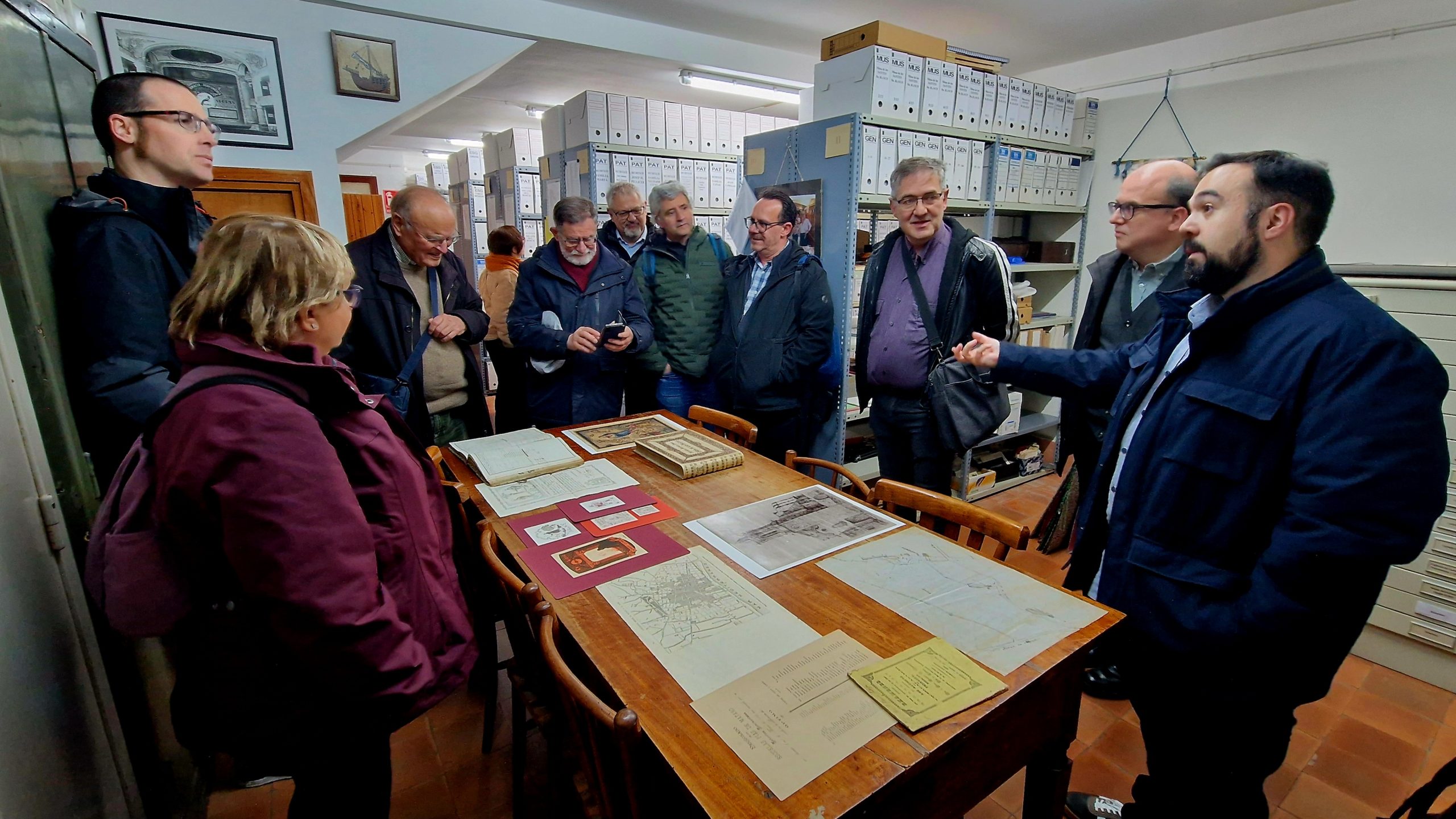
In the afternoon, after lunch, the second part of the conference took place, offered by the Museu-Arxiu de Santa Maria de Mataró: a highly engaging guided visit to the archives of the parish of Santa Maria and to the ensemble dedicated to Our Lady of Sorrows.