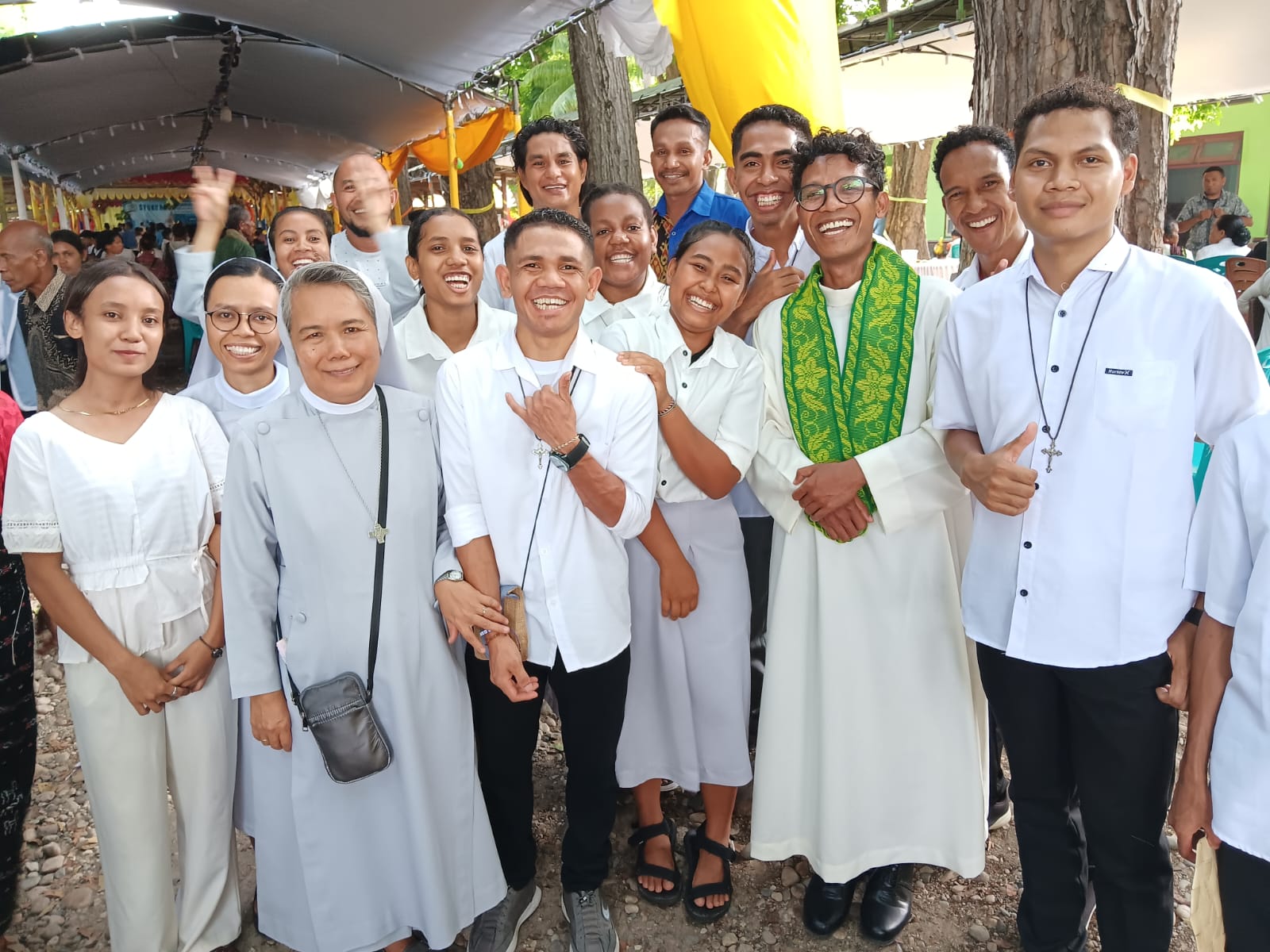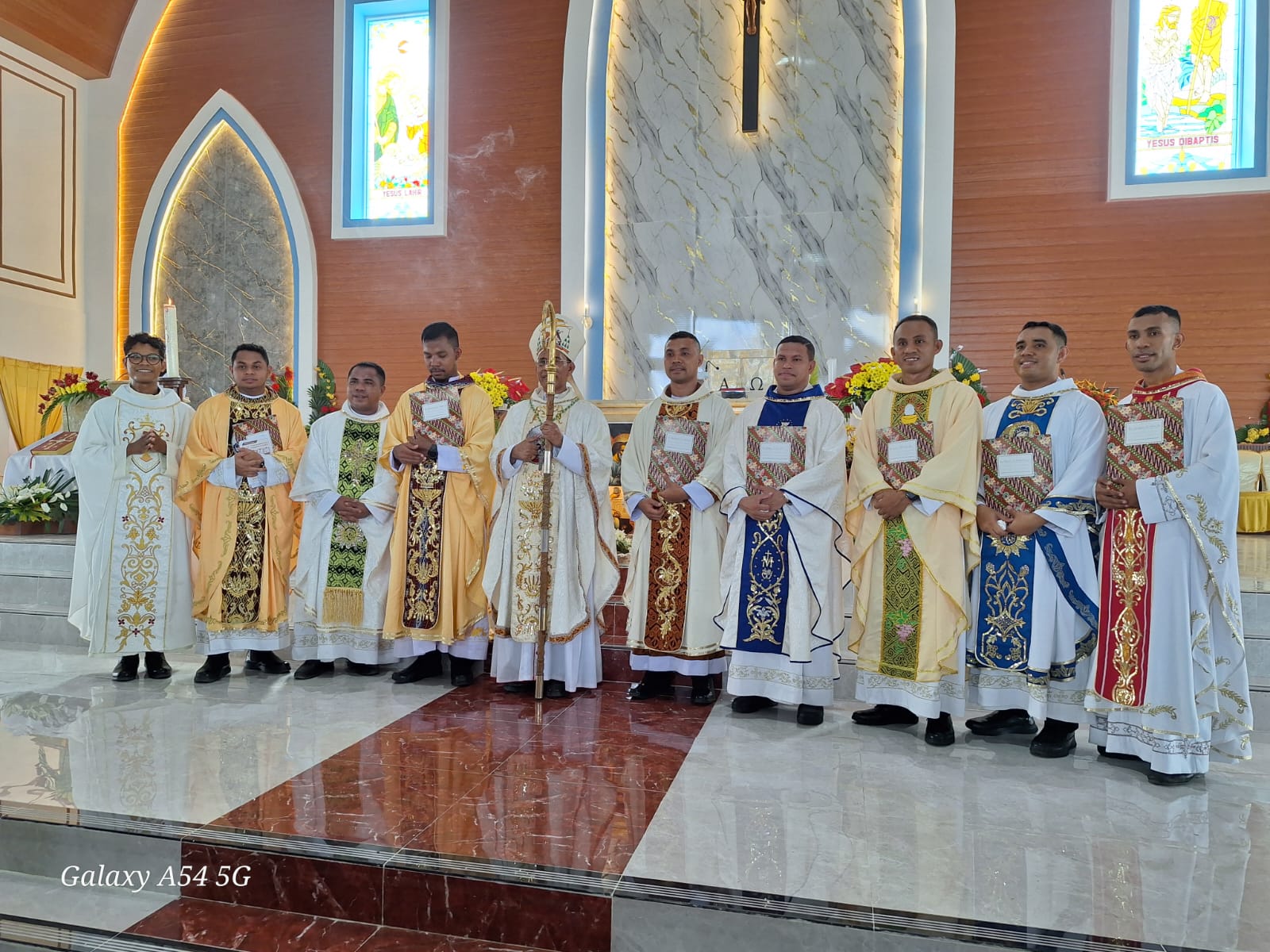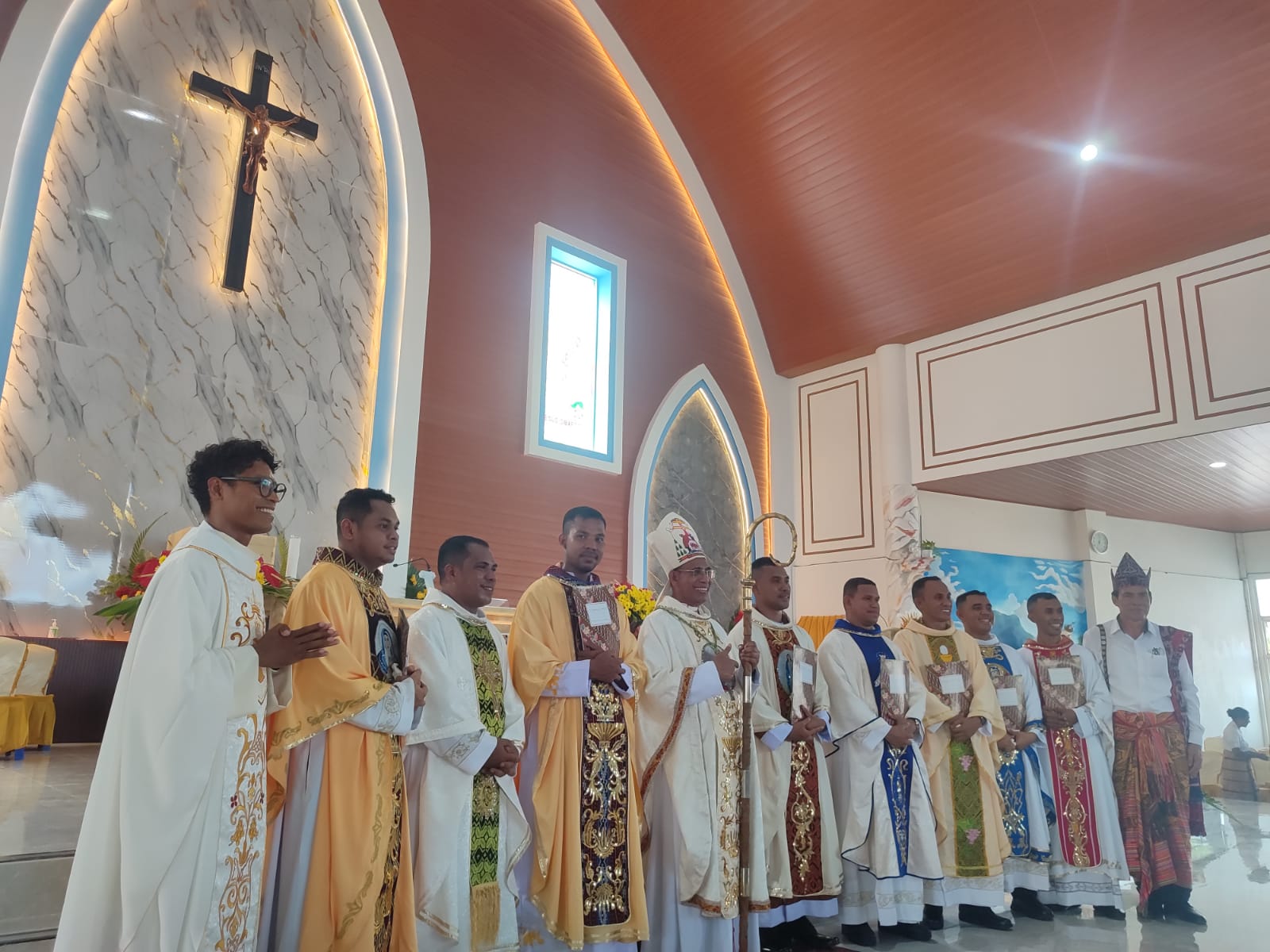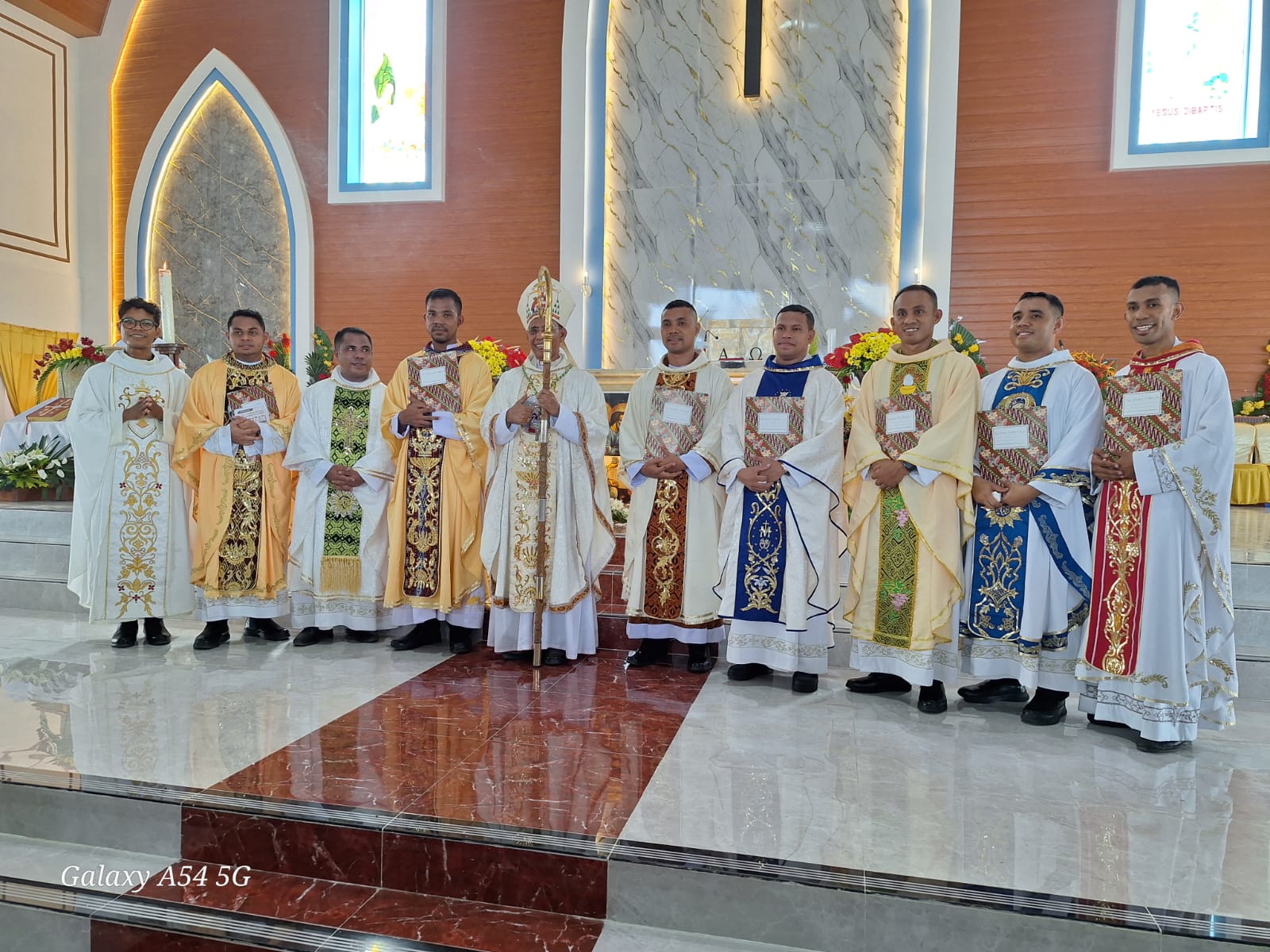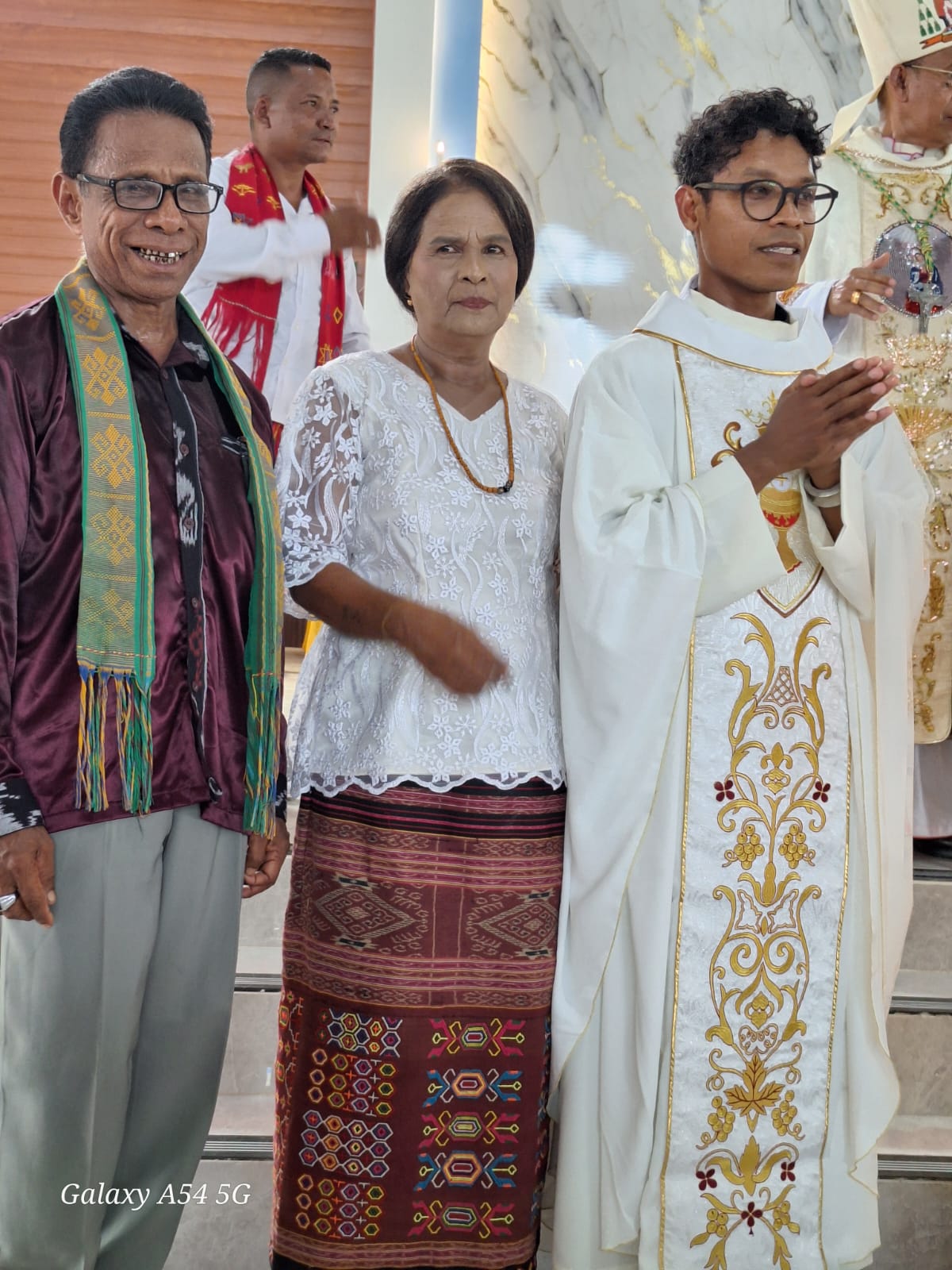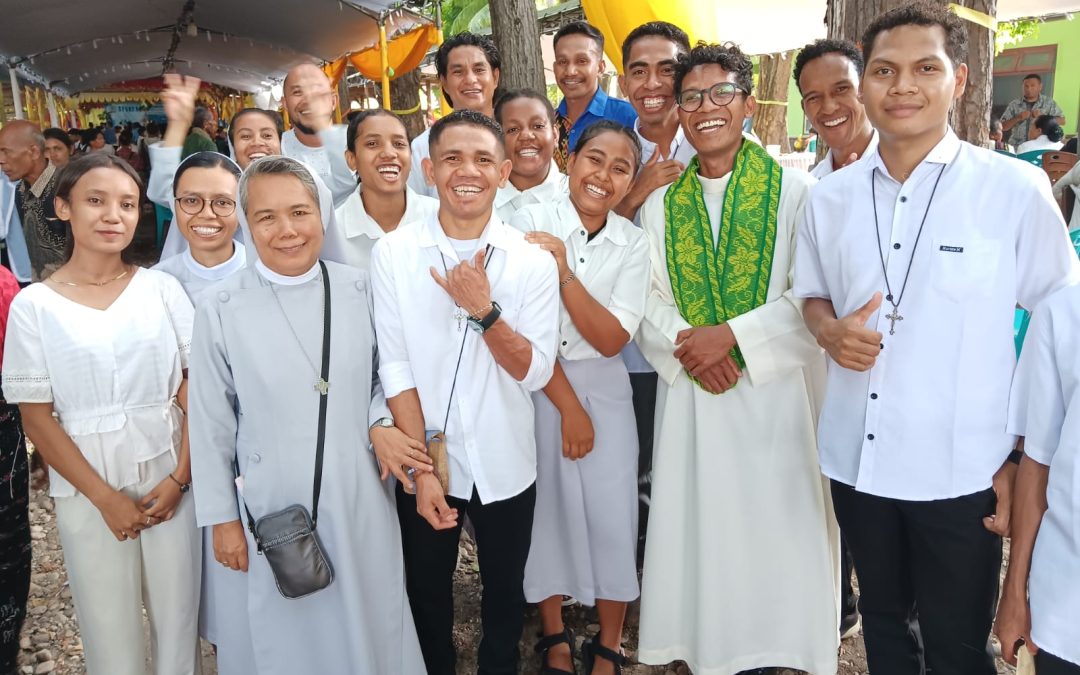
On 21 November of this year, our brother Gregorius Luan of Christ Crucified was ordained, together with eight diocesan candidates, in the Parish of Our Lady of Fatima, in the city of Betun, capital of Malaka. The ordination was presided over by Most Rev. Dominikus Saku. Around 250 priests took part in this celebration, both diocesan and members of congregations and Orders present in the Diocese of Atambua. Among that number were our Piarist priest brothers from the communities of Atambua (2), Kupang (2) and Dili (1). Also accompanying our newly ordained brother were his family members, the Piarist Sisters and their aspirants from Atambua, and our own aspirants (6), novices (5) and one junior, together with a large number of parishioners, many of whom had to follow the celebration from outside the parish church.
If we look closely at what happens around the priestly ordination, we can say that all the preparatory and celebratory elements that surround it point to a meeting of faith and tradition. There is not the slightest doubt that the sacrament received is an undeserved gift. Only God can enable and sanctify those he has chosen and make them his priests according to the order of Melchizedek. From then on, once he is consecrated, he is sacerdos in aeternum. For this reason, before ordination the future priests are given moments of intimacy with God in ecclesial communion through the spiritual exercises and the triduum.
Nevertheless, the sacramental is not celebrated outside the medium which is the cultural body in which the divine touches the earthly and transforms it into a locus sacer. God became flesh and took on human flesh. So it is also with priestly ordination. The sacrament adopts the cultural expressions of the place and makes them its own. The culture of the place, in turn, makes the sacramental an essential part of its existence.
When tradition and faith are fused into one, generating a new expression of faith incarnated in culture, they awaken in the holy People of God such overflowing joy that priestly ordination is celebrated with jubilation and solemnity. This overflowing joy finds its place in the expressions proper to the faithful people of Malaka. On the afternoon of 20 November, the future priests were received at the entrance to the city. Then each candidate got into a convertible car and was driven in procession to the church where they were to be ordained. Along the way they were received with handshakes and acclamations from the People of God. At the church door they were given a traditional welcome, ceremonial stoles were placed around their necks and they were accompanied into the church with a likurai dance. Afterwards, the blessing of the liturgical items of the new priests took place.
The celebration of the ordination itself was a true symbiosis of faith and culture. From the liturgical chants and the various liturgical dances to the liturgical vestments, everything was an expression of a faith that has become incarnate.
The joy of the people did not end with the words Ite, missa est. Those words introduce a new celebratory moment. Holy Mass finds its fulfilment at the shared table, where every gesture, every word and every dish served becomes a tangible expression of that same overflowing joy.
All that took place around the priestly ordination concluded with the Mass of Thanksgiving for the gift received, celebrated a few days after the ordination. Here, another symbolic element of profound significance, worthy of being contemplated, is the passage of the newly ordained priest through the house of his tribe. Like a hero who has just won a great victory for his people, the newly ordained is welcomed and walks in procession towards the tribal house amid dances and shouts of joy. His entry into the tribal house, to be vested with traditional attire and all its symbols, and then to be vested again with the liturgical vestments, is a supreme expression of gratitude and farewell. The new priest gives thanks to his ancestors for the life and cultural identity received, and at the same time he bids them farewell. He no longer belongs to the mother house (the tribal house), but to God. From now on, his life is a continual offering to God for the sanctification of his holy people, to educate by evangelizing and to evangelize by educating.