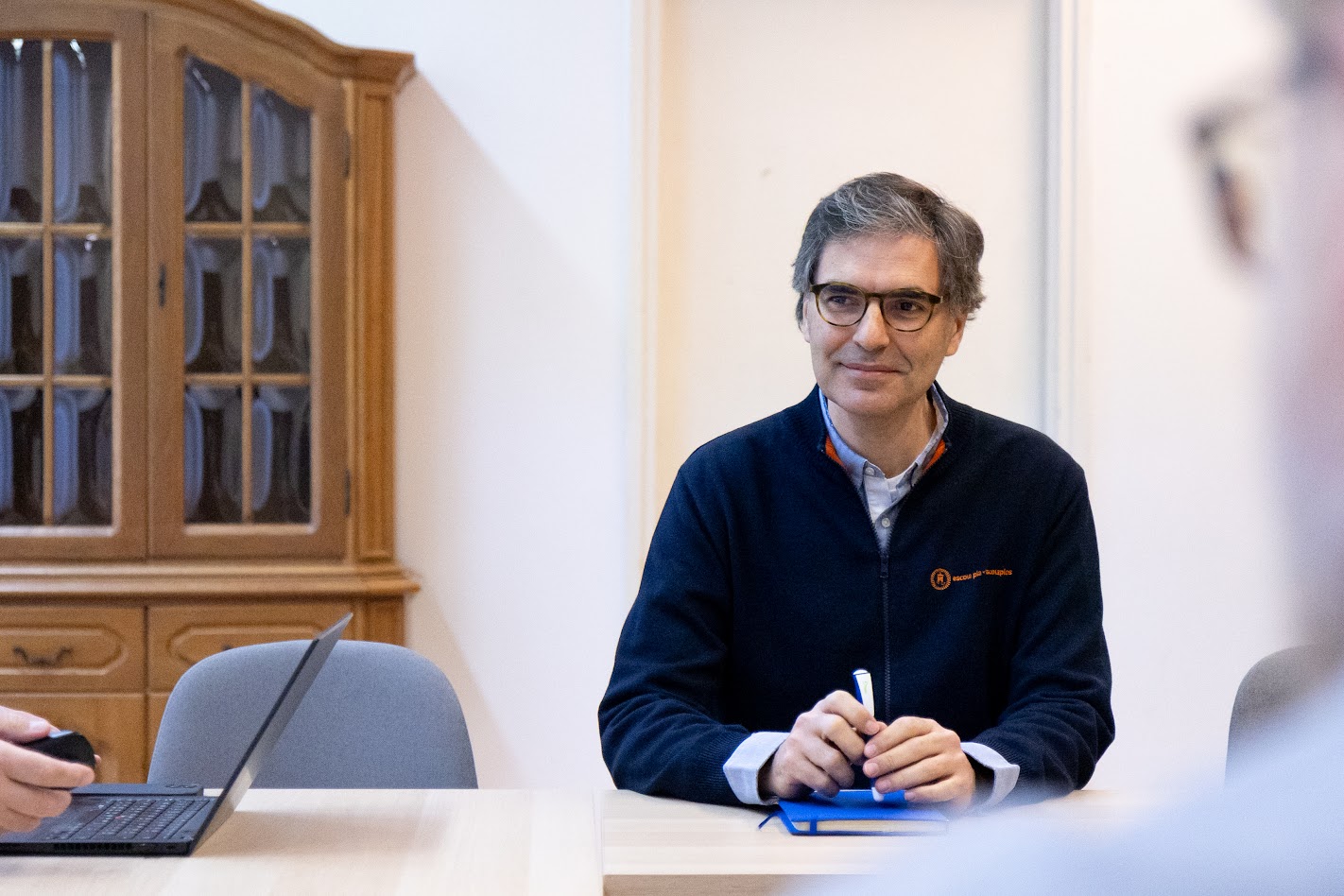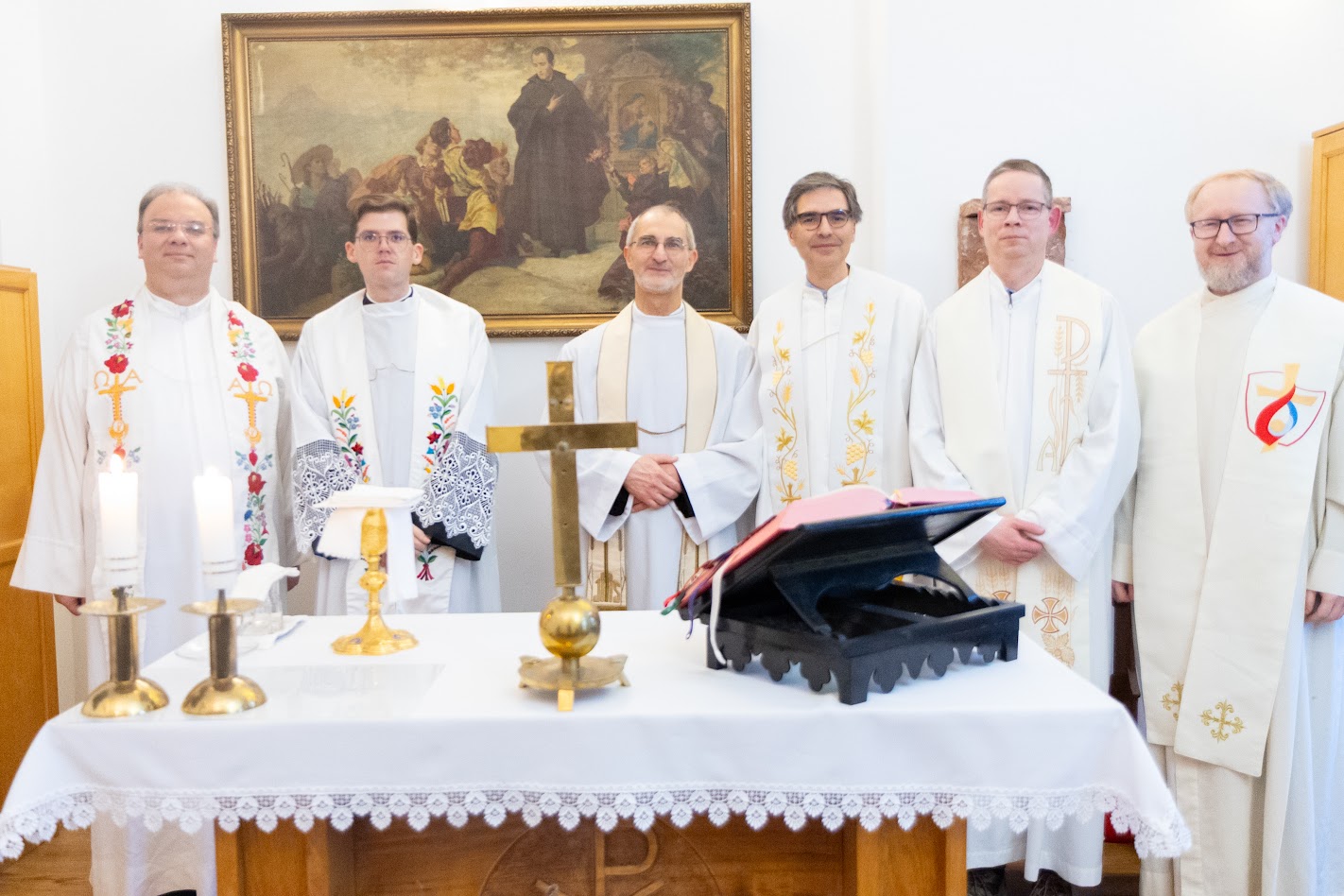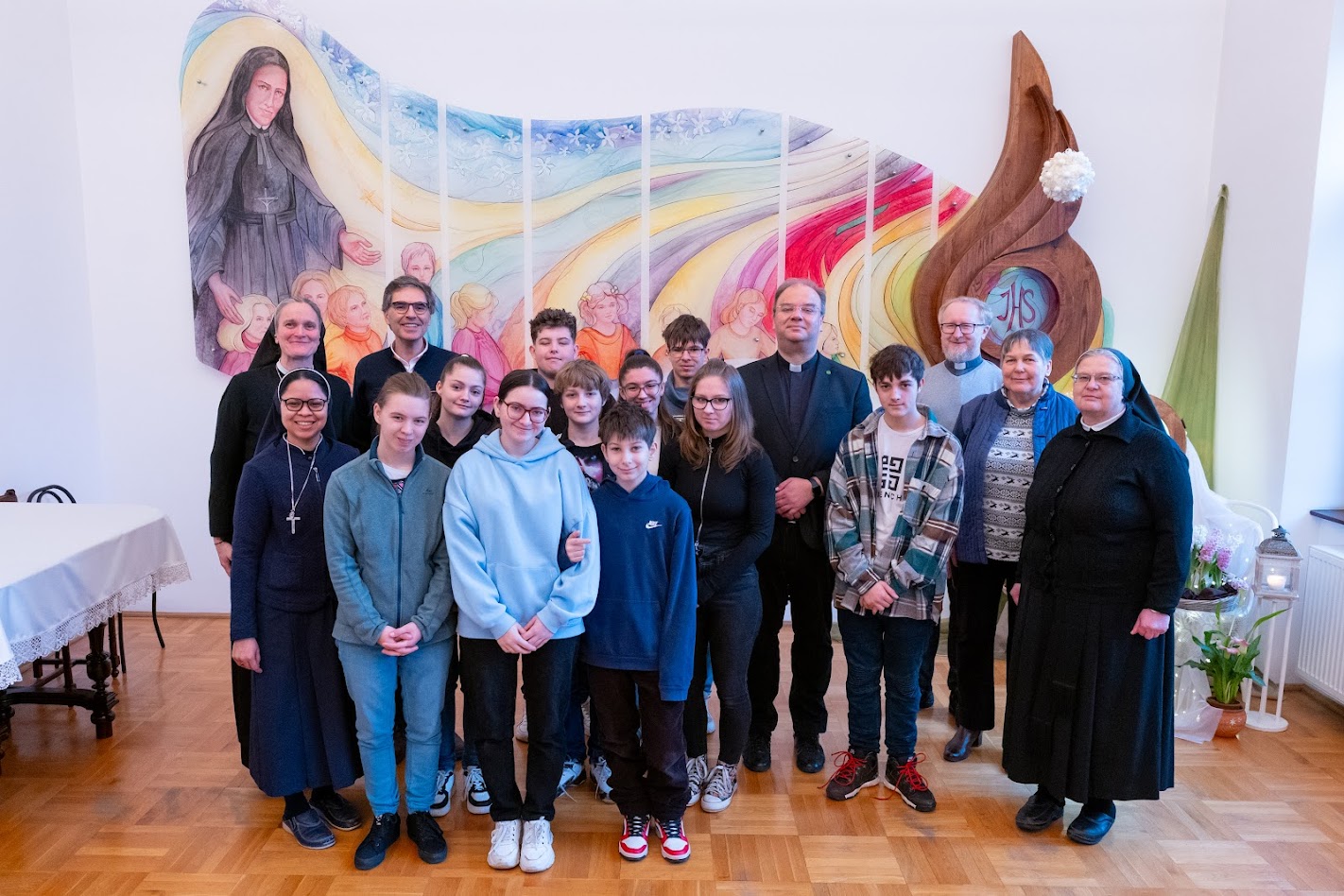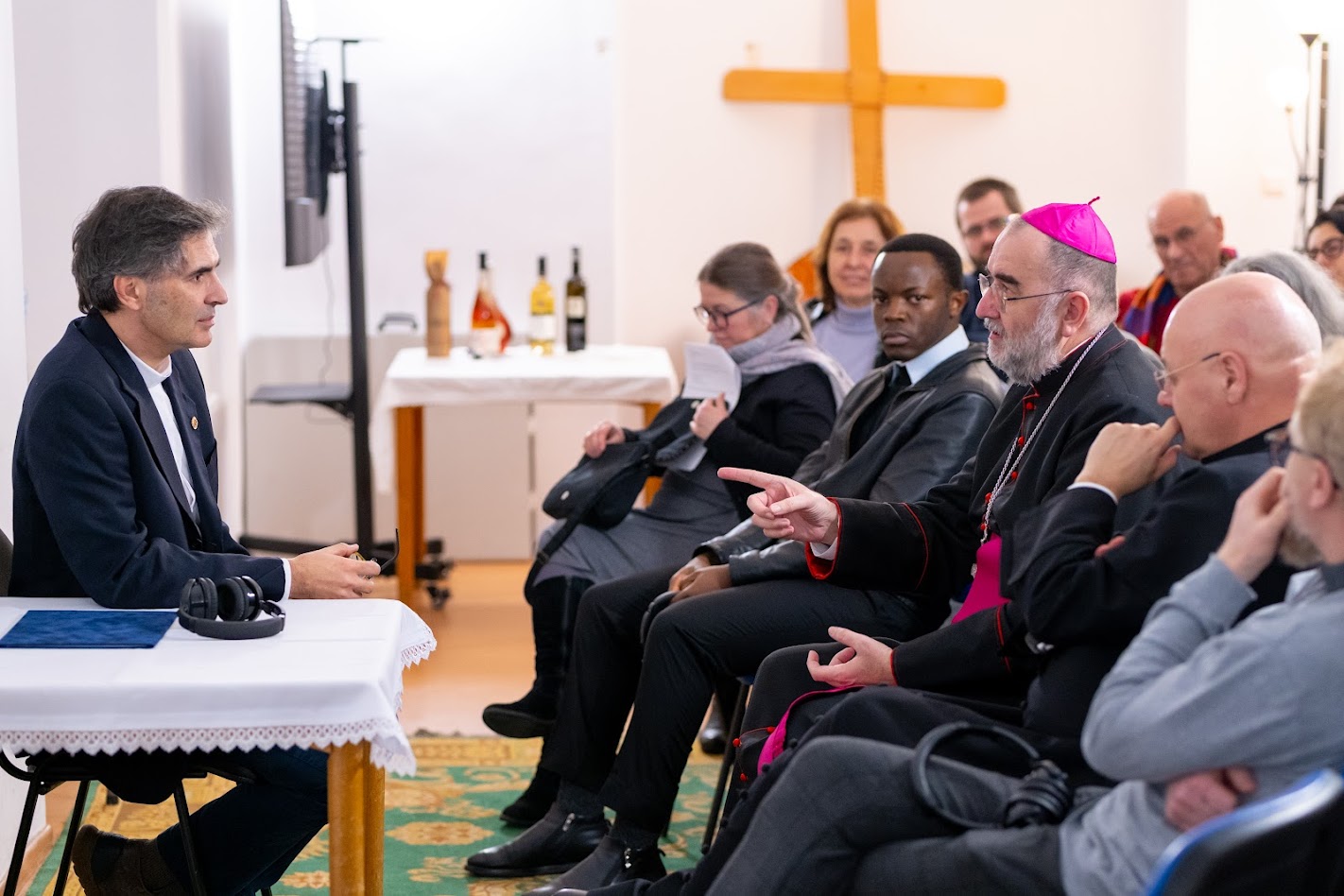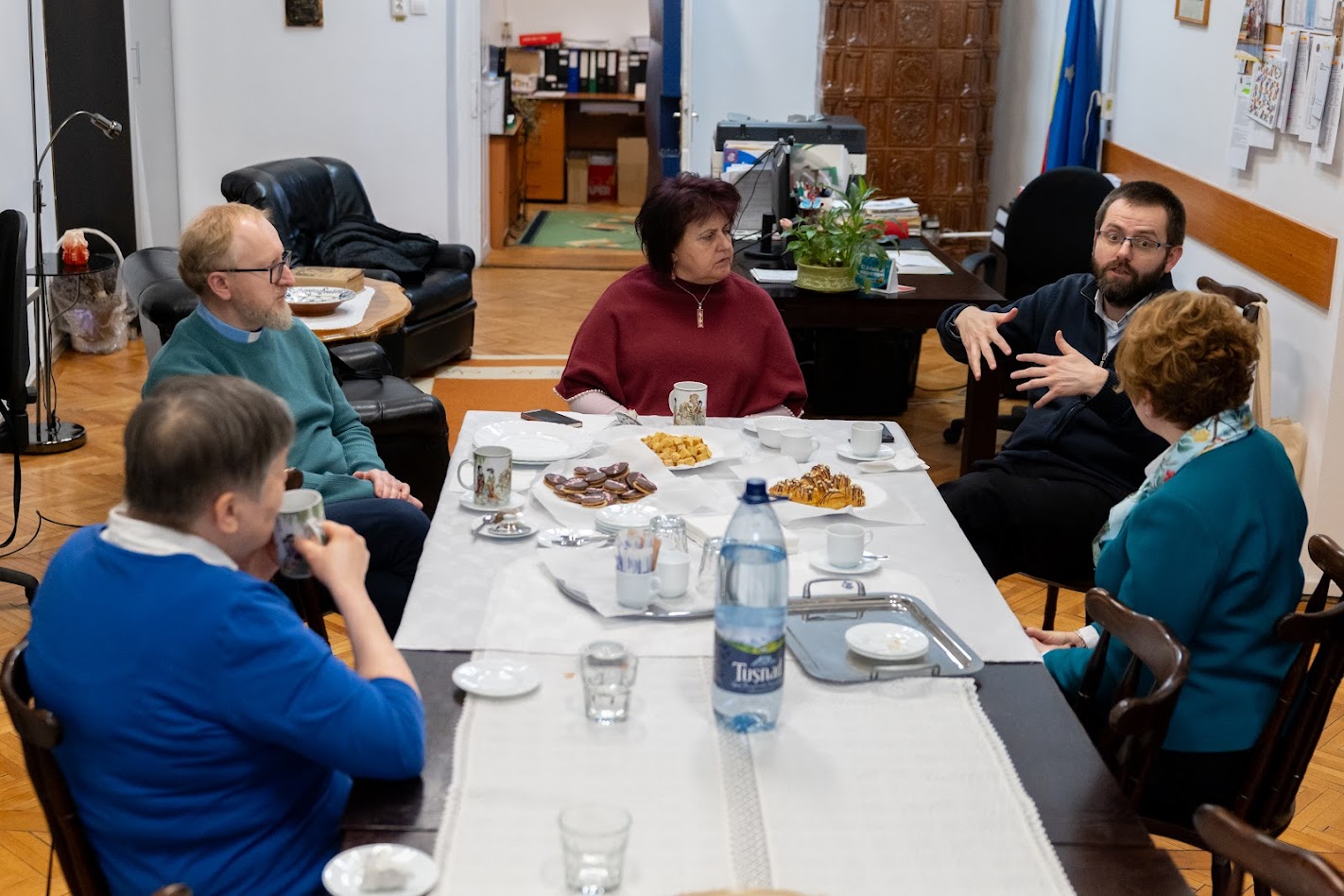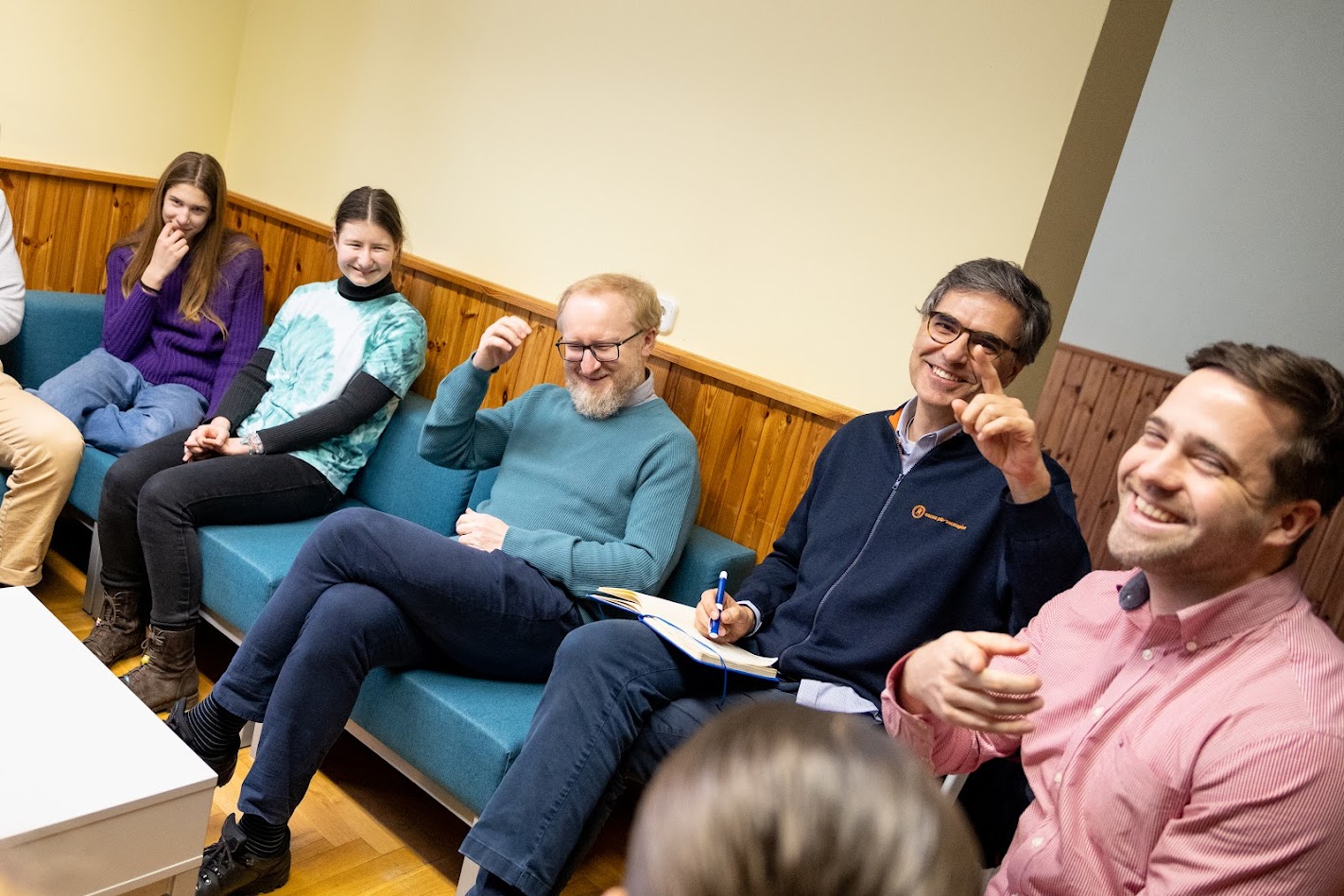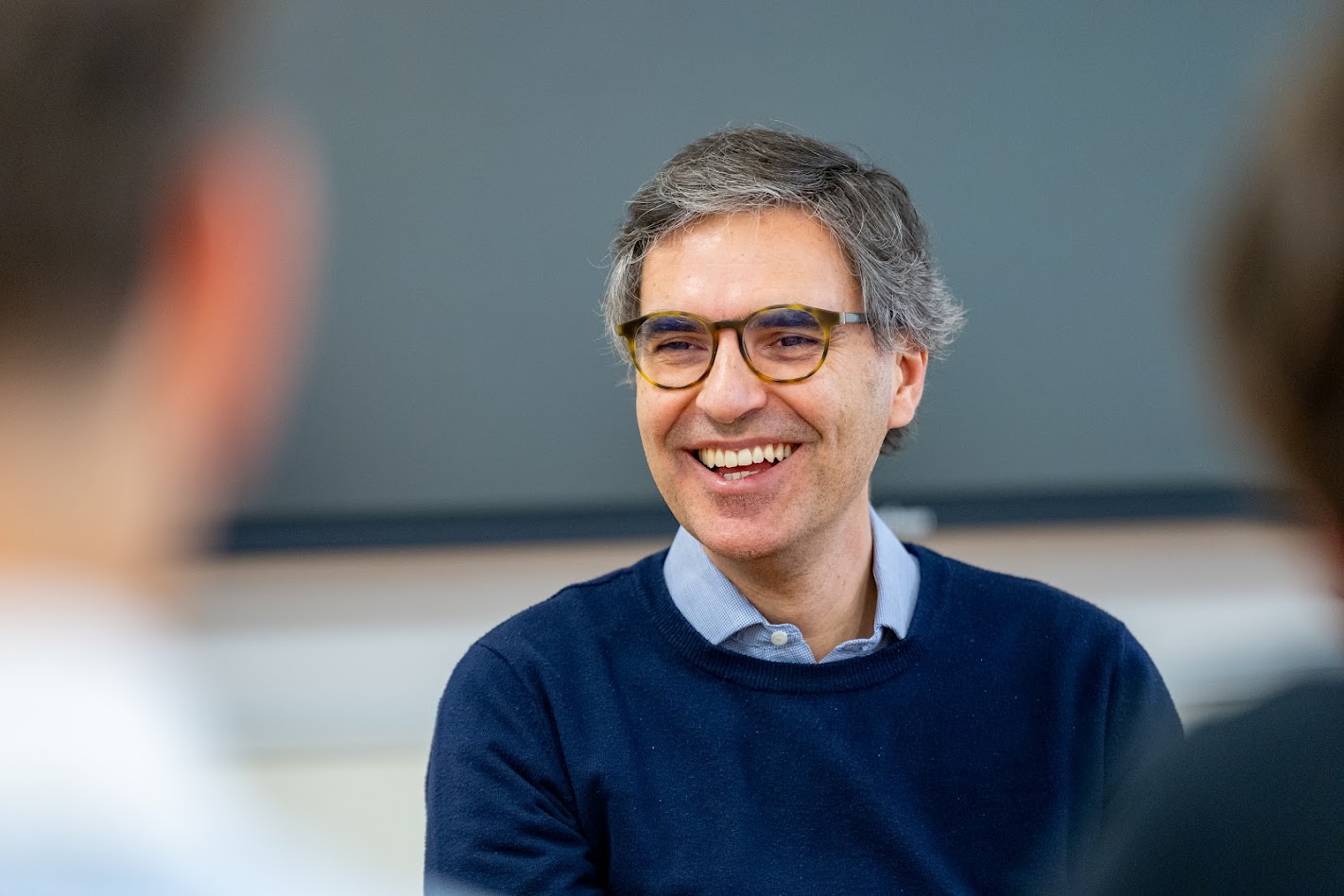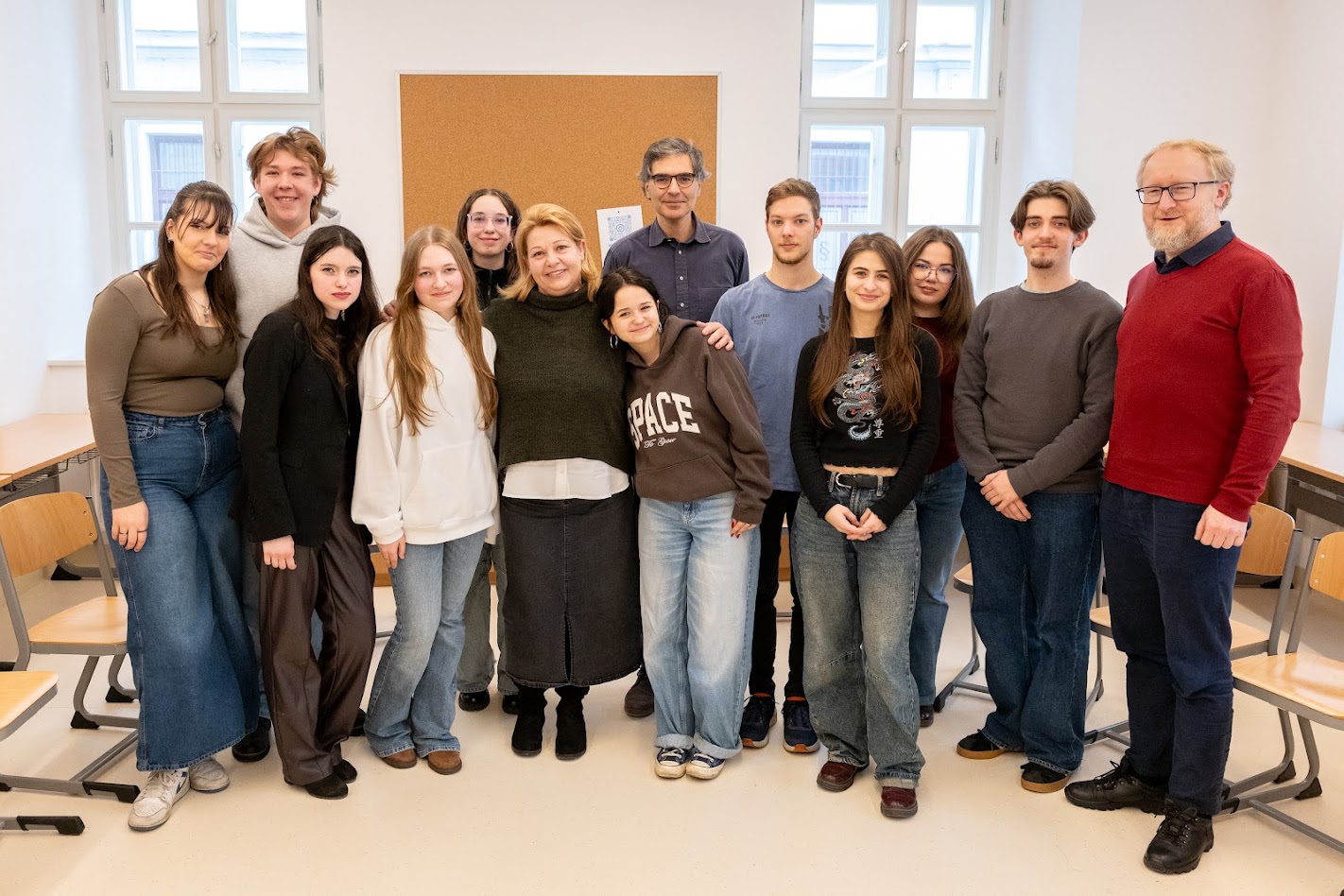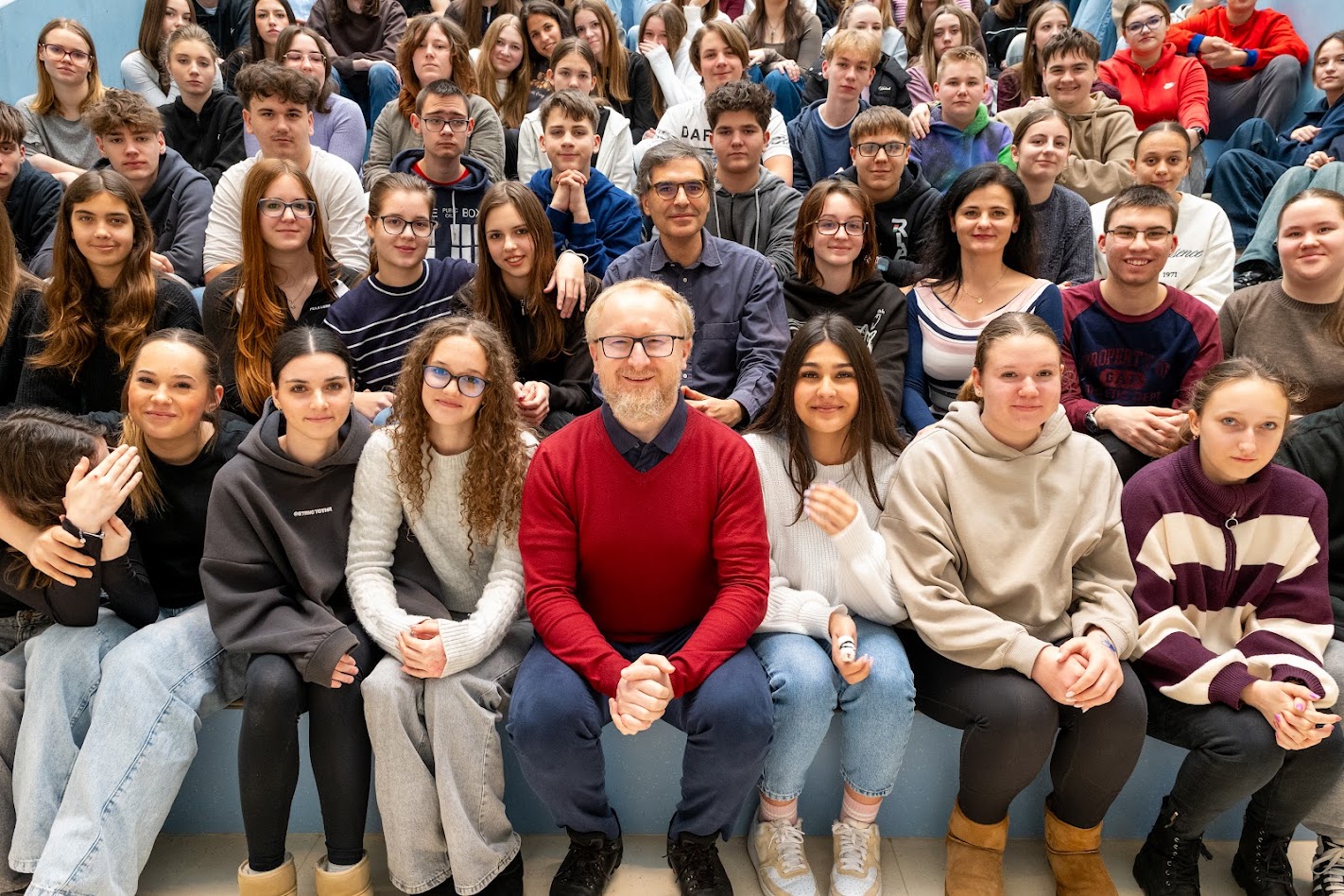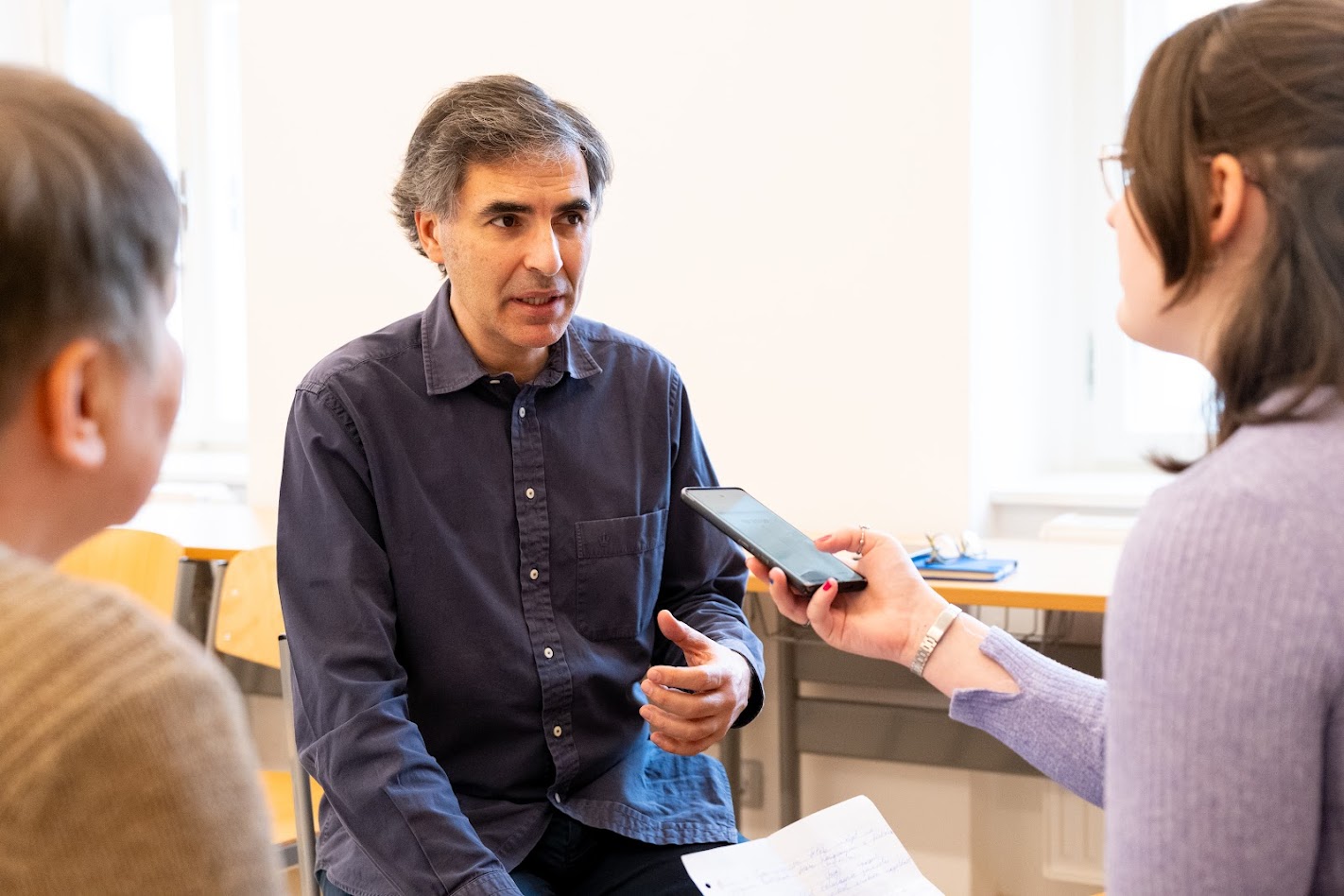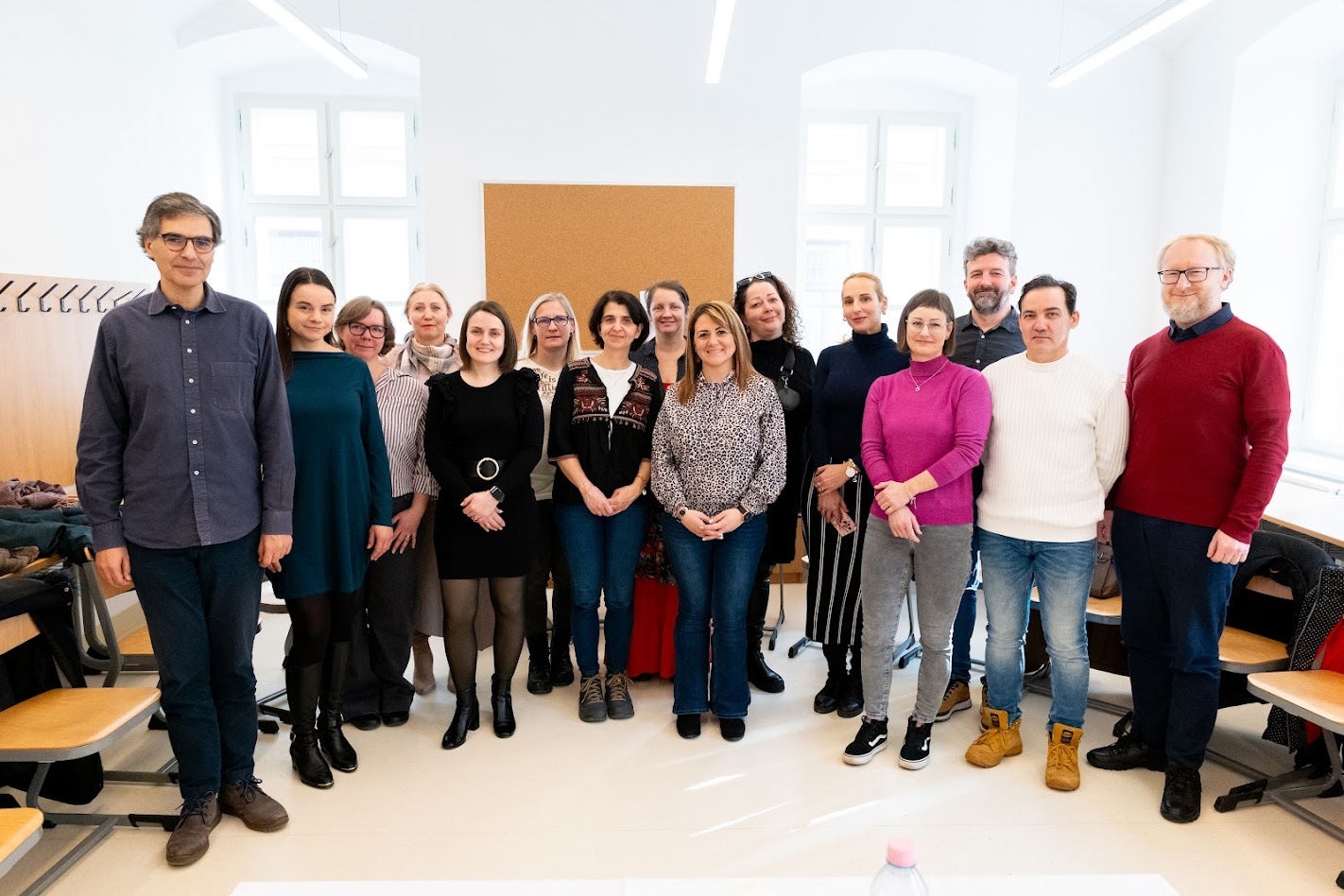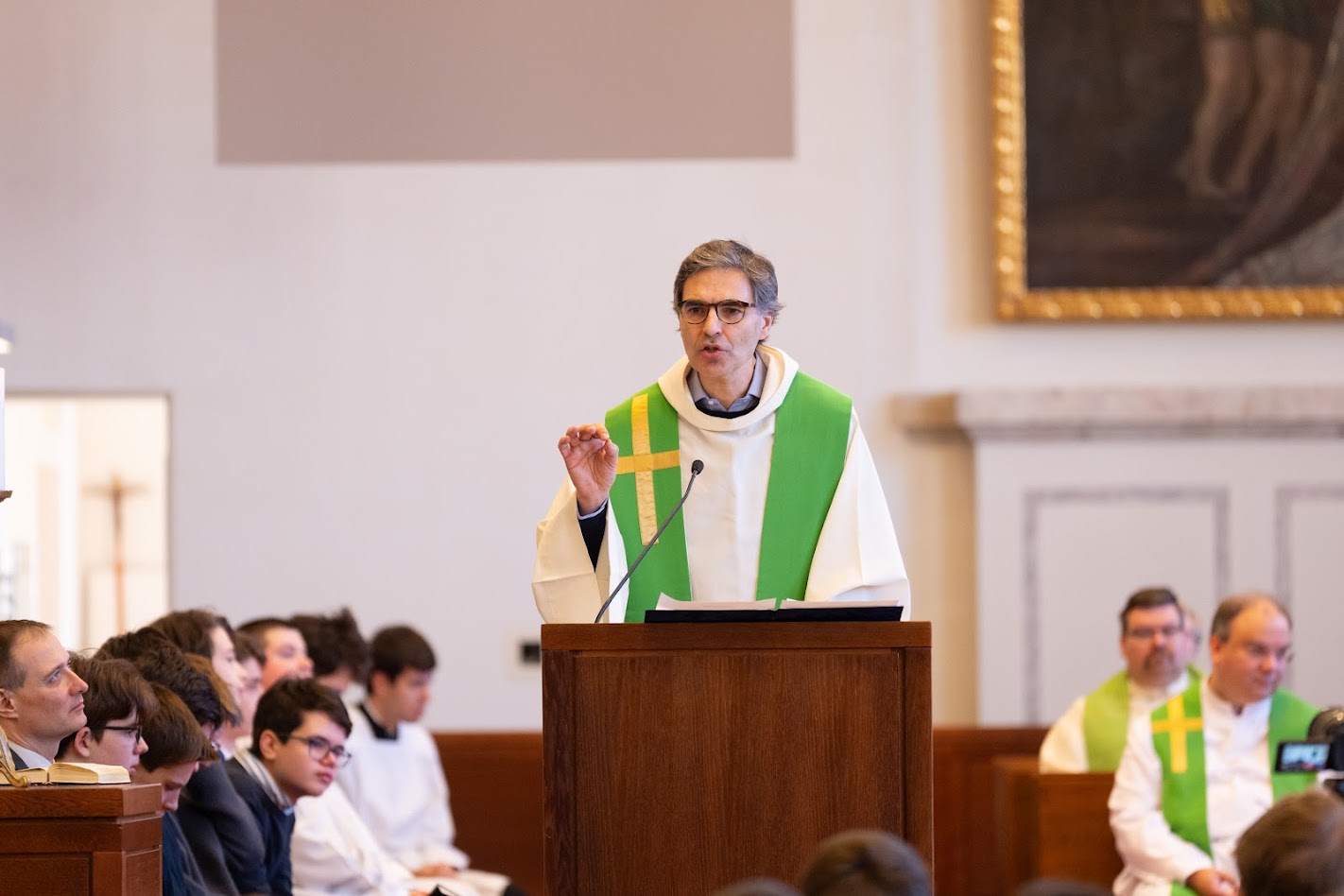
Interview with Fr Carles Gil i Saguer, Sch. P., Superior General of the Order of the Pious Schools (Piarists), recorded on 6 February 2026 during the canonical visitation in the Province of Hungary
To begin with a broad question: as the General Visitation draws to a close, what impression do you have of the Piarist reality in Hungary?
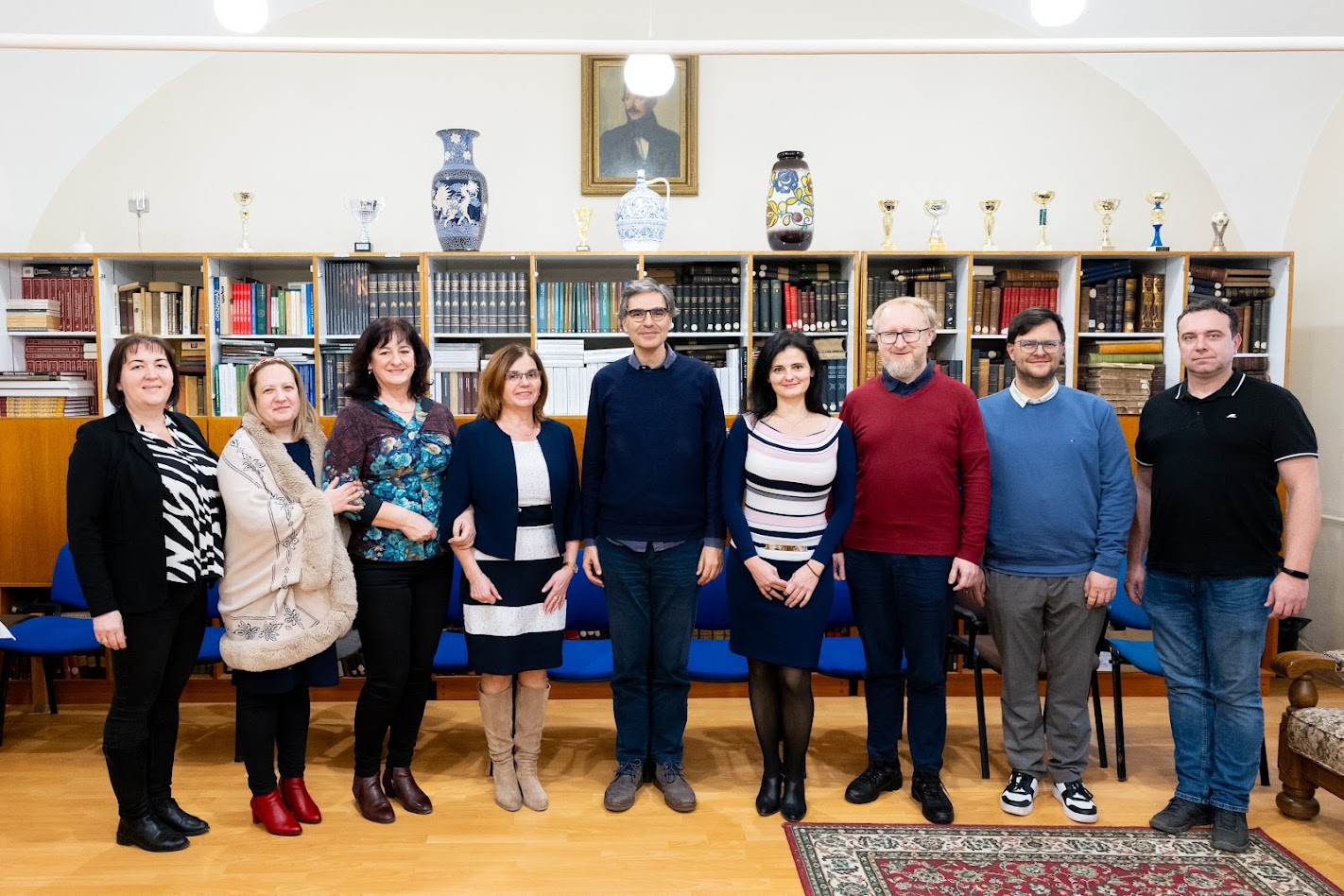
First, I would like to thank the Provincial, because he had truly prepared the visitation very well, with balance: going to places where we met with more teachers and to places where we spoke with fathers and mothers. In short, you can already see, even in the timetable, that it has been a very well thought-out and well prepared visitation.
We have enjoyed it greatly; we have lived it with joy, because it has enabled us to get to know not so much the Province’s extent, but its depth. This time it was not a matter of jumping from city to city simply saying “hello”, but of going from one Piarist presence to another. And every time we have been somewhere, every time we have had a meeting, we have spoken with people who were prepared: not only prepared for the meeting, but with a day-to-day life that is well thought out and well worked through. That is the great impression.
During your stay you spoke with many people about the Piarist presence in other countries and continents, as well as about some new projects and plans to found new centres. How do you see the place of the Province of Hungary within the universal Piarist community?
First of all, communion in the Order is fundamental for us. That is why we insist so much on something very concrete: following one another, following our publications, to see where there is life; that is, where Piarist life is emerging because there are more vocations, or because we are working on pedagogy in a very particular way, and also in order to have examples.
I think the role of the Province of Hungary can be diverse; it can be supportive, for example, by sharing knowledge. It is a centuries-old Province. It is a Province that has had great Piarists and continues to have great Piarists, with very solid and committed lay people, in sharing matters of pedagogy or pastoral care.
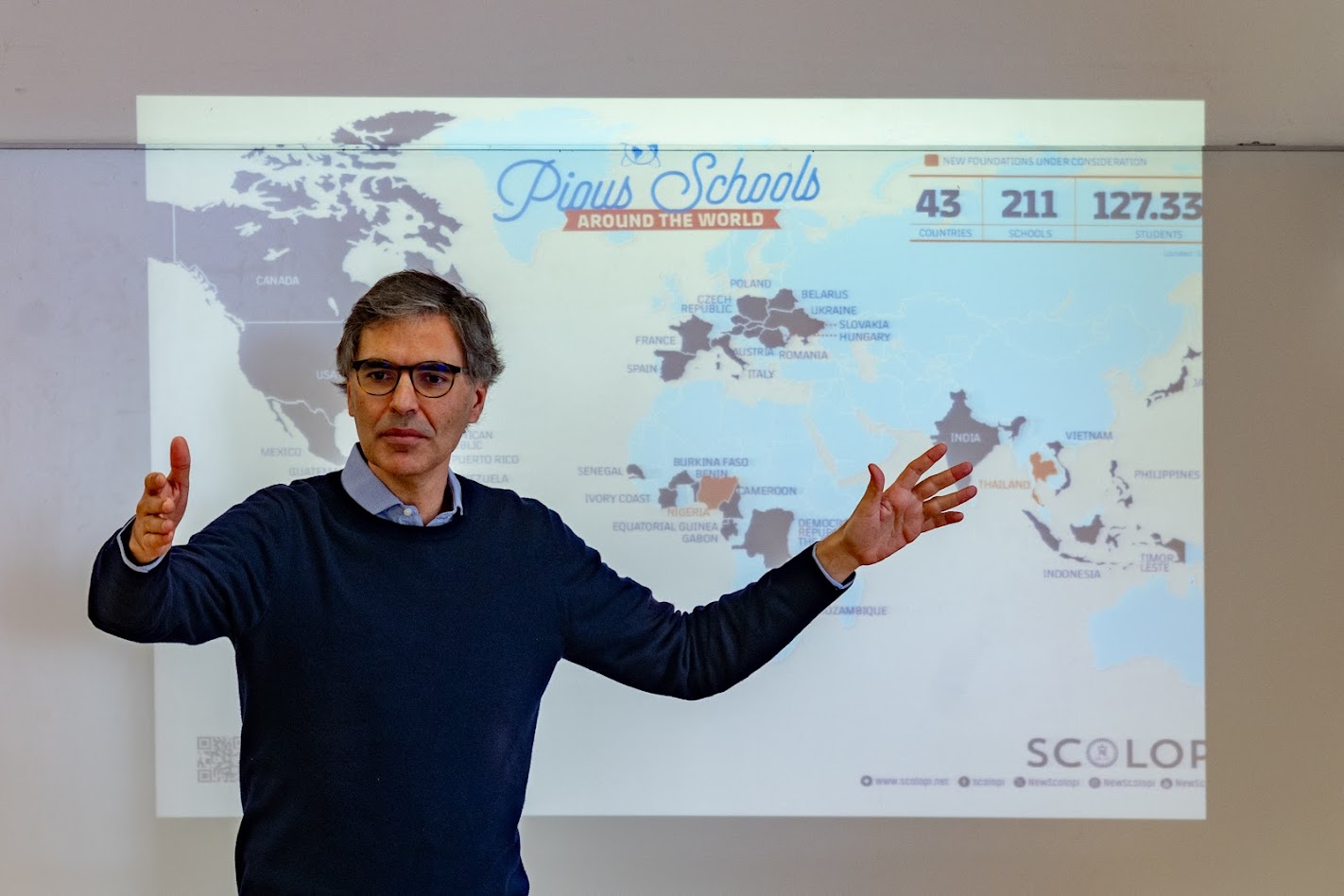
The second aspect is, quite literally, helping to found, for example, because it shares some of its people: either because some can be sent somewhere—and recently the Province of Hungary has done this—or because some people collaborate in international projects. I am thinking, for example, of the Alumni project, the Calasanz project, and also integral sustainability, areas in which the Province of Hungary is very directly involved. I believe that here we can see how the Province of Hungary is very connected with the Order.
Regarding foundations, I would like to add a nuance. And this is something I have tried to underline: we do not only found in new places, such as Asia or Africa; we also found in Europe. In the last ten years, in Europe we have founded more than ten new schools. That is to say: there is life in Europe; in Europe we are founding in new cities.
We can found because we have new projects, and the Pious Schools of Hungary found because they have new projects of pastoral care and of a more social approach. And the Pious Schools of Hungary found because they rethink themselves. That is what, some 20 or 30 years ago—in the 1990s—we called refoundation: thinking again in order to respond better to needs. Therefore, Europe founds because there are new social and pastoral projects, and Europe founds because it can rethink itself.
Over the course of the visitation we have travelled to eight presences, in addition to the sisters’ centre, which legally does not belong to the Province but also shares the charism. In this way, you have been able to see different kinds of service: from the youngest to university students; high-level schools and educational projects for children also in situations of disadvantage; parishes, university pastoral care… everything. In the light of all this, how would you define the mission of the Hungarian Province?
The first word that comes to mind is alive. The mission of the Piarist Province of Hungary is alive, and this is fundamental, because it is a deeply evangelical word: the Lord comes to give life. The Province of Hungary exists to give life—as you have said very well, by the way—to children, young people, pupils, adolescents and families.
There are very interesting projects, such as the extracurricular work, for example, in Sátoraljaújhely. In short: work camps, summer camps… so many things.
And this makes it possible to underline that today, in the year 2026, and also in the future, the Province of Hungary has to think of itself in an integral way. You have the good fortune to live in a country that is not as large as Brazil, and that means the distance between communities and presences is not so great. Let us make the most of that. Let us think of ourselves as a Province. That allows us to complement one another much more.
Perhaps, because of history, because of buildings and property, there are communities or schools that cannot give more of themselves; that is, perhaps they can offer only the educational dimension, without being able to offer the social dimension, for example. It may be because of history, sociology or the kind of school. However, if we think of the Province as a whole, if our sense is not only local but provincial, we see how we can compensate: in the school where it is possible, one can be more social; and where there are parishes, pastoral care can be developed more strongly.
So I believe that the grace of thinking as a Province is the grace of finding a better balance in the three great Piarist pillars, which are education, pastoral care and social action.
On another occasion you said that Piarist identity naturally arises from the Calasanzian charism, but that it is also in continuous development. That is why we have very diverse forms of expression. So, how would you sum up that Piarist identity today?
Look, in two words. First, the phenomenon of updating identity or—as the Church would say since the Second Vatican Council—making an aggiornamento; I like to call it creative fidelity.
Fidelity because, of course, we are Piarists. So it makes no sense to think of any kind of community, project or programme that is not Piarist. If we do something, it has to respond to the Piarist charism, but adapted especially with two parameters: time and locality; and also with sociology, macroeconomics and poverty. Therefore, a great deal of creativity is needed: the ability to adapt the charism while remaining faithful to the Piarist charism.
And the Piarist charism, fundamentally, consists in understanding very well what the socio-educational, existential and faith needs of children and young people are, and in offering a good response. Joseph Calasanz founded the first school, Santa Dorotea, by responding to a need. In that sense, we Piarists have a charism that is very sensitive to needs, and we have to understand very well what is happening: to listen to people, to families, to towns, to the People of God, to adolescents… in order to understand their needs, their spiritual thirst, for example, and to be able to offer a response.
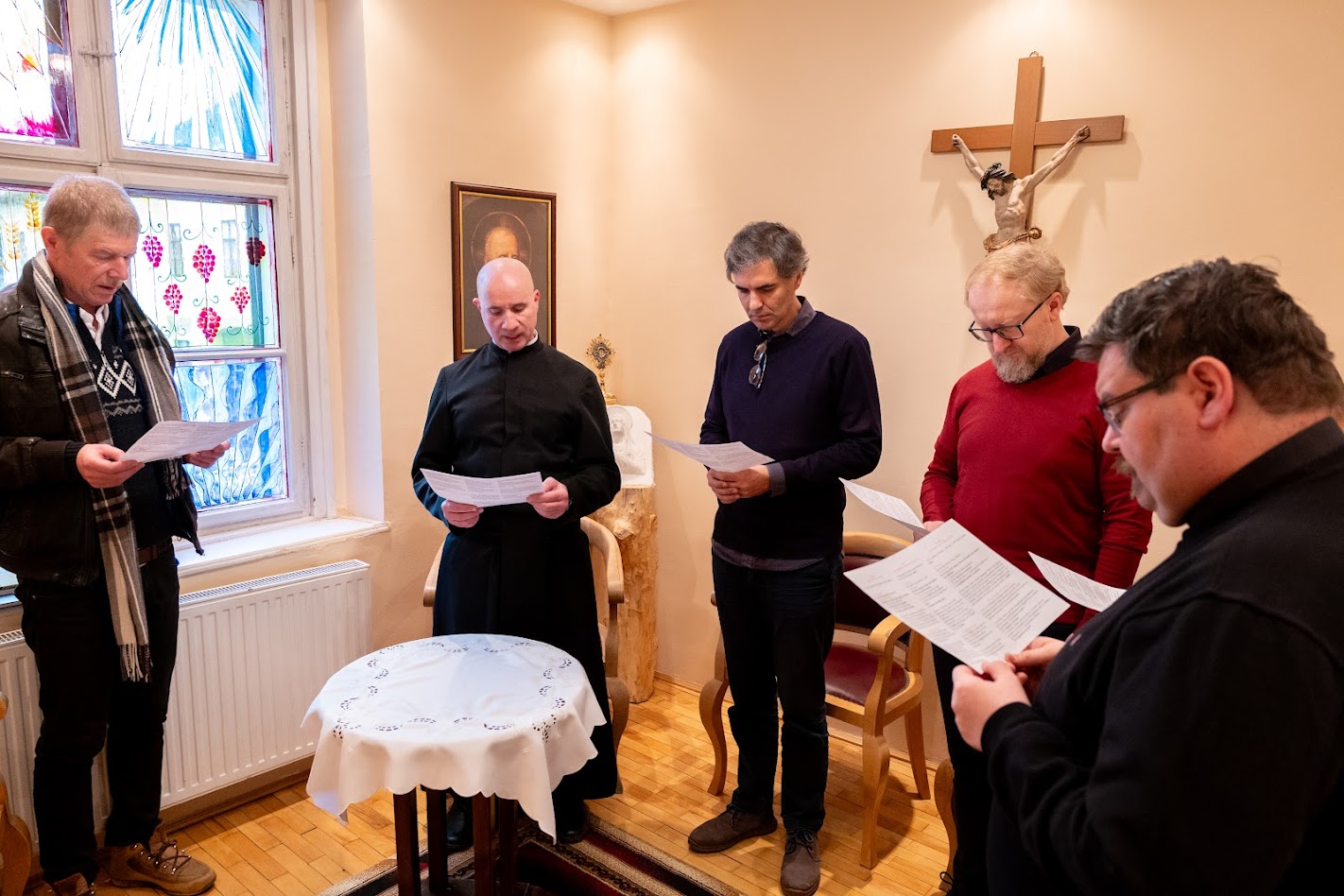
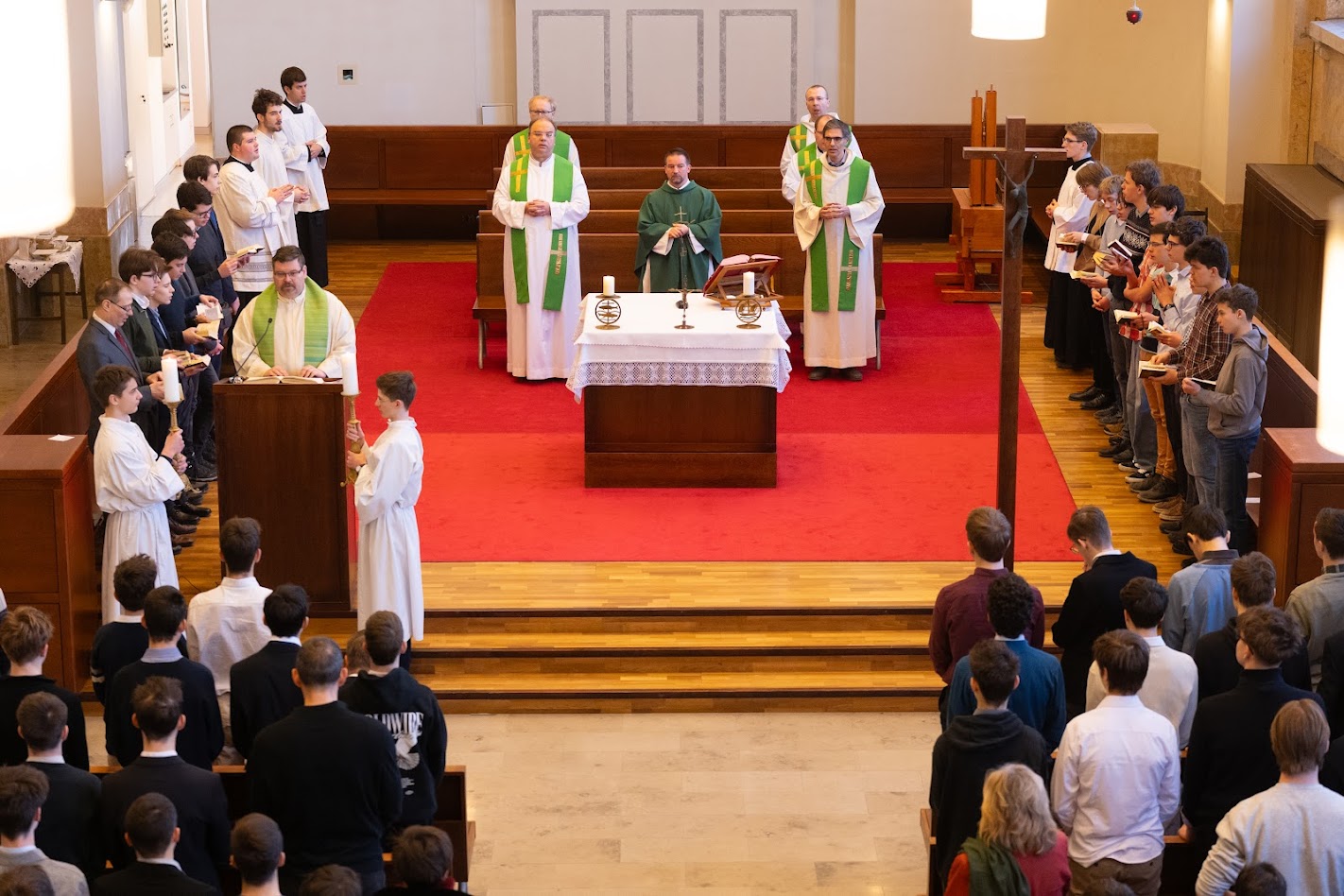
The Piarist charism is a charism that, over the centuries, has expressed itself in three faces: the educational, the pastoral and the social. Because what it seeks is to respond to that need through the educational world—which can range from a residence to a school or a university—through the social dimension—by means of a programme, from a simple scholarship scheme to volunteering, a more sophisticated project or a mentoring project—and through pastoral care: through the Calasanz Movement, which is a project very dear to the Piarists, but also through parishes, carefully prepared liturgies, prayers and Eucharist where pupils can feel themselves in the presence of God, which is what is fundamental.
—So, as we have already mentioned, we have seen different kinds of service. You always say that you consider what a community is doing to be very valuable, whether it is a school for elites or another kind of centre. But is there any type of service to which you give special importance, and which you consider a priority to strengthen or to promote more actively?
—Yes, of course. But perhaps it is not so much that I consider it a priority, as that Calasanz considers it a priority. Because we are speaking precisely about charism and, logically, about how we interpret it and how we adapt it.
If we draw close to Calasanz, we see that he had two great priorities. When we speak about Calasanz, we are speaking about the saint; when we speak about the Piarists, we are speaking about the whole Order and its whole history. So these preferences of Calasanz—proper to the Founder—are also, logically, Piarist preferences throughout history and in the more than forty countries where the Order is present: the preference for the most vulnerable.
And there is not always an easy answer to this; but the fact that there is no easy answer does not mean that we should not keep asking ourselves the question. The challenge of how we offer a dignified response to the most vulnerable, to the poorest—put simply—has to keep hammering away, repeatedly, in our meetings, our teaching staffs, our provincial chapters. We cannot “close the file” and settle, once and for all, the issue of poverty, the issue of the most vulnerable, or the issue of the new peripheries, which are not only material forms of poverty, but peripheries.
Pope Francis spoke of existential peripheries: the psychological and emotional problems of many adolescents, or special educational needs that require inclusion. This whole world of the great periphery must be present, again and again, on our tables; and I would even dare to say it must unsettle us a little, because we can never give a completely adequate response. And each year, or every four years, when we rethink ourselves, it has to spur us on, it has to prod us, it has to make us move forward. That is the great theme of poverty and of the social dimension.
And the second great theme, the second great Piarist preference, is to present and to care for piety, that is, the spiritual life for children and young people, and also for families. How can we offer families, lay people, or teachers who work with us a participation in Christian life?
That is why, recently, for example, we have been speaking about Piarist Christian communities, where we gather to pray, to celebrate the Eucharist… The great Piarist community is made up of pupils, teachers, religious Piarists, lay Piarists, former pupils and, of course, the young people of the Calasanz Movement.
And also, more concretely—and especially in Europe—there is the question of how to find the right language. We are sensing that there is a spiritual thirst in Europe, and that young people lack the vocabulary to express their desire to grow spiritually. How do we find the right liturgy? How do we find the right words to respond, fundamentally, to this thirst?
—Many people speak in a very pessimistic way about the present reality. They speak of the decrease in vocations with nostalgia for the past; they are sad because the structures we had before no longer work. However, when one listens to you, you always convey enthusiasm and hope, and you speak rather of opportunities than of crisis. How, then, do you see the future of the Pious Schools?
—Well, it seems to me that this is an almost vital, existential, anthropological principle, and it is fundamental. The past has to nourish us. The past nourishes us with experience; it feeds us with tradition, with what we want to communicate and share with new generations. The past allows us to have such beautiful, centuries-old schools, for example.
So the past is fundamental, but, clearly, we cannot live anchored in it. That is why, for example, I was speaking about creative fidelity. Our life is the present. And it seems to me naïve—with all due respect—to look at the past with great nostalgia, because it adds nothing. The past has to enlighten us, it has to give us knowledge, and it has to be like a springboard that helps us to live the present better.
And in the present we have a series of conditions. Perhaps we have fewer vocations, statistically, than some time ago; agreed. But, very fortunately, we have very committed lay people, who feel very Piarist, very much part of the Pious Schools. Perhaps in the past this existed less, and now it has its place. We have extremely competent teachers.
And why do I have hope? I prefer to speak about hope rather than optimism; in fact, I use “optimism” much less. Fundamentally because hope is a theological virtue, whereas optimism is simply a way of looking at things.
And why do I have hope? Because I walk through the schools, because I listen to the teaching staffs, because I speak with young pupils and, when I speak with them, I think: “This will go well.” When I speak with the final-year pupils, those in the sixth form, in other centres, and I see how alert they are; when I speak with the young animators of the Calasanz Movement and I see how eager they are, the time they give, how passionate they are about helping it grow; how bright they are, how they study at good universities, how they will surely have good jobs and, above all, how they are good people… this will work.
Good people with talent, good people, in a good context, on fertile ground: this will work. It is like a formula, almost an equation of success.
—I initially thought that the General Visitation was mainly an administrative meeting about organisation and finances; however, at the heart of these days there have clearly been people and communities: faces, personal encounters.
—I am very pleased that you noticed it, that you underline it, and that you raise it as a question. Naturally, in the General Curia there are, as it were, three things.
The first is that, according to our Rules, canonical visitations are also carried out by the Provincial. And the Provincial is already carrying out a very complete canonical visitation of the Province of Hungary.
The second is that our communication with the Provincial is very fluid. I speak with Fr Víctor Zsódi every week. So, the information we have is constant and recurrent. Moreover, they have prepared very good reports. The more administrative work, the more statistical work, or the work of verification has already been done beforehand. And if there has ever been a problem, we have already dealt with it, or we continue to deal with it.
And the third: with the Provincial Congregation, of course, we address all the matters, at the beginning of the visitation and also at the end. That said, once we can set them aside—because we have already read them, because we have already discussed them, or because we can resolve them more smoothly over the course of the year—we can focus on what we consider fundamental.
In the Order there is a Key of Inspiration called Integral Sustainability, and the first element of this key is people and their leadership. That is the reason for the visitation: people. They are the key factor for things to happen.
The Calasanz Movement could not exist without the animators, without the right leaders, without the right people responsible. These well-run schools, these encouraged leadership teams—who do not give up in the face of challenges, who want to build—are good because they have good headteachers and headmistresses, whom we have met. And the Provincial Congregation keeps encouraging and inspiring everyone: those responsible for pedagogy, for pastoral care, for finances…
People are key; and the particularly key people—the very, very key people—who must be cared for are the teachers. I am no longer speaking about the pupils; I do not even mention them, because that is the most basic thing. We exist for the pupils. Clearly, no school makes any sense unless it is for the pupils. They are so fundamental that I almost take them for granted: the pupils are the first face, the fundamental face.
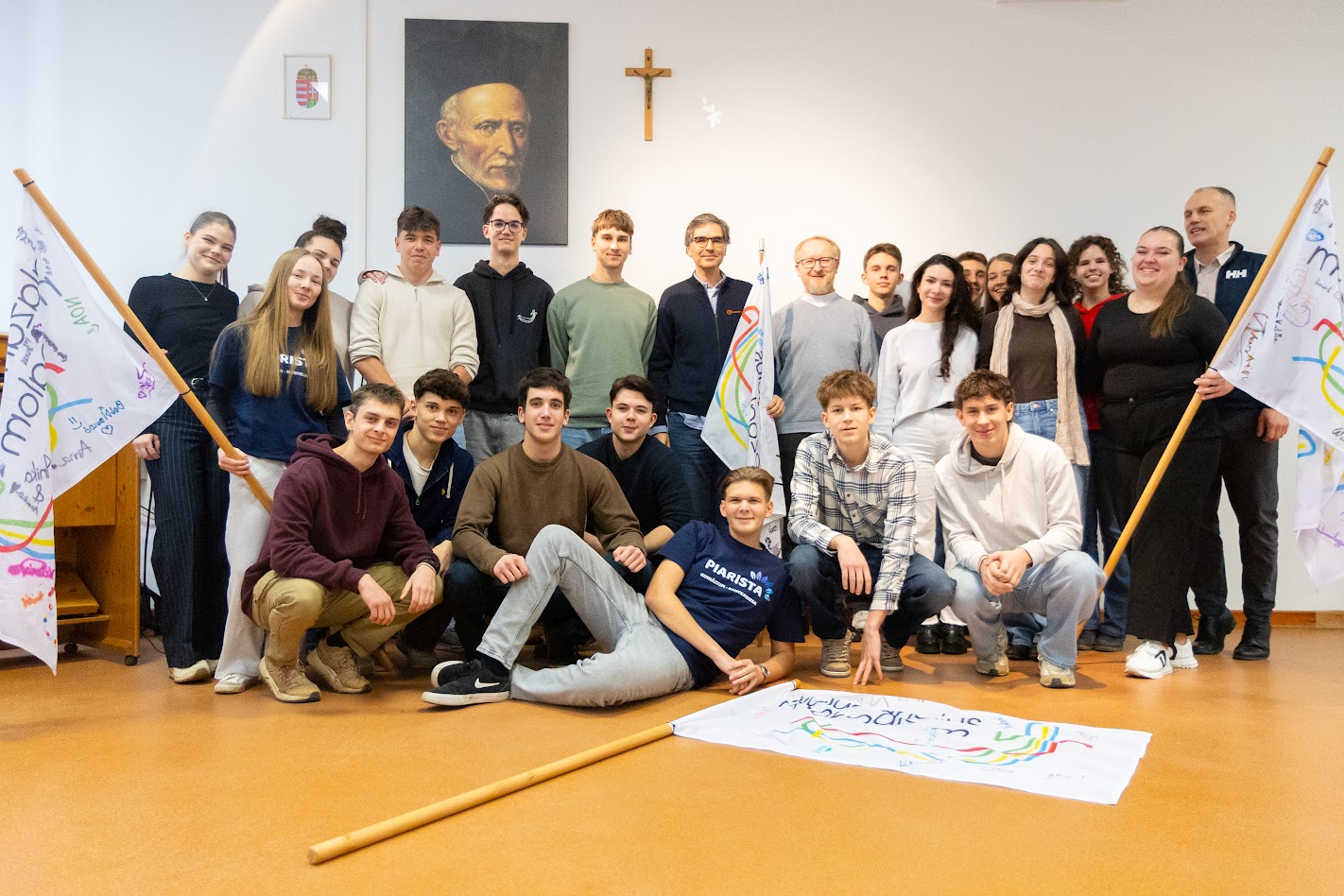
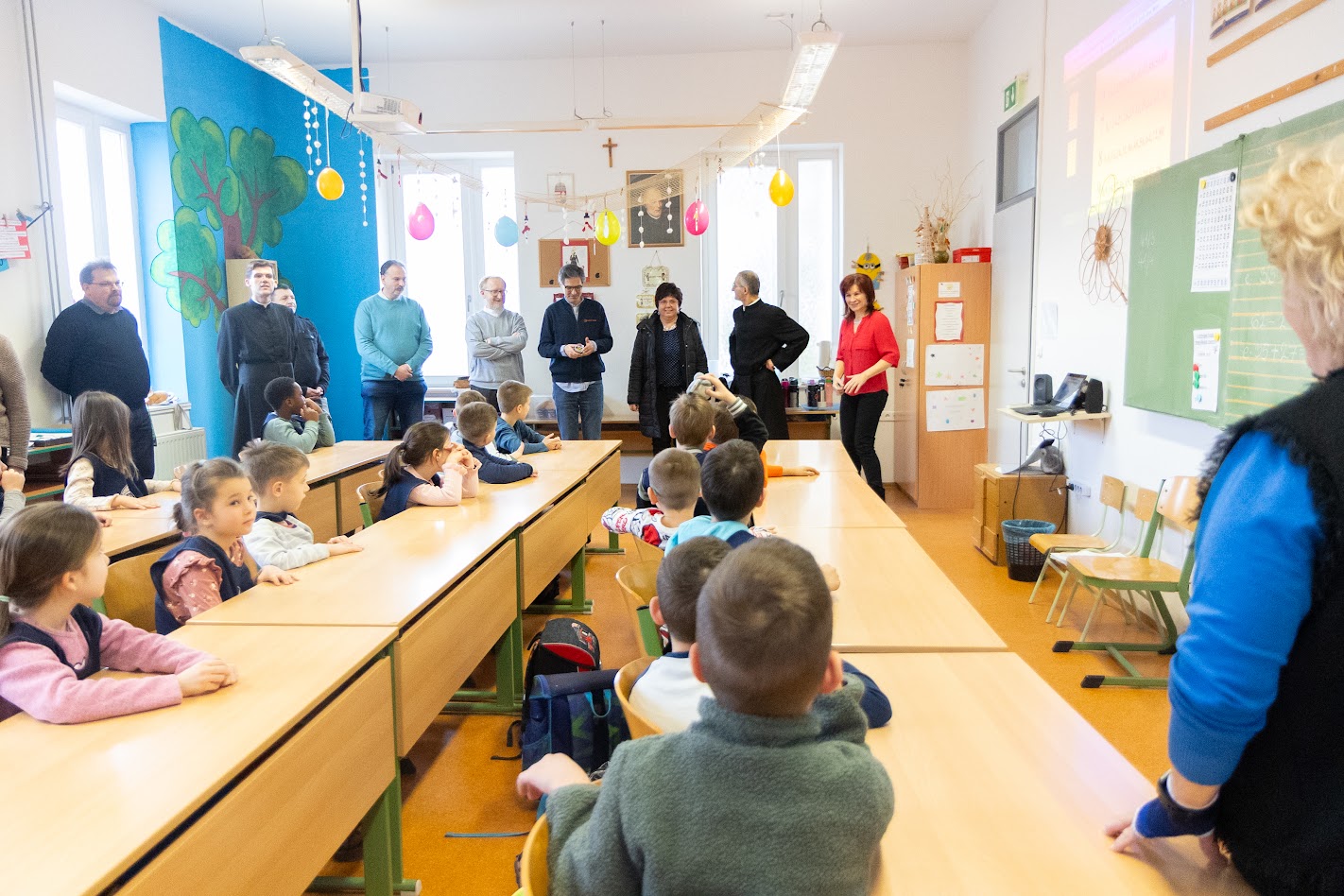
That is why we have wanted to go into the classrooms. In every school we have visited, in every social project we have visited, in every residence we have visited, we have said “hello”, we have greeted the pupils and participants; but the ones we have wanted to support in a very direct way and encourage have been the teachers: the person who is with the pupils in the classroom.
That very personal teacher–pupil relationship is a precious relationship; and we want to encourage teachers greatly, because thanks to them learning happens, thanks to them pupils’ integral growth happens. That is why we want to be close to them: we want to speak with them and get to know them.
—During the visitation you met the Apostolic Nuncio and the Cardinal. You were also able to dialogue with two bishops from Transylvania, as well as addressing religious and those responsible for spiritual movements. Do you think this visitation has also borne fruit at a relational or diplomatic level?
—I have to thank the Provincial for all of that, because we give Provincials a great deal of freedom so that—in coordination with us, but with them as the principal ones responsible—they can think, dream, and, within the framework we offer for the profile of a canonical visitation, build it. So it has been the Provincial himself, with his team, who thought it would be interesting to do all of this. And I have been deeply grateful for it, for two fundamental reasons.
The first is that it is good to highlight the canonical visitation, not because the Father General comes to visit—not because of the person—but because we feel ourselves in the communion of the Order, so that it becomes more visible that we are an Order on four continents and all that it means to be an Order. I think this is good.
But the second reason—perhaps even more important—is that we are Church. The Piarists are Church, and our proposal is to work and live in deep communion with the Church, fundamentally with the local Church, through its pastor, who is the bishop. And in every meeting—both with Msgr Banak, the Nuncio, and with His Eminence Cardinal Péter Erdő; with Archbishop Gergely Kovács or with Bishop Jenő—we ended by offering ourselves and saying that we are at their disposal. And the phrase has always been the same: “We are the Church; Your Excellency / Your Eminence, we place ourselves at your disposal.”
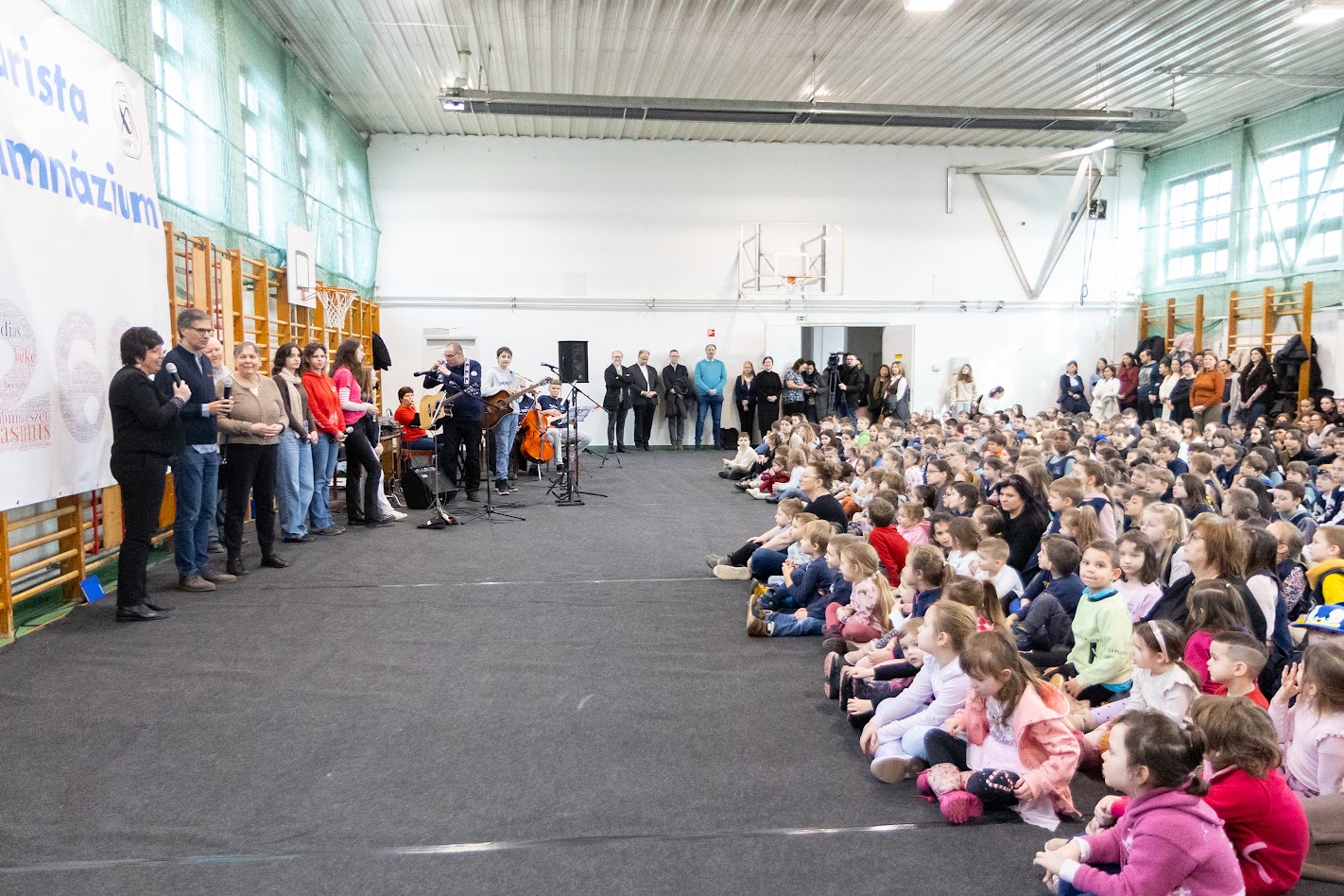
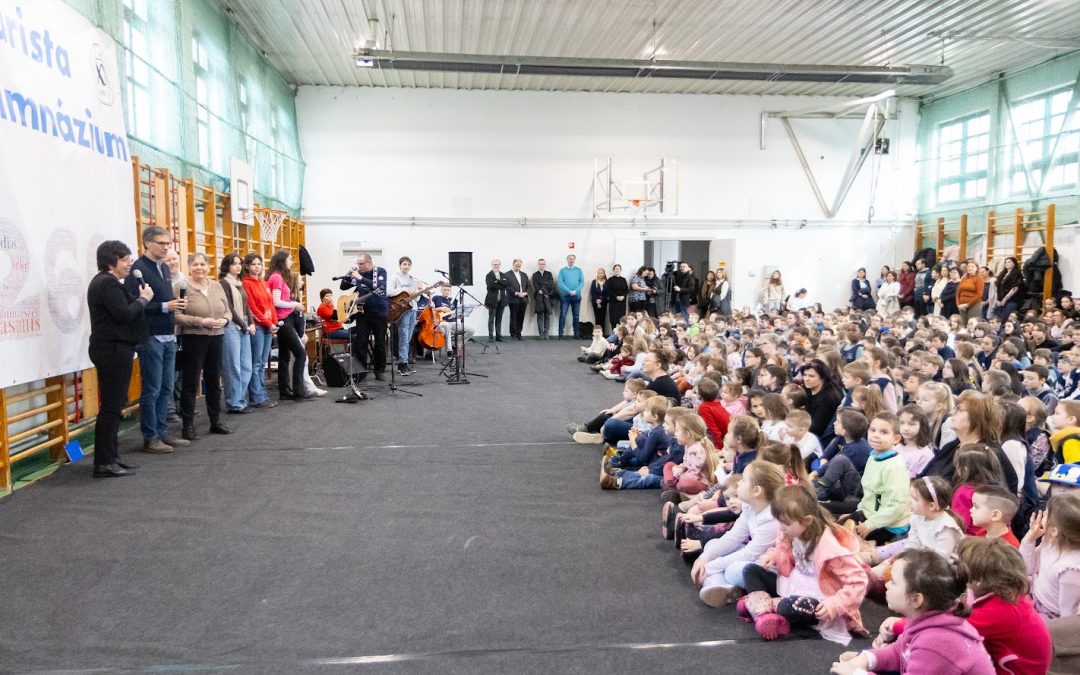
—Having said all that, it has been clear to me that meeting young people has been a priority for you. I think that, consistent with your identity as a Piarist and an educator, you seemed at ease among the children at the school, at every level. What have you encouraged them to do? I ask because they heard you, but many students were not present. So I would also like to ask: what is your message for those you could not meet personally?
—I would like to begin by responding to the start of your question: both Jacek and I are Piarists and, therefore, our natural place is the classroom, the parish, the group, the socio-educational institution, the home, the university… in short, all those settings of our ministry where we are close to our very reason for being, which is children, young people, and also their families.
It is true that service takes us to other places, but every time we have the opportunity to return to what is fundamental, we enjoy it greatly.
And the message we offer them, especially in Hungary, is essentially this: make the most of this great opportunity. As we travel around the world and live in very complex contexts—because of politics, dictatorships, illnesses, certain forms of poverty, certain restrictions, certain kinds of States—having the wonderful opportunity of beautiful, centuries-old schools, with competent teachers who identify with the Piarists, who are present and who accompany, is truly valuable. It is fertile ground for growth. Make the most of the opportunity to grow.
The second thing—and I sometimes say this as a small joke, but I like to remember it—is that, in Greek, the word “school” (in Spanish; in English it works a little less) comes from scholé, which means “a place where I have a good time”, “a place of recreation”. And you also have a right to be happy. School is not an academy where we only learn. School is a place where we build friendships, we build a family, and we are happy. We spend a lot of time at school: we have to enjoy school, we have to be cheerful at school. School has to have a vital, joyful tone; otherwise, it is less of a school—or, at least, a little less of a Piarist school.
I think academic rigour is one thing. Academic rigour does not have to go hand in hand with seriousness. It seems to me a mistake to understand it that way. Rigour can also exist with joy, and the two can coexist. We have a right to joy, to that evangelical joy, at school.
And the third thing I would say is that, when they finish their stages, they should try to keep their communities. For example, we have a beautiful project: the Alumni Project, which is now a worldwide project. It is about offering them, inviting them, so that everything they have lived can, in some way, be maintained. The school stage ends, but the relationship with the Piarists does not have to end.
In summary, may they make the most of these opportunities for integral growth; may they live their school years with joy, because they deserve it and should do so; and we hope—and we invite them—to continue this beautiful community through a project as strong, international and global as the Alumni Project.
—Thank you very much for spending this time with the Hungarian Piarist family; for the moments shared; for encouraging everyone, from the youngest, through collaborators and members of the Order, to those in leadership. Have a good journey to the lands of our brothers in other countries.
—Thank you very much. And I will end with a blessing, which is the best way to conclude a meeting: to wish good to others through intercession—in this case, of Saint Joseph Calasanz.
We ask the good Father, the Father full of goodness, to bless your lives, your families, your schools and your teachers; and that you too may turn to Calasanz whenever you need to.
A very big embrace.