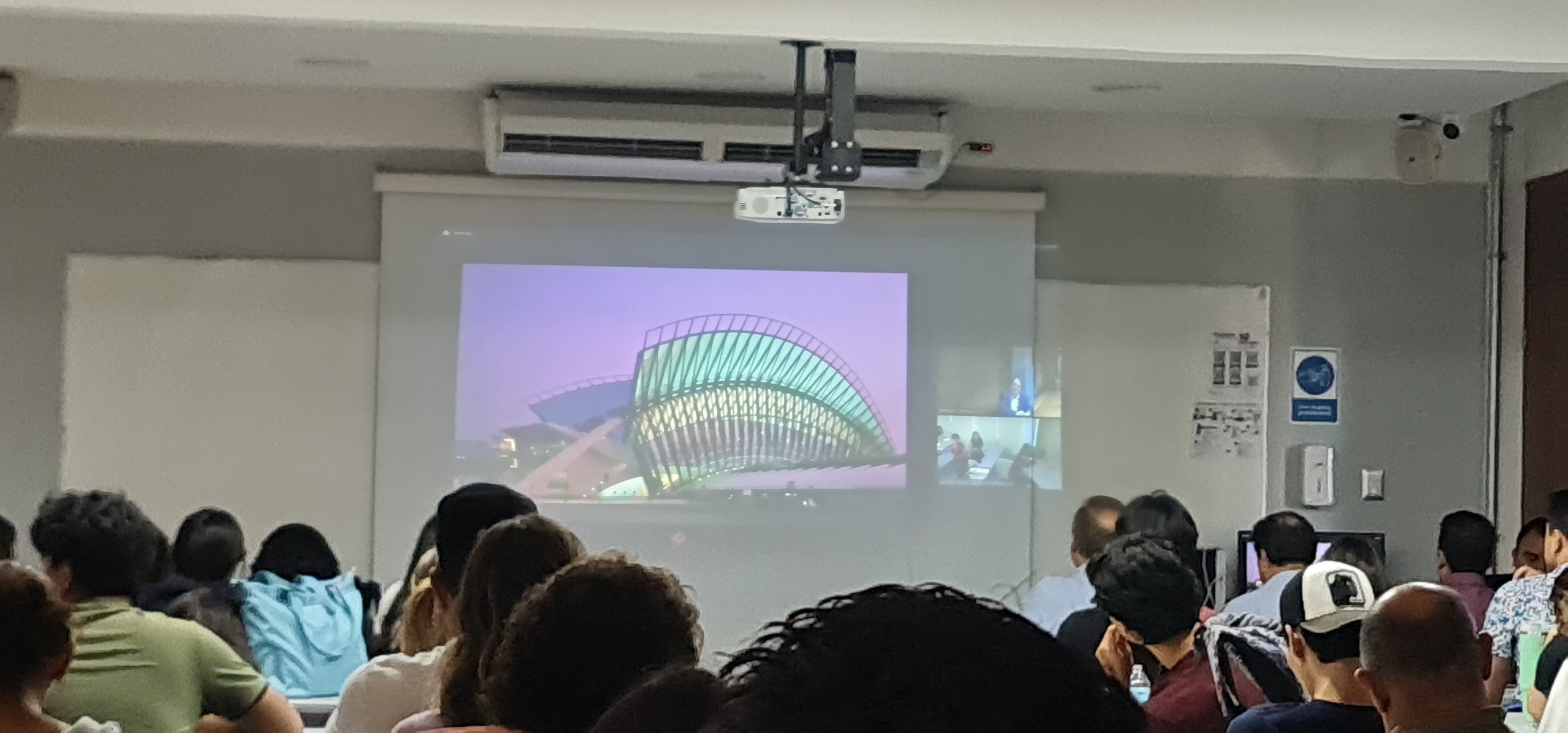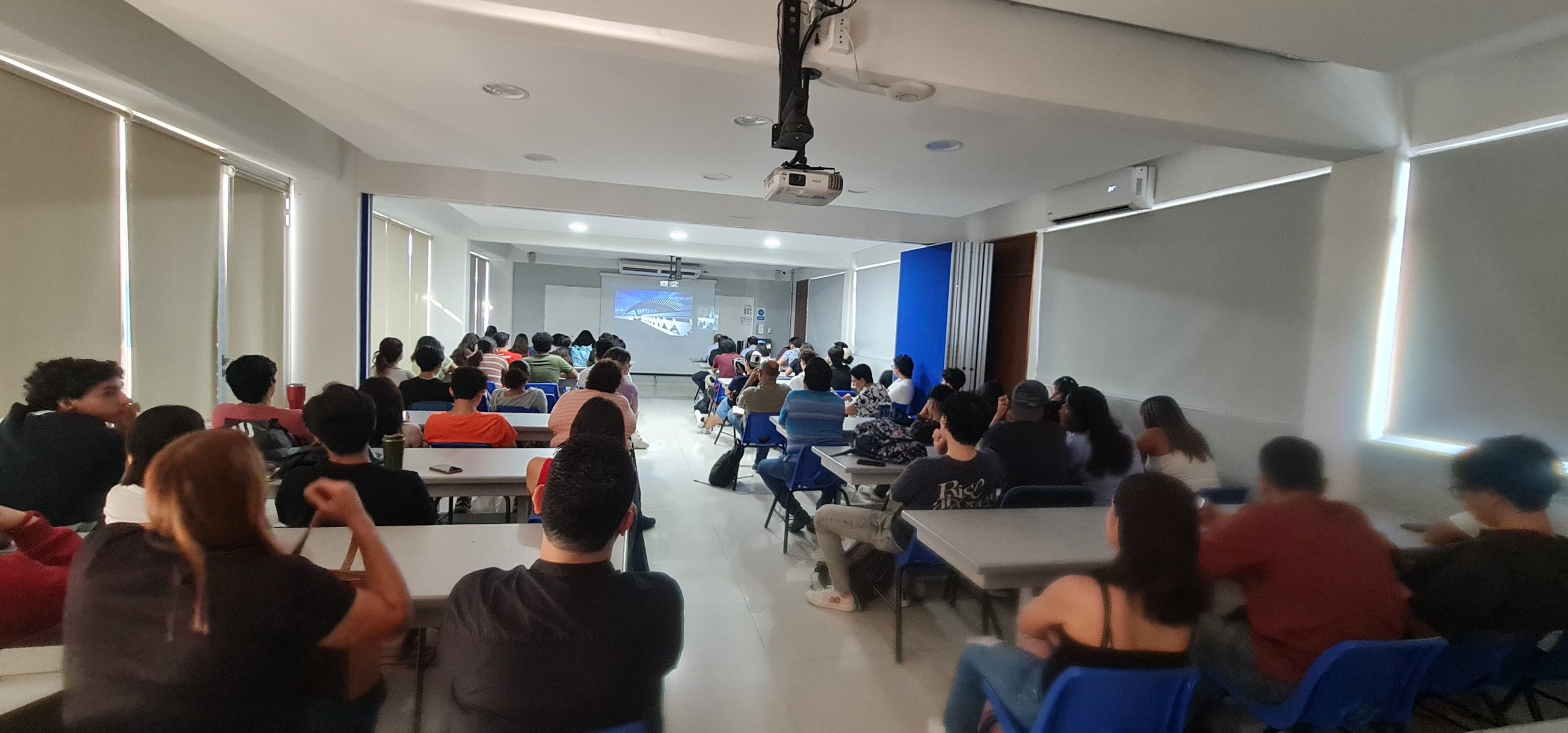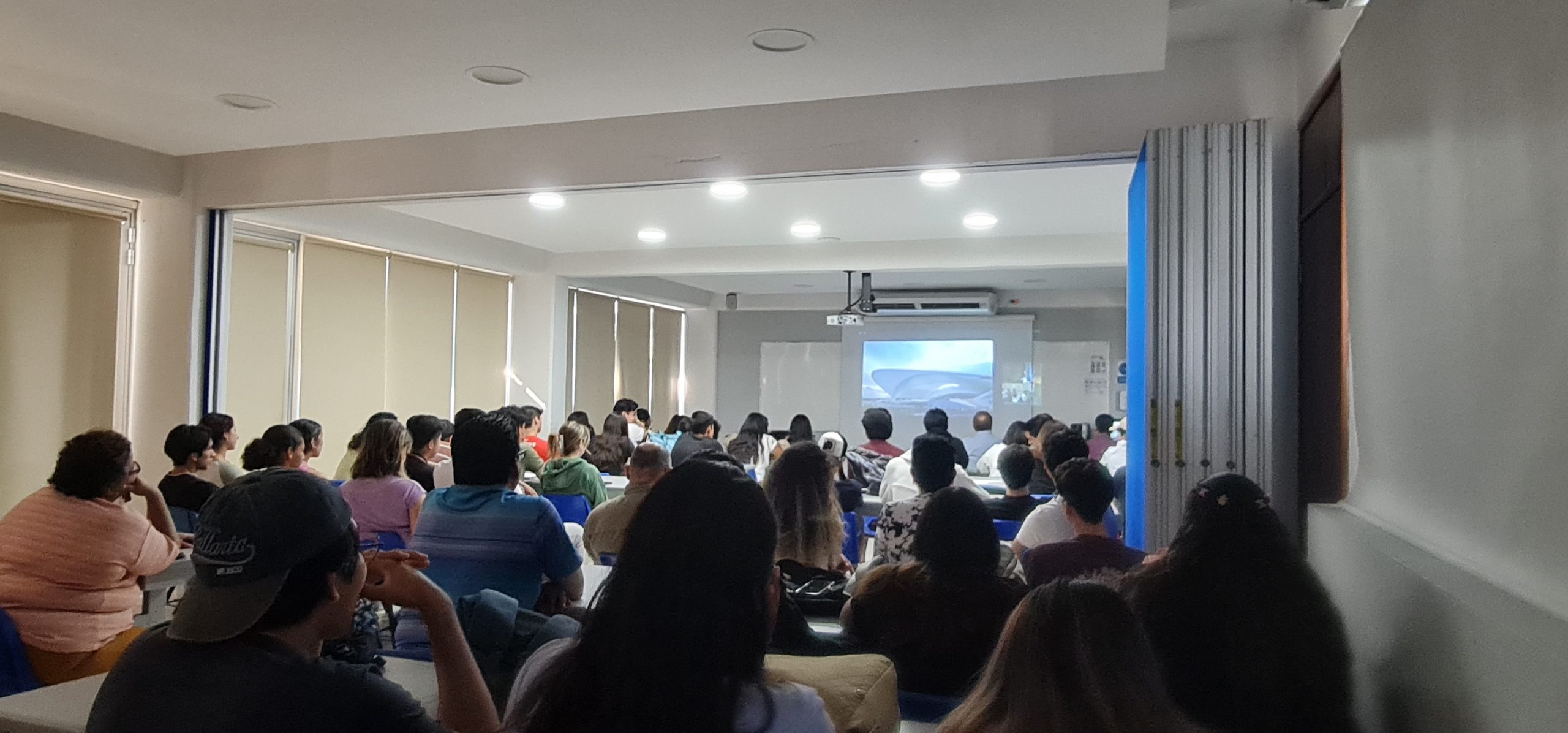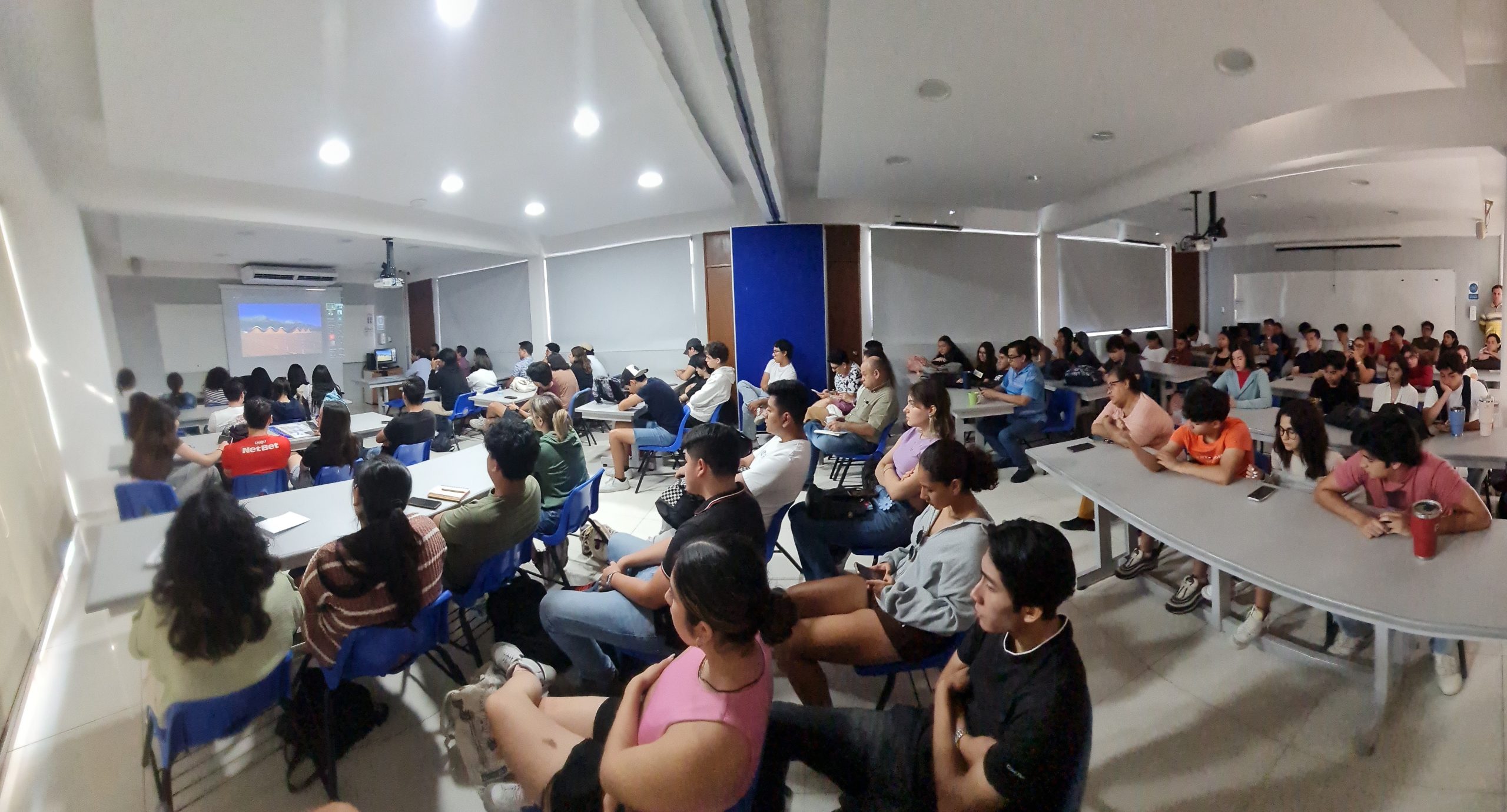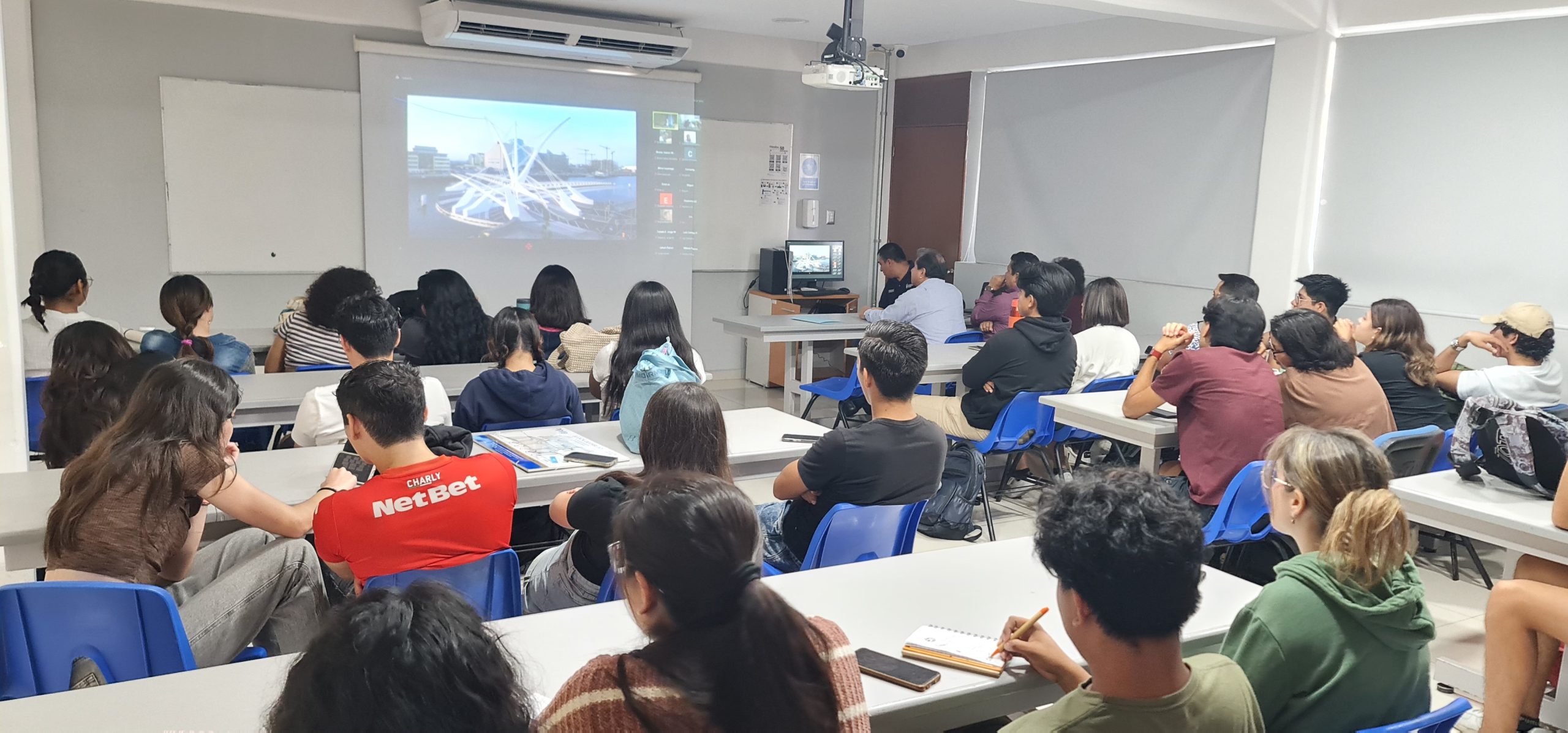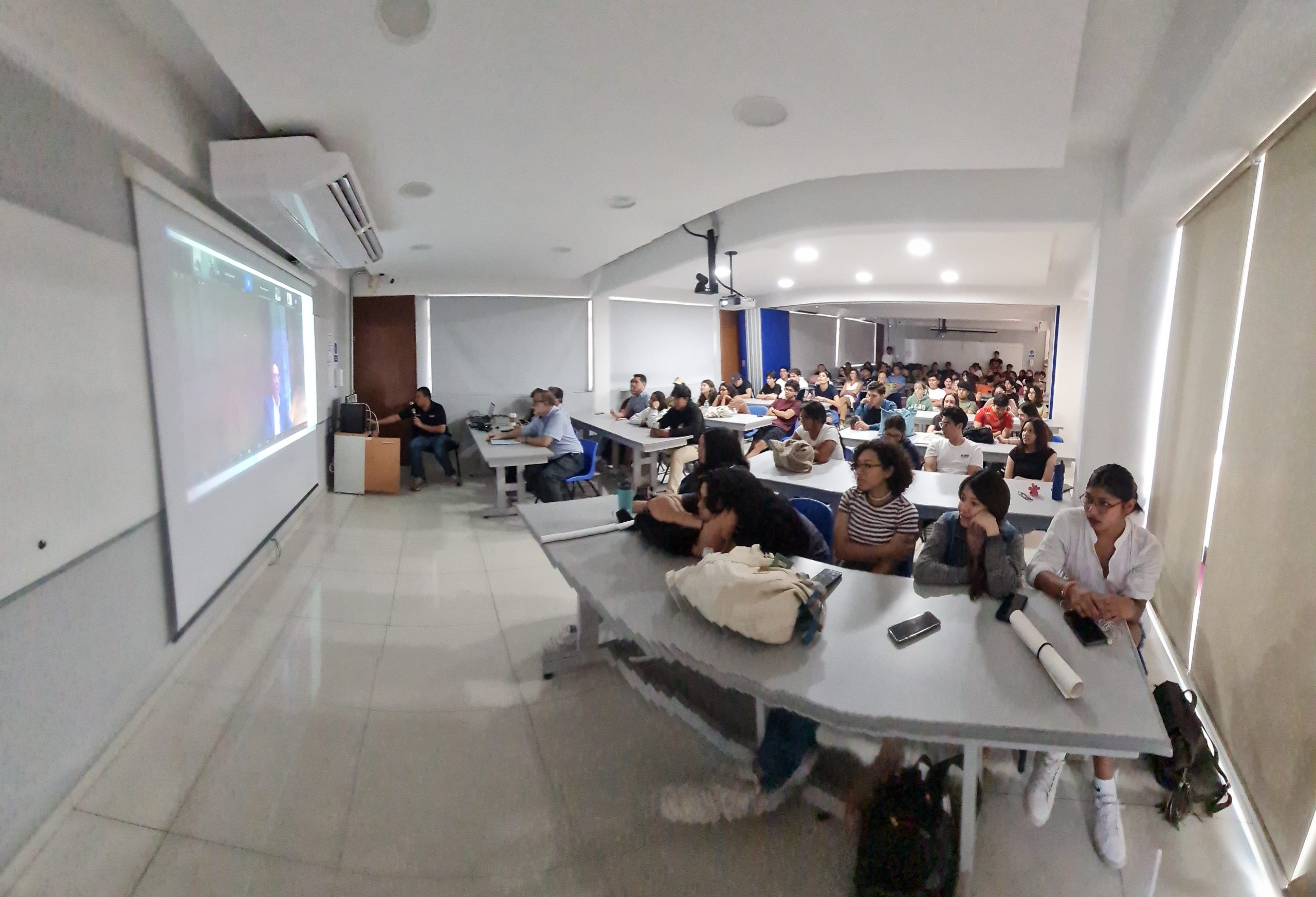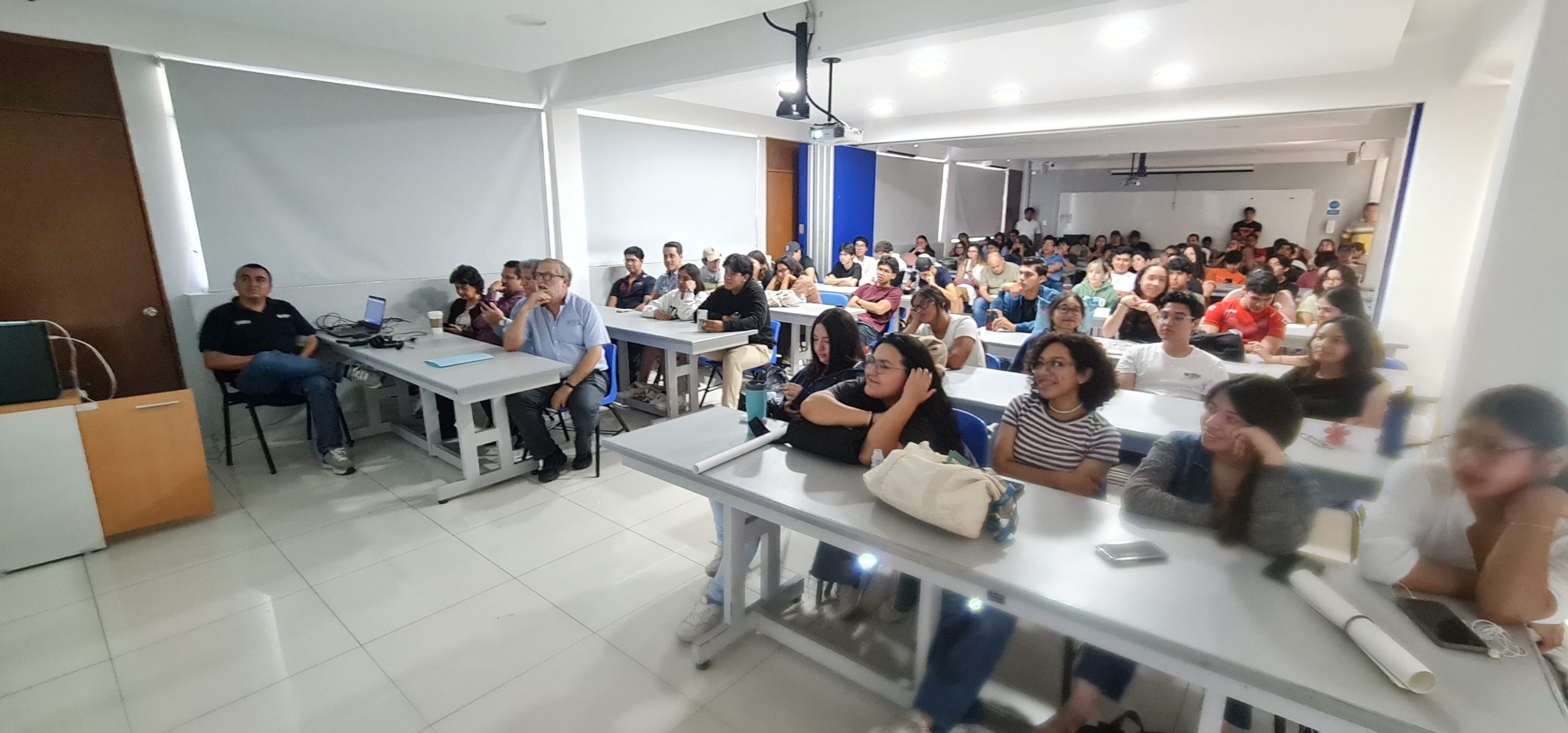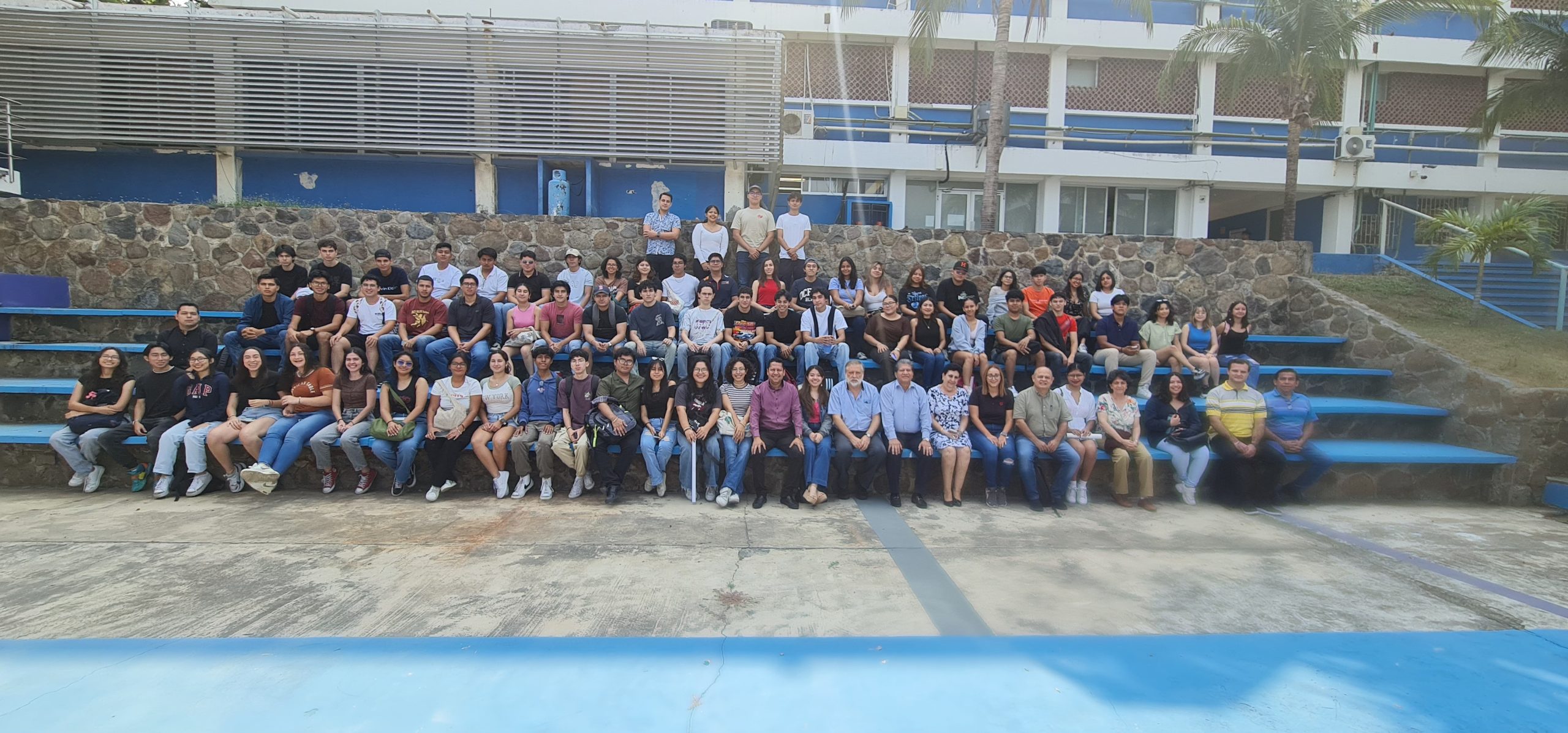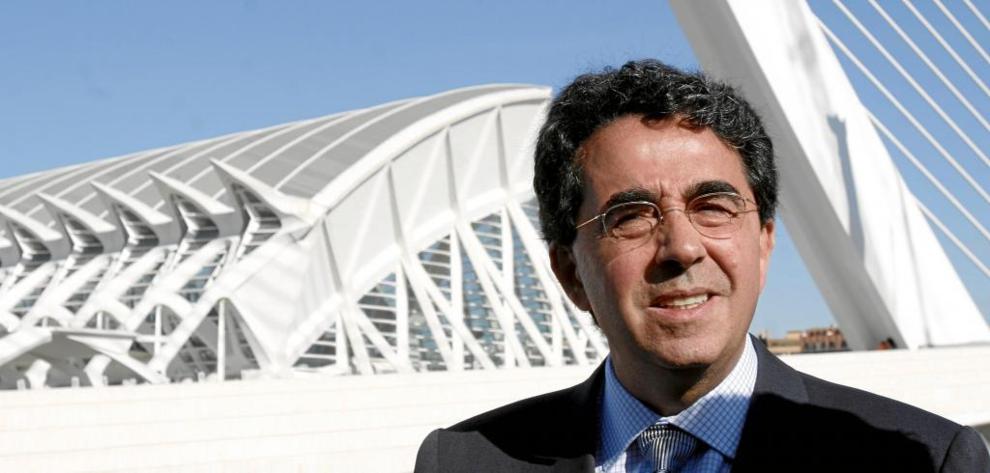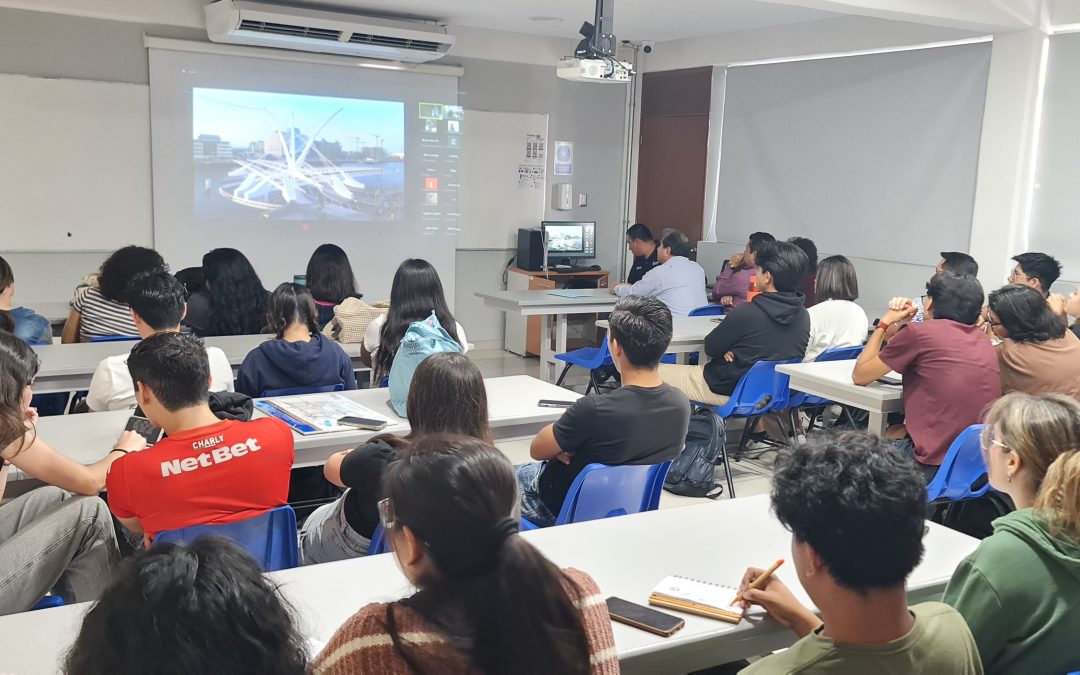
On 2 May, the academic community of the Universidad Cristóbal Colón had the honour of receiving the renowned Spanish architect and civil engineer Santiago Calatrava via remote transmission. This event was an important milestone for the students and professors of the Bachelor of Architecture programme, who had the opportunity to learn first-hand details about his vast experience and innovative contributions to the world of architecture and design.
The graduate of the Order Schools of Valencia was awarded the Prince of Asturias Prize for Art in 1999, the National Architecture Prize and the National Prize for Construction in 2005 and the European Architecture Prize in 2015, among other honours for his brilliant career.
The session began with a warm welcome from the Rector, Father Francisco Javier Alonso Arroyo, and a brief introduction to the life and work of Santiago Calatrava.
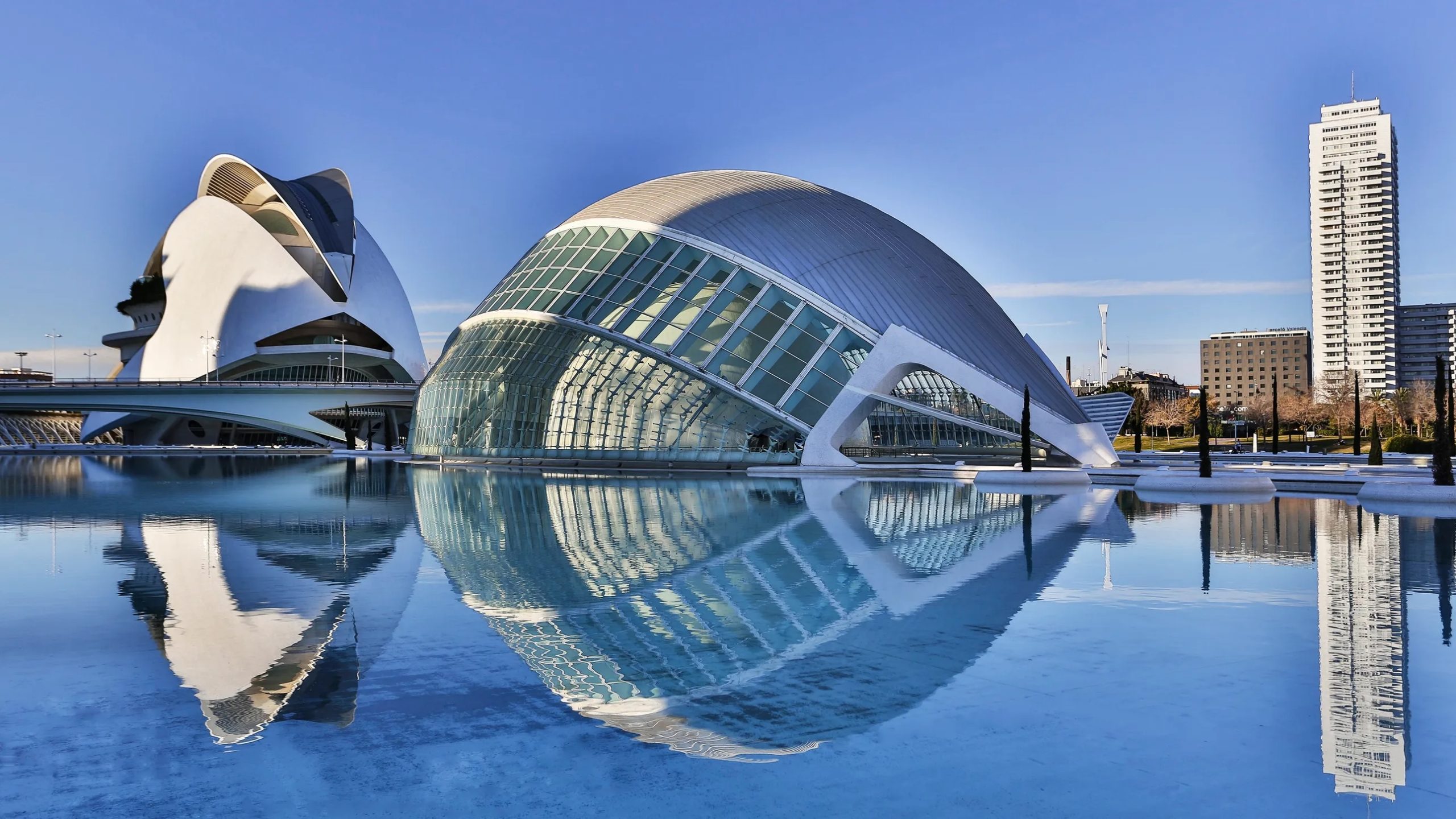
The architect Santiago Calatrava, known for his unique approach of combining building technology with a lyrical sculptural aesthetic, gave an overview of his most famous projects.
The lecture began with a reflection on his humble beginnings in architecture, emphasising that “everything has a beginning” and that no one starts “by “doing very big things”. Calatrava recalled his first significant project, a small balcony on a historic building in Zurich, and emphasised the importance of every detail, no matter how small the project. This philosophy has led him to tackle ever larger and more complex projects.
He emphasised the need to understand architecture beyond a technical profession, describing stylistic richness as an art form that enhances the human experience in the built environment. He cited figures such as Albert Einstein, whose theories on space and time resonate with his focus on the dynamic interaction between structures and environments. He also referred to Michelangelo, who himself was inspired by Vitruvius and his treatise De Architectura. It states that the proportions of the human body should determine the ideal proportions of architecture, emphasising the anthropomorphic relationship of design and space to the human body.
He also recalled the passage in Exodus 35:31-33 in which Bezalel, the craftsman chosen by God to build the tabernacle, is mentioned and, as a master craftsman, is credited with great wisdom, skill and ability in all kinds of crafts; qualities that Calatrava considers essential for an architect. He also mentioned the New Testament passage from 1 Corinthians 3:16-17, in which Jesus refers to the body as a temple for the spirit, thus linking architecture with spiritual symbolism.
The event ended with applause and expressions of gratitude from students and teachers, leaving a lasting impression of inspiration and motivation.