
Within a joint reflection among the general teams for Youth and Pious Schools and the Calasanz Movement, we have seen that one of the topics we are working on in several places is Piarist international volunteering, and that there are people responsible for this area with whom we could connect in order to share experience, even if it takes on different forms in each place.
We believe that international volunteering is a very pastoral, social and educational commitment for many young people and adults who take part in the Pious Schools, if it is carried out well, and that it is good to promote it and make it more visible from a Piarist approach.
Calasanz himself was an international volunteer when he began in Trastevere and, as the document The Calasanctian Identity of Our Ministry (General Congregation, 2012) tells us, we want to follow this path and “encourage Piarist volunteering, making use of the network that the Pious Schools have throughout the world” (p. 20).
In our general teams, one of our objectives is to encourage exchanges of young people between Provinces in order to get to know one another better as Pious Schools, to offer meaningful experiences on a personal and vocational level, and to deepen our sense of co-responsibility for so many realities of mission and poverty in which we are present as Piarists. Connecting with one another as those responsible for this topic can enrich the initiatives we are already carrying out, help us by sharing resources and good practices, generate a stronger common Piarist identity, and encourage more Provinces to send or receive volunteers.
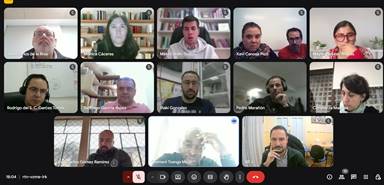
With this in mind, we met online on Tuesday, 11 November, with the Provinces that we know are carrying out these volunteering initiatives, and we dealt with the following points:
1. General presentation of each experience of Piarist international volunteering
Each person responsible from these Provinces named the key elements they work on in the preparation, organisation and accompaniment of international volunteering, and all expressed their gratitude for being able to meet and share this moment.
Several Provinces also shared the materials they use. The Provinces were:
- Central Africa, through the Provincial Mission Secretariat.
- Nazareth, with the Province’s “Lay People on Mission” proposal.
- Mexico, through the University of Veracruz.
- Catalonia, through the Province’s groups and communities area.
- Emmaus and Betania, through the Calasanz Movement and Itaka-Piarists.
- Hungary, through the Calasanz Movement and Erasmus+.
2. Some key words we shared from all these experiences were:
Building a Piarist presence / Having previous experience / Co-responsibility / Personal growth / Evaluation / Accompaniment / Joint communities / Spirituality / Life / Mission / Getting to know other realities / Missionary spirit / Piarist identity / Piarist network / Awareness-raising / The “before” and “after” of the experience / Options / Charism / Values / Selection / Formation / Calasanz Movement / “Going forth” / Integration / Social commitment / Group experience / Allowing oneself to be challenged / Affective maturity / Vocational search / Discovery / Quality process.
3. Finally, we asked ourselves: in what areas could we strengthen one another? What can we all incorporate into our itineraries as part of the Pious Schools?
In the discussion, we agreed to consider how to work on these four ideas in order to develop them together, while each Province will continue with its own specific itinerary:
- One or two joint online formation sessions per year for provincial leaders responsible for this area, focusing on specific aspects, in order to stay in contact and invite other Provinces to this type of volunteering. Also, to listen to the experiences of the volunteers themselves in these meetings.
- To create a brief common framework document on Piarist international volunteering, through a collaborative process during 2026.
- To strengthen communication about all these experiences at the level of the Pious Schools, in collaboration with the general Communication team.
- To agree on a common document and a common video on Piarist identity formation, to be used in all itineraries with these volunteers.
