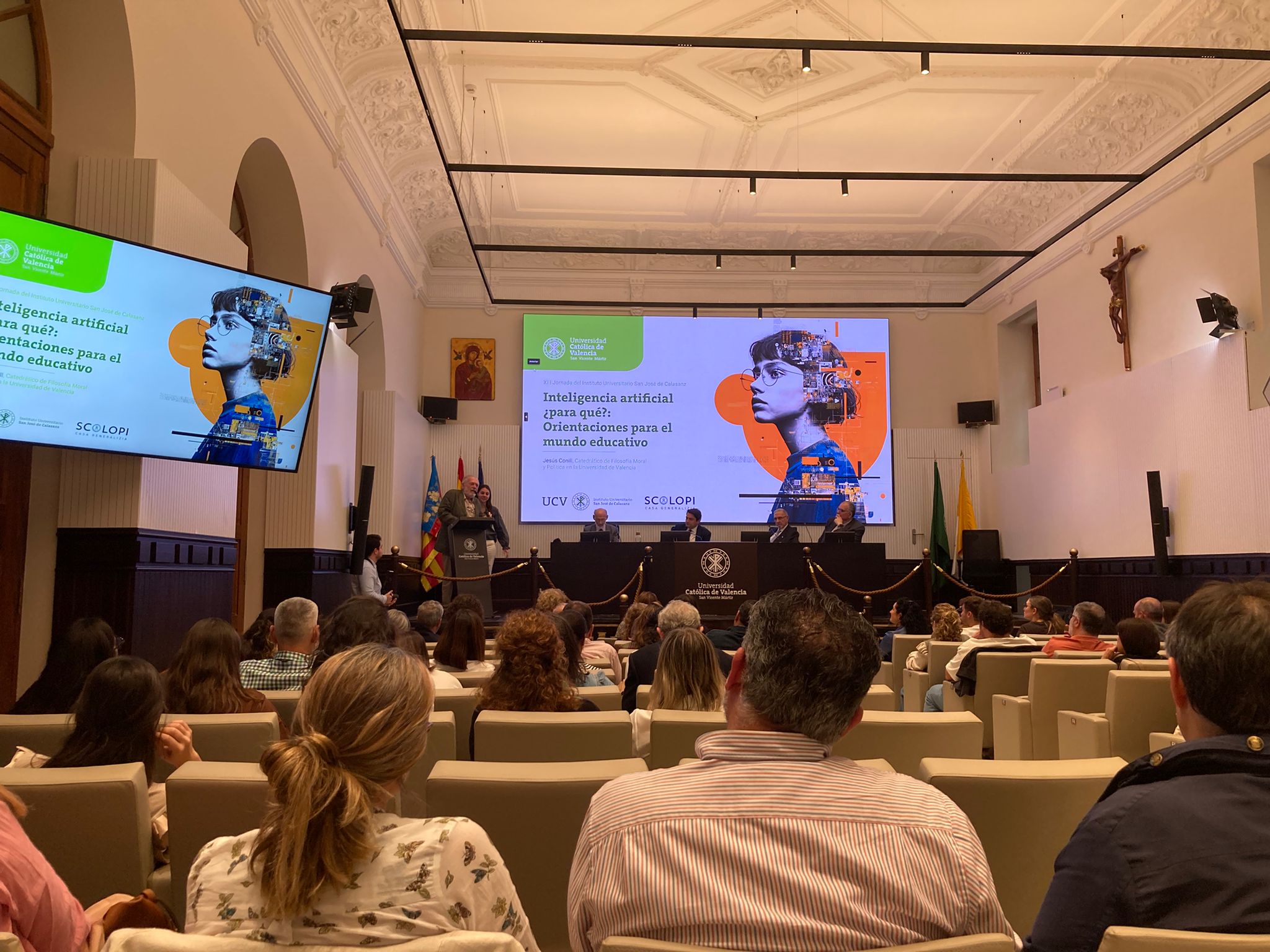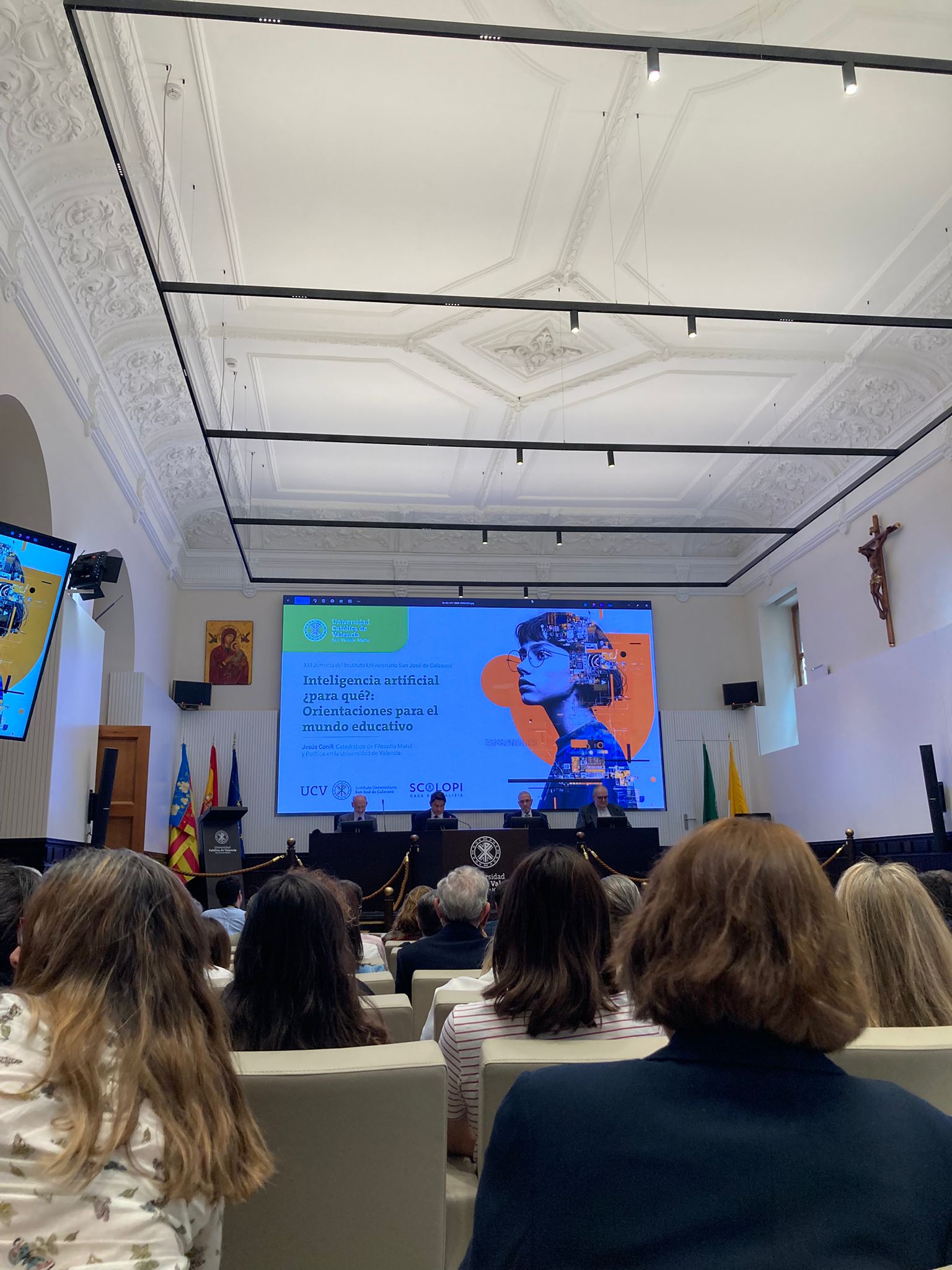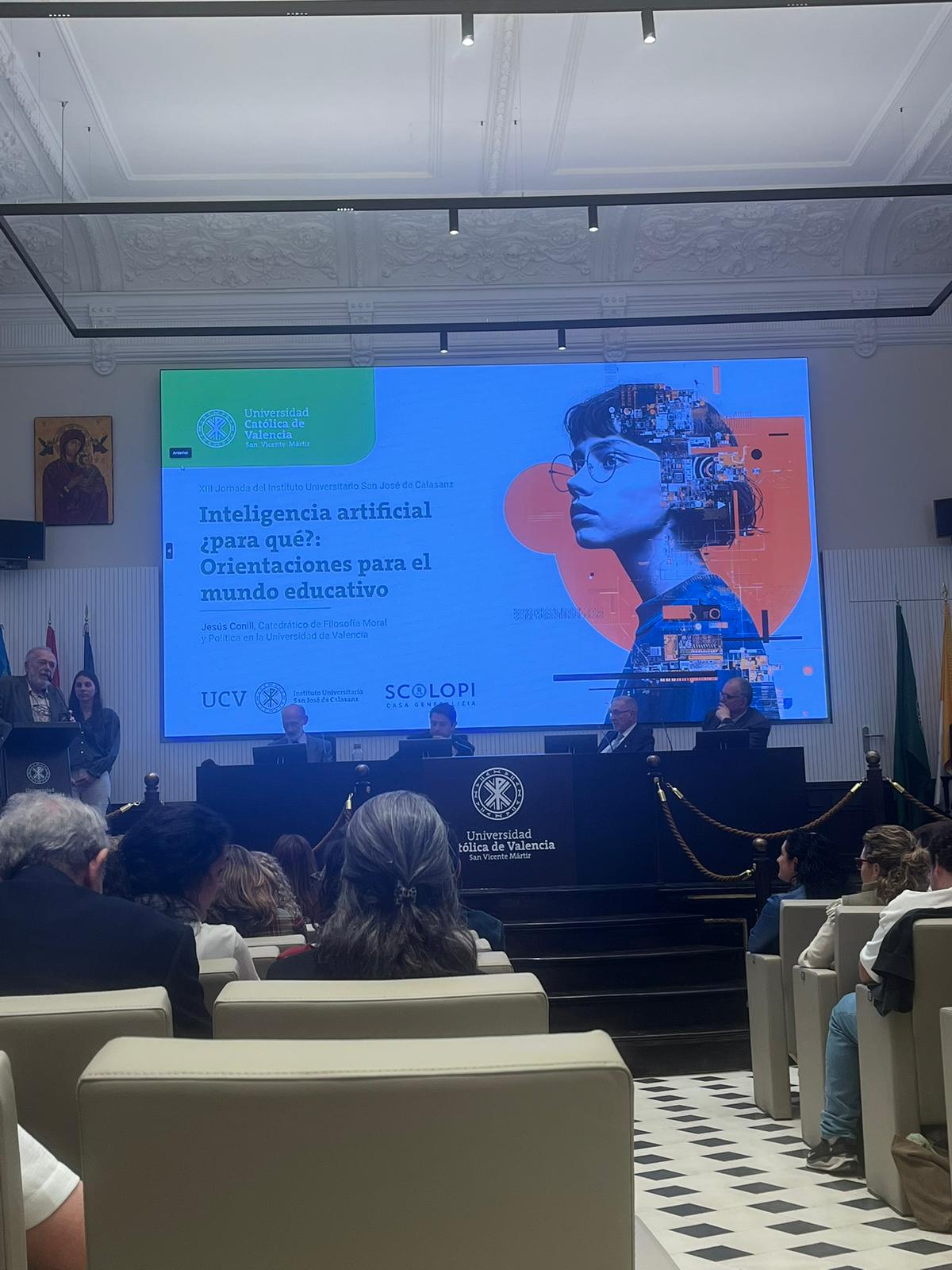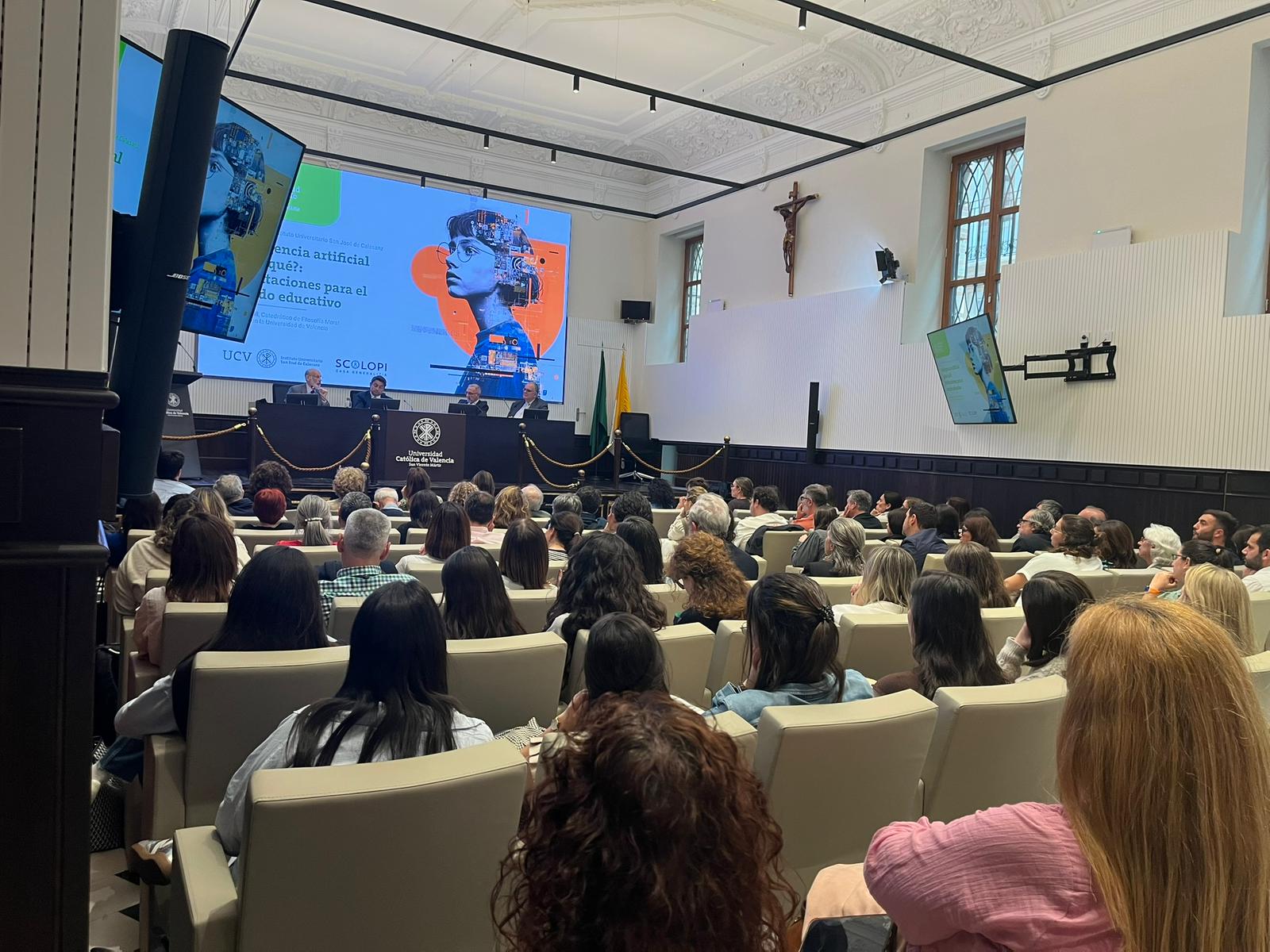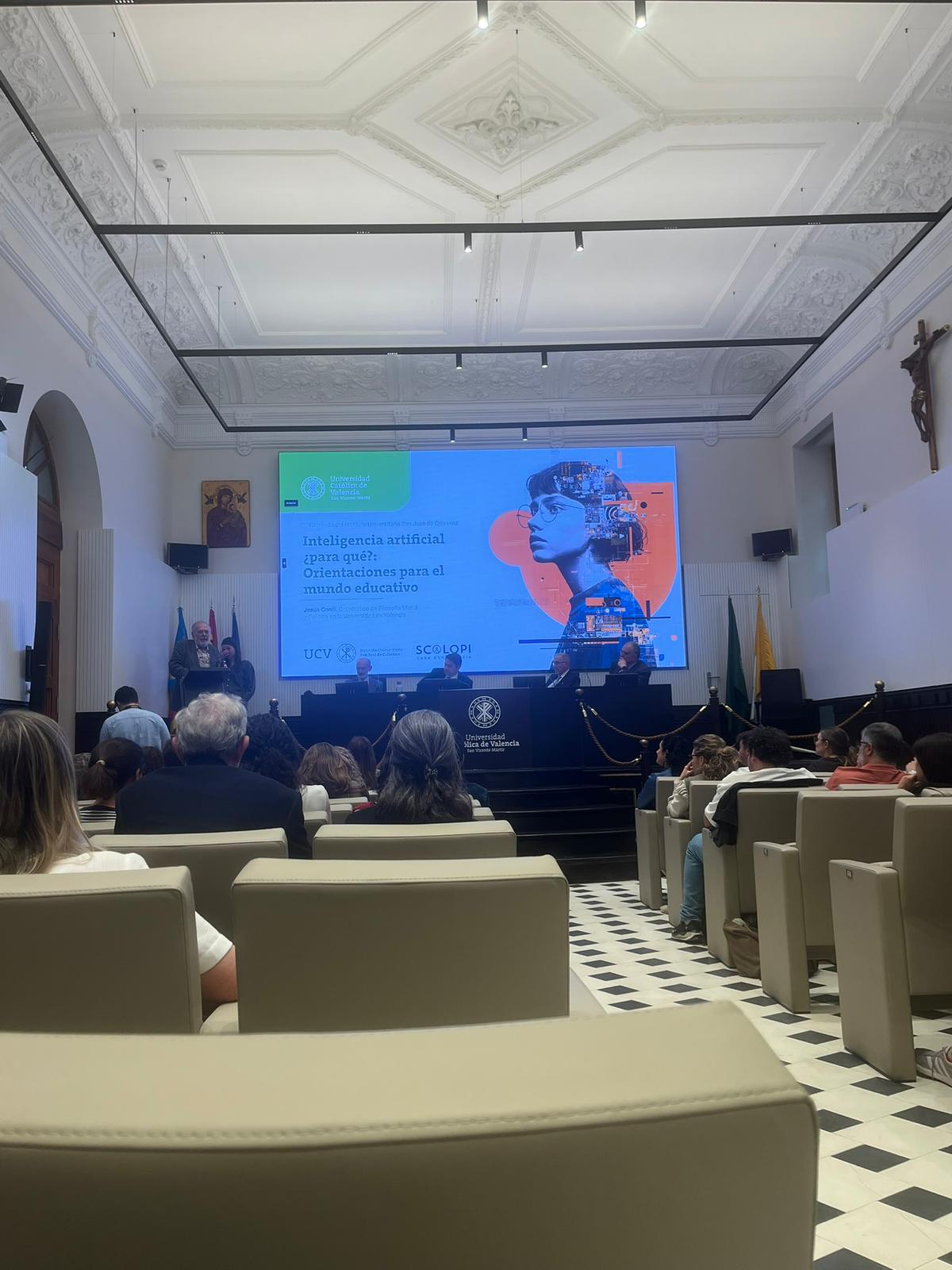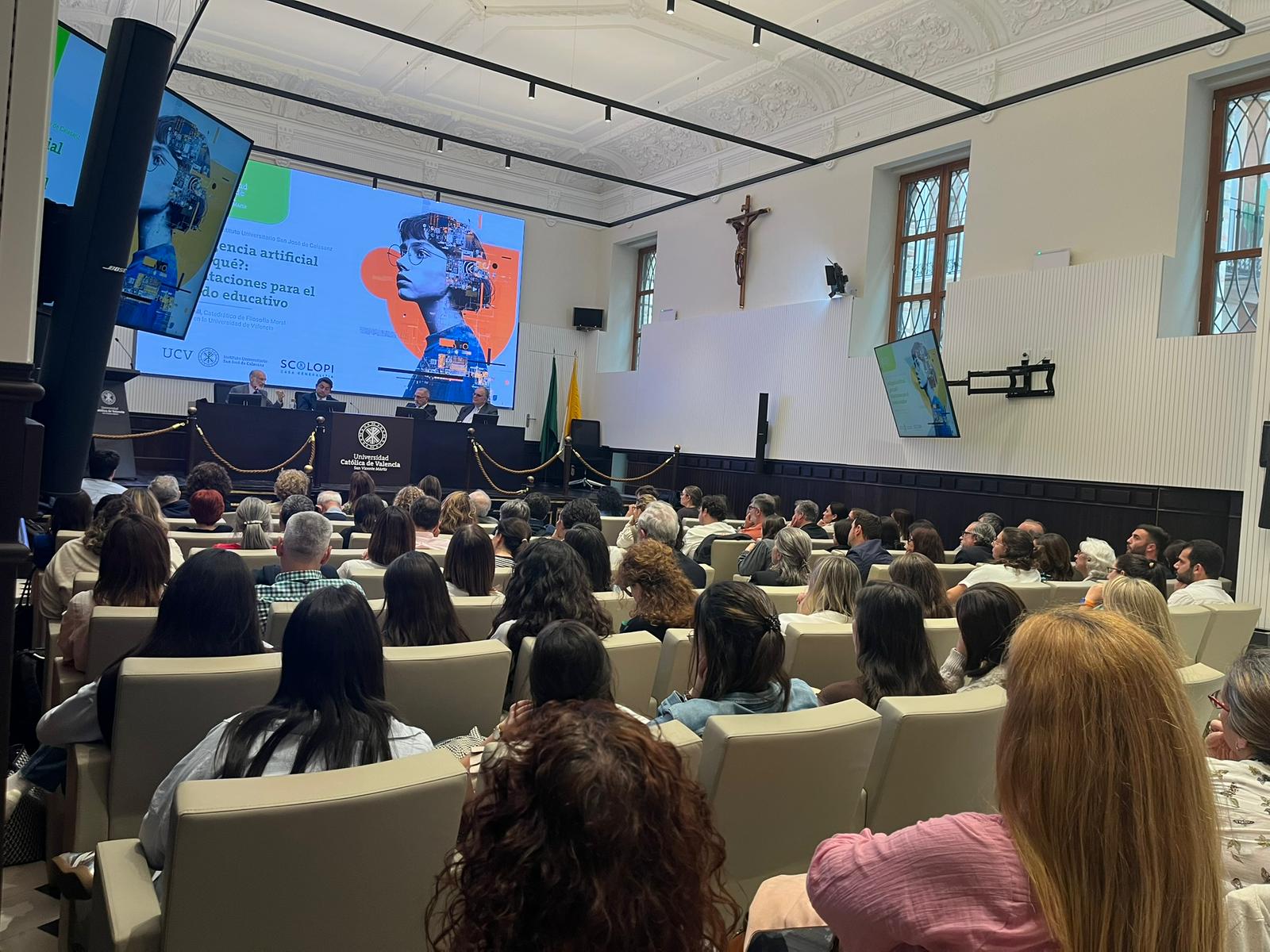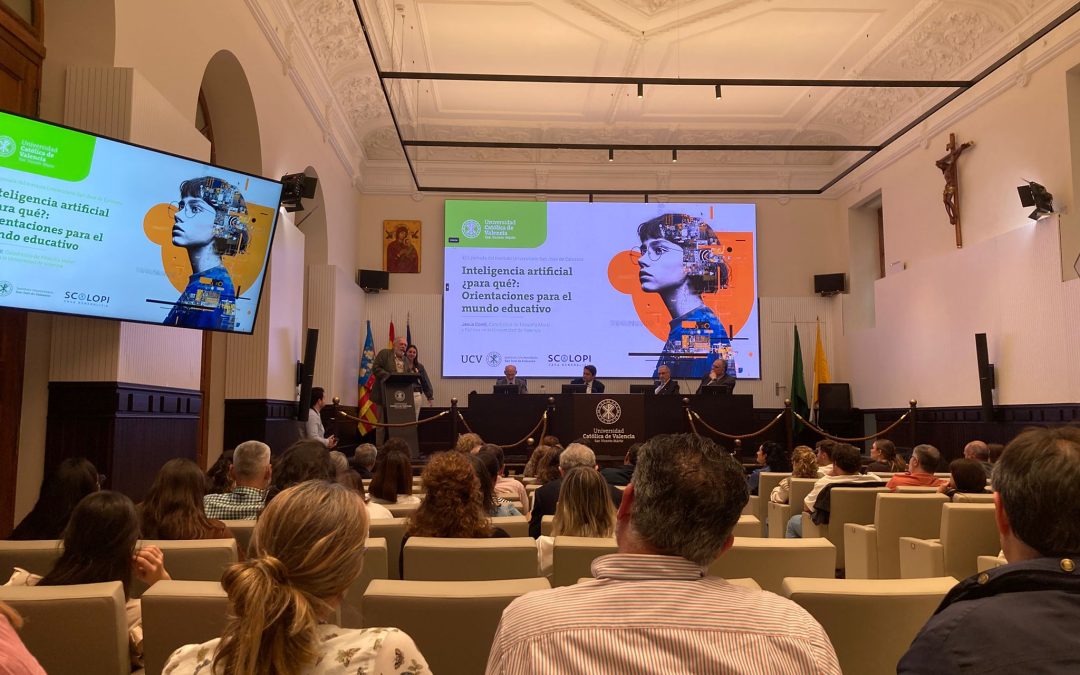
The Trinitarios site of the Catholic University of Valencia hosted, on Wednesday 6 May, the annual conference of the Saint Joseph Calasanz Institute, now in its thirteenth edition, an unmissable fixture in the academic calendar.
The meeting began with an address by the Rector, Mr José Manuel Pagán, who noted that the use of artificial intelligence should not give rise to an “Oppenheimer moment”, in which we regret having created a useful tool, but one with evident risks that must be taken into account. In this regard, he argued for the importance of the teacher’s role, within a proper hierarchy, and warned against absolutising techniques without taking people into account.
Afterwards, the Secretary of the Institute, Dr Ricardo Cerverón, briefly reviewed the activities and publications carried out during the past academic year. Then Fr José Luis Zanón, Director of the Institute, introduced the speaker, taking the opportunity to express his personal point of view on the beginning of an irreversible era to which, one way or another, we must adapt.
The speaker, Dr Jesús Conill, began his lecture by clarifying the terms technique and technology, affirming that the latter belongs to the logos. In this sense, artificial intelligence is a technology, τέχνη + λόγος, “an instrument that cannot be separated from the human”, he stated. This unity is broken in modernity when technology invades every sphere of life, disrupting the unitary order and causing a split between technical reason and ethics. For this reason, the speaker argued, “the meaning of technique must be humanising”, insofar as it must provide well-being, noting that one of the educational functions of Artificial Intelligence is to help us know ourselves as human beings.
On the other hand, Professor Conill pointed out that we must be aware that technology is not neutral and introduces new values, including another notion of truth, which entails evident risks, especially political risks and risks related to power.
Focusing on the educational field, the lecturer underlined the personalisation of teaching, the facilitation of collaborative tasks and simplification as major advantages of the use of artificial intelligence, while stressing that it can never replace the teacher. Quoting Jonathan Haidt, he identified, as the main challenges in the face of its addictive use, especially among minors, the need “to safeguard respect for the person’s privacy and freedom”.
The professor’s address then gave rise to an intense debate with the large audience, which filled the hall at the Trinitarios site.
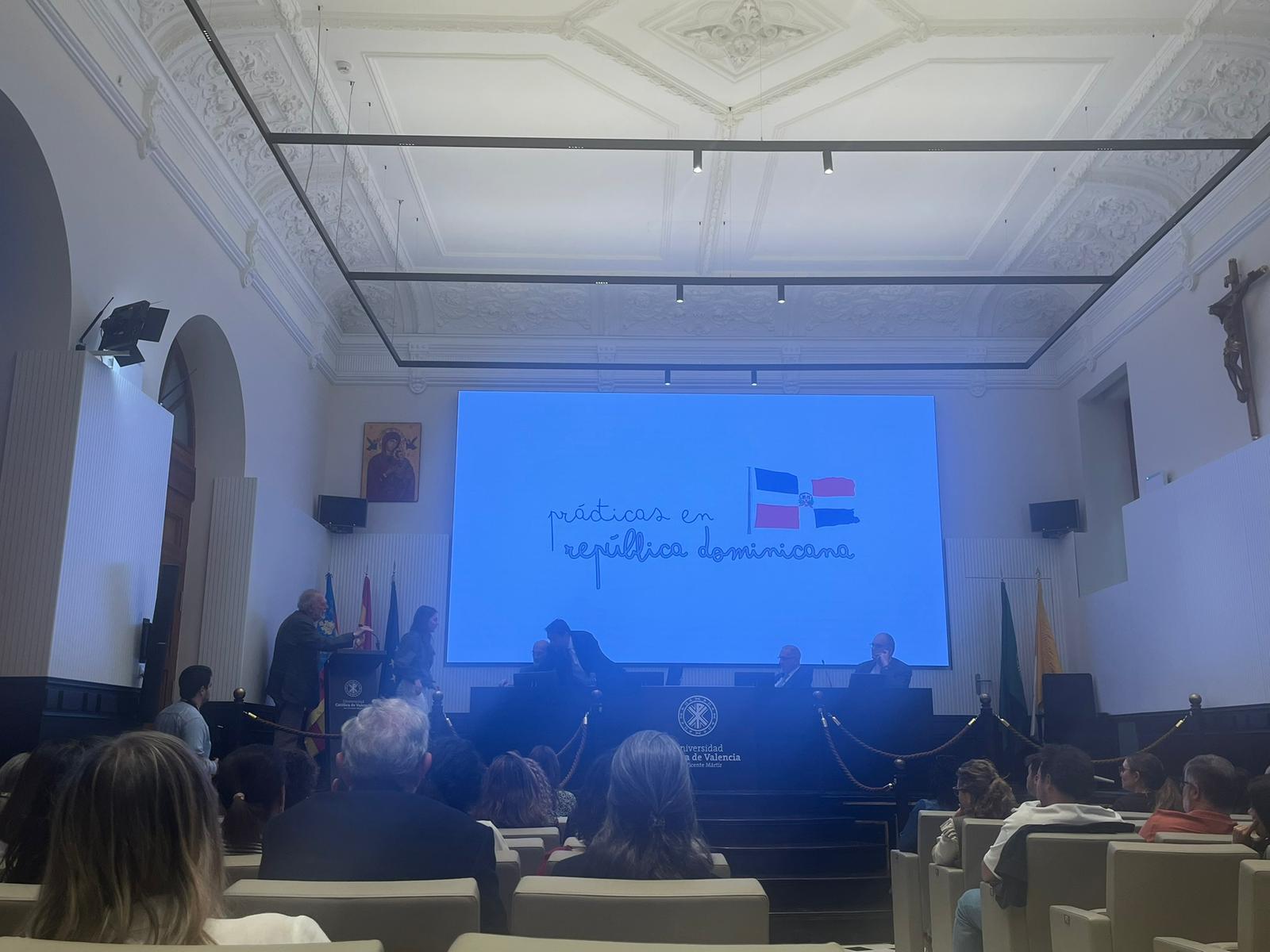
As the culmination of the day, Prof. José Mula introduced several students from the Catholic University, who explained their intercultural placements in Central America, carried out thanks to the initiative of the Institute.
Jesús Conill is Emeritus Professor of Moral and Political Philosophy at the University of Valencia, recognised for his work as co-director of the ÉTNOR Foundation. His academic career and his many publications stand out for integrating classical philosophy with the ethical challenges of contemporary technological society.
The Saint Joseph Calasanz University Institute, founded in 2007, is a centre under joint ownership of the Catholic University of Valencia San Vicente Mártir and the Order of the Pious Schools, based at that University and with archival, bibliographic and documentary holdings in the centres of the Pious Schools in the same city. The purpose of the Institute includes the following objectives:
- To promote and carry out study and research activities in order to deepen knowledge of the figure of Saint Joseph Calasanz.
- To research and make known the historical development of the pedagogical contributions of the Pious Schools and their current situation.
- To contribute to teacher formation, based on the Piarist educational style.
- To encourage and manage intercultural placements for university students in Piarist centres in Latin America.
Betania Communication